The Truth About Chin Hair in Women — What’s Normal, What’s Hormonal, and When to Pay Attention
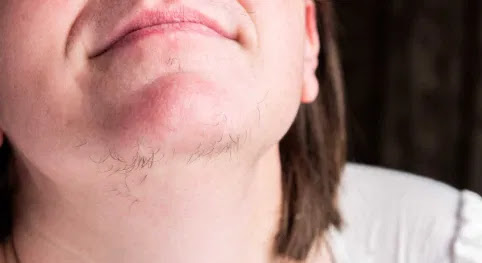
You catch it in the mirror one morning: a dark hair on your chin.
You pluck it quickly and move on. A few days later, another appears. Then another. Soon, you find yourself checking your reflection in certain lighting, wondering whether this is normal—or whether your body is trying to tell you something.
Here’s the truth most women are never told clearly enough:
Facial hair on women is extremely common.
In fact, studies suggest that up to 70–80% of women have some visible hair on the chin, upper lip, or jawline. For many, it’s simply part of normal genetics and aging—not a sign that something is “wrong.”
And despite what social media filters and beauty standards may suggest, having chin hair does not make someone less feminine, less attractive, or less healthy.
Understanding why it happens can help remove some of the fear, shame, and confusion surrounding a completely natural human experience.
Why Women Grow Chin Hair
One of the biggest misconceptions is that chin hair automatically means a woman has “too much testosterone.”
That’s usually not true.
All women naturally produce androgens, including testosterone. Hormones exist on a spectrum, and normal levels vary widely from person to person.
The real reason many women develop chin hair comes down to something surprisingly simple:
Hair Follicle Sensitivity
Some hair follicles are genetically more sensitive to normal hormone levels.
That means two women with identical hormone levels can have completely different amounts of facial hair.
Factors that influence chin hair include:
| Factor | Effect |
|---|---|
| Genetics | Strongest influence |
| Ethnicity | Some populations naturally have more visible facial hair |
| Aging | Hormonal shifts after menopause may increase visibility |
| Hormone sensitivity | Follicles respond differently in each person |
| Body changes | Pregnancy, menopause, and stress may affect growth |
Women of Mediterranean, Middle Eastern, South Asian, and some Indigenous backgrounds may naturally have more visible facial hair due to inherited hair patterns.
That’s normal variation—not a medical failure.
Aging and Chin Hair: Why It Often Appears Later in Life
Many women notice chin hairs becoming more visible in their 30s, 40s, or after menopause.
This happens because estrogen gradually declines with age, while androgen levels remain relatively more stable.
The hormonal balance shifts slightly, making facial hair easier to notice.
At the same time:
- Skin becomes thinner
- Hair texture changes
- Follicles become more visible
- Gray hairs may appear coarser
This is a normal part of aging for many women.
When Chin Hair Might Signal a Medical Condition
Most chin hair is harmless.
However, sudden or excessive facial hair growth—especially when combined with other symptoms—can sometimes indicate an underlying medical issue.
Possible causes include:
| Symptom | Possible Condition |
|---|---|
| Irregular periods + acne + facial hair | Polycystic Ovary Syndrome |
| Rapid hair growth over months | Hormonal imbalance |
| Deepening voice | Elevated androgen levels |
| Hair on chest or abdomen | Possible endocrine issue |
| Sudden changes after medication | Medication side effects |
Rarely, excessive androgen production can be caused by tumors or adrenal disorders, but these situations are extremely uncommon.
What Is PCOS?
Polycystic Ovary Syndrome (PCOS) is one of the most common hormonal conditions linked to increased facial hair in women.
Symptoms may include:
- Irregular periods
- Acne
- Weight gain
- Ovarian cysts
- Fertility challenges
- Increased facial or body hair
But chin hair alone does not automatically mean someone has PCOS.
Diagnosis usually requires multiple symptoms plus medical evaluation.
The Biggest Myth: “Shaving Makes Hair Grow Back Thicker”
This myth refuses to die—but science has repeatedly disproven it.
Shaving does not:
- Increase hair growth
- Change hair color
- Alter follicle thickness
- Cause faster regrowth
Hair may feel coarser because shaving creates a blunt edge, but the follicle itself remains unchanged.
Dermatologists have confirmed this in multiple clinical studies.
Hair Removal Options: What Actually Works?
Every woman has the right to choose what feels best for her own body.
Here are the most common options:
| Method | Pros | Cons |
|---|---|---|
| Tweezing | Precise, inexpensive | Time-consuming |
| Shaving | Fast, painless | Frequent upkeep |
| Threading | Long-lasting | Can be uncomfortable |
| Waxing | Removes multiple hairs | Skin irritation possible |
| Laser hair removal | Long-term reduction | Expensive |
| Electrolysis | Permanent removal | Slow process |
| Bleaching | Makes hair less visible | Doesn’t remove hair |
There is no “correct” choice—only personal preference.
Laser Hair Removal: What to Know
Laser Hair Removal works by targeting pigment inside the follicle.
It tends to work best on:
- Dark hair
- Lighter skin tones
Multiple sessions are usually needed, and results vary from person to person.
While many people see major reduction, hormonal changes can still trigger future hair growth.
Electrolysis: The Only FDA-Approved Permanent Removal Method
Electrolysis destroys follicles individually using electrical current.
Unlike laser treatments, electrolysis can work on:
- Blonde hair
- Gray hair
- Red hair
However, it is slower and requires multiple appointments.
The Emotional Side Nobody Talks About
For many women, chin hair feels emotionally heavier than it should.
Not because hair itself is harmful—but because culture taught us it was unacceptable.
Social media, advertising, beauty filters, and airbrushed images have created impossible expectations around female hairlessness.
Many women experience:
- Mirror anxiety
- Embarrassment
- Shame
- Obsessive checking
- Fear of being judged
But human bodies naturally grow hair.
That includes women’s bodies.
Your Choices Are All Valid
There’s no universally “empowering” way to handle facial hair.
You can:
- Remove it
- Trim it
- Bleach it
- Ignore it
- Embrace it
None of those choices determine your worth.
The healthiest decision is usually the one that comes from comfort—not shame.
Tips for Safe Hair Removal
If you choose removal, dermatologists often recommend:
- Exfoliating gently beforehand
- Using clean tools
- Moisturizing afterward
- Avoiding harsh products immediately after removal
- Patch testing creams or waxes first
Sensitive chin skin can become irritated easily.
Frequently Asked Questions
Is chin hair in women normal?
Yes. It’s extremely common and often completely harmless.
Does chin hair mean high testosterone?
Usually not. Genetics and follicle sensitivity play a major role.
Can stress cause chin hair?
Stress may influence hormone fluctuations, but genetics remain the biggest factor.
Should I see a doctor?
See a healthcare provider if facial hair appears suddenly or is accompanied by symptoms like irregular periods, acne, or voice changes.
Is laser hair removal permanent?
It offers long-term reduction, but hormonal changes may still trigger regrowth later.
Final Thoughts
That single chin hair you noticed in the mirror?
It’s not a personal failure.
Not a loss of femininity.
Not proof that your body is “wrong.”
For millions of women, facial hair is simply part of being human.
And while beauty culture often treats female body hair like a secret to erase, biology tells a very different story: bodies are diverse, hormonal, imperfect, and wonderfully individual.
So remove the hair if it makes you feel more comfortable.
Or don’t.
But either way, your value was never dependent on being flawlessly hairless in the first place.