
Introduction
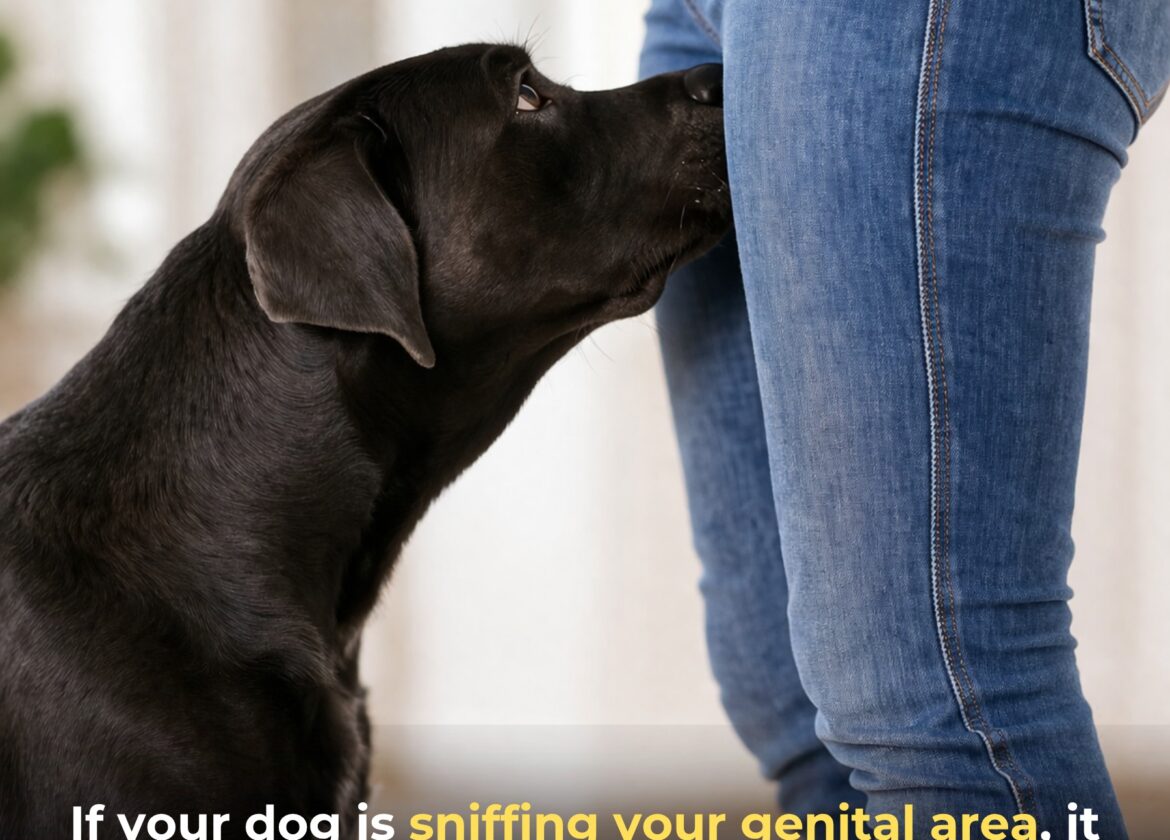
It’s a familiar—and sometimes awkward—moment for many dog owners. A guest walks through the door, and instead of barking or wagging excitedly, your dog calmly approaches… and begins sniffing in a place that makes everyone slightly uncomfortable.
Many people quickly apologize and pull their dog away, assuming the behavior is rude or inappropriate. But what if that moment isn’t misbehavior at all? What if it’s actually your dog’s version of a friendly greeting?
The truth is that dogs experience the world primarily through scent. What seems embarrassing to us is simply part of how they gather information about the people around them. Understanding the science behind this instinct can help dog owners respond with patience, better training, and a deeper appreciation for how their pets communicate.
(Ad placement opportunity after introduction)
Dogs Experience the World Through Their Nose
Dogs rely on their sense of smell far more than humans do. While people primarily use sight and sound to interpret their surroundings, dogs build their understanding of the world through scent.
A dog’s nose is incredibly powerful:
- Humans have about 6 million olfactory receptors
- Dogs can have up to 300 million
- The scent-processing area of a dog’s brain is about 40 times larger proportionally than a human’s
This means that when a dog sniffs something, they’re not just smelling it—they’re analyzing a complex mix of chemical signals that reveal detailed information.
For a dog, a single sniff can provide clues about another person or animal’s identity, emotional state, and even recent activities.
Why Dogs Sniff the Groin, Armpits, or Neck
The areas dogs tend to sniff most—such as the groin, armpits, and neck—aren’t random choices.
These regions contain apocrine sweat glands, which release pheromones. Pheromones are chemical signals that carry biological information about a person.
Through scent, dogs may gather information such as:
- Age
- Biological sex
- Emotional state (stress, calmness, excitement)
- Recent health changes
- Where someone has recently been
In other words, dogs are essentially reading a “chemical biography” about the person standing in front of them.
A Special Tool: The Vomeronasal Organ
Dogs also possess an additional scent-detection system called the Vomeronasal organ, sometimes referred to as Jacobson’s organ.
This organ sits on the roof of a dog’s mouth and allows them to detect pheromones more precisely.
While humans cannot consciously detect these chemical signals, dogs can analyze them easily. The vomeronasal organ allows dogs to gather information that goes far beyond what ordinary smell provides.
Because of this, a dog’s nose functions almost like a sophisticated biological scanner.
(Ad placement opportunity mid-article)
Sniffing Is Normal Dog Etiquette
In the canine world, sniffing is an essential part of social interaction.
When two dogs meet, they typically circle one another and sniff each other’s hindquarters. This behavior may seem odd to humans, but for dogs it serves an important purpose.
It helps them quickly answer questions such as:
- Is this dog friendly or aggressive?
- Have we met before?
- Is this dog healthy?
- Is there any reason to feel threatened?
This information helps reduce uncertainty and allows dogs to relax around one another.
When your dog sniffs a person in a similar way, they’re simply applying the same natural greeting behavior they would use with another dog.
Why Dogs Sniff Guests When They Arrive
When someone new enters your home, your dog is trying to figure out who they are and whether they are safe.
Sniffing is their primary tool for gathering that information.
Once a dog finishes this quick scent investigation, they often relax because they now understand the visitor better. Preventing them from sniffing at all can sometimes make them feel more uncertain or anxious.
Think of it this way: for humans, eye contact and facial expressions communicate identity and emotion. For dogs, scent plays that role.
(Ad placement opportunity before training section)
How to Guide This Behavior Politely
Although sniffing is natural, it’s understandable that humans prefer a more comfortable greeting.
The goal isn’t to punish the behavior, but to gently guide it.
Here are a few helpful strategies:
1. Teach a “Polite Greeting”
Train your dog to sit when guests arrive. Reward them when they greet visitors calmly instead of jumping or crowding.
2. Redirect the Sniff
Encourage your dog to sniff hands or lower legs instead of more sensitive areas. These areas still provide scent information but are less awkward socially.
3. Allow a Brief Investigation
Let your dog sniff for a second or two, then gently call them back to you. This respects their natural instinct while maintaining boundaries.
4. Avoid Harsh Corrections
Yelling or pulling sharply on the leash can create confusion or anxiety. Positive reinforcement works far better for shaping polite behavior.
Understanding Your Dog’s Perspective
Sometimes the best solution is simply understanding your pet’s point of view.
Your dog isn’t trying to embarrass you or invade someone’s personal space. They’re simply using the most powerful tool they have—their nose—to understand the world around them.
When you see the behavior through that lens, it becomes less awkward and more fascinating.
Frequently Asked Questions
Why does my dog sniff strangers more than family members?
Your dog already knows the scent of household members. New people carry unfamiliar smells, which makes them more interesting to investigate.
Is it rude for a dog to sniff people?
No. It’s a completely natural form of communication for dogs.
Can I train my dog not to sniff people?
You can’t remove the instinct entirely, but you can train polite greeting behaviors that make interactions more comfortable.
Why does my dog sniff certain people more than others?
Dogs may detect stronger scents caused by stress, hormones, perfumes, or recent contact with other animals.
Do dogs really learn information from scent?
Yes. A dog’s sense of smell is so advanced that trained dogs can detect illnesses, track individuals, and identify specific chemical changes in the body.
Final Thoughts
The next time your dog greets someone with an enthusiastic sniff, take a moment to see the behavior differently.
To humans, it might feel awkward. To dogs, it’s simply conversation.
It’s their way of asking questions, gathering information, and deciding whether the newcomer is a friend.
When we understand that sniffing is part of a dog’s natural language, it becomes easier to guide the behavior with patience instead of embarrassment.
And in that small shift of perspective, we begin to appreciate something remarkable:
our dogs are constantly trying to understand the world—and the people in it—the best way they know how.