
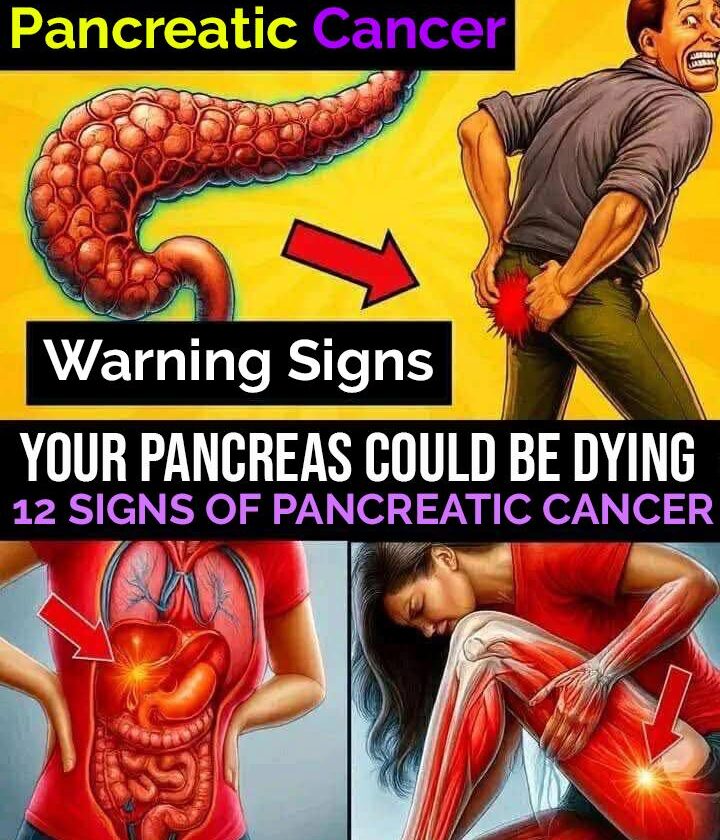
Pancreatic cancer is often called the “silent killer” — because by the time symptoms appear, the disease is frequently advanced. Here is everything doctors say you need to know about the warning signs that are too often dismissed.
Of all the major cancers, pancreatic cancer is among the most feared — and for painful but understandable reasons. It is one of the few cancers where survival rates have remained stubbornly low for decades, not because treatment options are absent, but because the disease is so rarely caught early enough for those treatments to work effectively.
The pancreas sits deep in the abdomen, tucked behind the stomach, which means tumors growing there cause little disruption to surrounding structures until they’ve grown considerably. By the time symptoms become undeniable, pancreatic cancer has often already spread beyond the pancreas itself — making curative surgery far less likely. This is the clinical reality that makes awareness of early warning signs so critically important.
The good news — and there is real good news here — is that some warning signs do appear in earlier stages in certain patients. Knowing what to look for, understanding why these symptoms occur, and having the language to describe them clearly to a doctor can make the difference between a diagnosis at a resectable stage and one that isn’t.
Understanding the Pancreas — Why Location Matters
🔬 What the Pancreas Does — and Why Tumors Are Hard to Detect Early
The pancreas is a glandular organ approximately 15cm long, located deep in the upper abdomen directly behind the stomach. It serves two critical biological functions: exocrine function (producing digestive enzymes that break down fats, proteins, and carbohydrates in the small intestine) and endocrine function (producing hormones including insulin and glucagon that regulate blood glucose levels).
Its location — deep, surrounded by major blood vessels and organs, and largely inaccessible to routine physical examination — means that tumors growing there cause minimal physical symptoms in early stages. There is no pancreatic equivalent of a breast self-exam or a visible skin change. The pancreas is silent until it isn’t.
The most common type — ductal adenocarcinoma — starts in the cells lining the pancreatic ducts, which carry digestive enzymes to the small intestine. This accounts for approximately 90% of pancreatic cancers. Symptoms vary significantly depending on whether the tumor develops in the head (most common, near the bile duct), the body, or the tail of the pancreas.
At a Glance: 11 Warning Signs and Their Urgency
| Symptom | Why It Occurs | Act Level |
|---|---|---|
| Jaundice | Bile duct obstruction by tumor | ⚠ Urgent |
| Abdominal / back pain | Tumor pressing on nerves | ⚠ Urgent |
| Unexplained weight loss | Metabolic disruption, enzyme loss | High — See Doctor |
| New-onset diabetes | Insulin-producing cell destruction | ⚠ Urgent |
| Pale, oily, foul stools | Blocked digestive enzymes | High — See Doctor |
| Dark urine | Bilirubin overflow into blood | ⚠ Urgent |
| Persistent fatigue | Systemic disease burden | High — See Doctor |
| Nausea / vomiting | Digestive disruption | Monitor + Consult |
| Itchy skin | Bile salts under skin from jaundice | High — See Doctor |
| Blood clots (DVT) | Cancer-related hypercoagulability | ⚠ Urgent |
| Fever and chills | Infection or tumor activity | High — See Doctor |
Every Symptom Explained in Detail
Jaundice — the yellowing of the skin and the whites of the eyes — is one of the most visible and diagnostically significant symptoms of pancreatic cancer, particularly when the tumor develops in the head of the pancreas, which sits immediately adjacent to the common bile duct.
When a tumor presses on or invades the bile duct, it blocks the flow of bile from the liver to the small intestine. Bilirubin — a yellow-orange pigment produced during the normal breakdown of red blood cells — then backs up into the bloodstream and deposits in body tissues, causing the characteristic yellow coloration of jaundice.
Pancreatic cancer-related jaundice typically presents as painless jaundice — a yellowing that appears without significant abdominal pain in early stages. This is an important clinical distinguishing feature. Jaundice in this context also frequently comes with dark, tea-colored urine (from excess bilirubin in the urine) and pale or clay-colored stools (from absence of bile pigment in the stool).
Why this matters
Painless jaundice in an adult over 50 is considered a red-flag symptom that warrants immediate medical investigation. Never wait to see if jaundice resolves on its own.
Pain in the upper abdomen or mid-back is one of the most common symptoms reported by pancreatic cancer patients — and one of the most frequently dismissed. In early stages, the pain may come and go, initially resembling muscle strain, indigestion, or a pulled back muscle. As the tumor grows, the pain becomes more persistent, more severe, and often worse at night or when lying flat.
The pain pattern is characteristic: a dull, gnawing ache in the upper abdomen that radiates through to the mid-back. This happens because the pancreas is located near a dense network of abdominal nerves (the celiac plexus), and as a tumor expands, it begins to compress these nerve fibers. Patients sometimes report that the pain is relieved slightly by leaning forward or curling into a fetal position — a clinical hint that distinguishes pancreatic pain from other abdominal causes.
The pain may also worsen noticeably after eating, as the digestive process increases demands on the already-compromised pancreas.
Why this matters
Back pain is extremely common and usually benign. The distinguishing features here are: upper abdominal involvement, worse after eating, worse when lying flat, and progressive worsening over weeks rather than days.
Significant, unintentional weight loss — losing 10% or more of body weight without dieting or changes in physical activity — is one of the most consistent symptoms reported in pancreatic cancer. It occurs through several overlapping mechanisms that make it particularly clinically meaningful.
First, as the pancreas loses function, its production of digestive enzymes (lipase, amylase, protease) drops. Without adequate enzyme production, fats, proteins, and carbohydrates in food are no longer properly broken down and absorbed. The body receives far less nutritional value from meals even when food intake remains normal. Second, cancer cells impose a significant metabolic burden — they consume glucose and energy at a high rate, contributing to a systemic wasting effect. Third, many patients eat less due to nausea, loss of appetite, or pain after eating, compounding the weight loss.
Why this matters
Unexplained weight loss of more than 5% of body weight over 6–12 months is a medical red flag for multiple serious conditions including cancer. It should never be attributed to stress or busy schedules without investigation.
One of the most clinically significant — and most commonly overlooked — warning signs of pancreatic cancer is the sudden onset of type 2 diabetes in a person with no previous history of blood sugar problems, particularly in people over 50.
The pancreas contains clusters of cells called islets of Langerhans, which produce insulin and glucagon to regulate blood glucose. When a tumor develops in or around these cells, their function is disrupted. The resulting sudden inability to regulate blood sugar can present as new-onset diabetes — often appearing months before other symptoms become obvious. Research suggests that roughly 25–50% of pancreatic cancer patients develop diabetes as a result of their cancer, often preceding diagnosis by 1–2 years.
This is a critical window. A patient who develops diabetes after age 50 with no family history or obesity should have pancreatic function evaluated — not just blood sugar managed. The diabetes here is the symptom, not the primary disease.
Why this matters
New diabetes in an older adult with no risk factors, or a sudden worsening of previously well-controlled diabetes, warrants imaging of the pancreas — not just adjustment of diabetes medication.
Changes in stool appearance — particularly pale, clay-colored, greasy, or unusually foul-smelling stools — are important warning signs that reflect two distinct problems occurring simultaneously in pancreatic cancer.
The first is the absence of bile pigments. When the bile duct is blocked by a tumor, bile cannot reach the intestines, removing the brown color it normally gives stool. The result is characteristically pale or clay-colored stool. The second is steatorrhoea — oily, fatty stool caused by the failure to adequately digest dietary fats. Without sufficient lipase (the pancreatic enzyme that breaks down fat), undigested fat passes through the intestine and is excreted in the stool, making it appear greasy, float in the toilet bowl, or be difficult to flush. The smell is often distinctively foul.
Patients may also experience loose stools, diarrhea, or general changes in bowel habits if the pancreatic duct is partially or fully obstructed.
Why this matters
Pale stool combined with dark urine (both symptoms of bile duct blockage) is a highly specific symptom combination that warrants urgent evaluation, especially when it appears alongside any other symptoms on this list.
When bilirubin builds up in the bloodstream (as happens when the bile duct is blocked), the kidneys attempt to filter and excrete the excess through urine. This causes urine to turn a noticeably darker color — ranging from orange-amber to dark brown, sometimes described as resembling strong tea or cola.
Dark urine appearing alongside pale stool is a highly significant symptom pairing — known clinically as the “pale stool, dark urine” sign of obstructive jaundice — and should always prompt immediate medical evaluation. It indicates that bile flow is significantly blocked, which in older adults without a history of gallstones is an urgent red flag for pancreatic or biliary cancer.
Why this matters
Dark urine on its own has many benign causes (dehydration being the most common). Dark urine combined with pale stool is a specific clinical pattern that is never normal and always requires investigation.
Cancer-related fatigue is qualitatively different from the tiredness that comes from a late night or a hard week. It is a profound, persistent exhaustion that doesn’t improve with rest, that makes even simple daily activities feel difficult, and that often precedes other more obvious symptoms by weeks or months.
In pancreatic cancer, fatigue arises from multiple simultaneous sources: the metabolic demand of cancer cell growth, the immune system’s ongoing inflammatory response to the disease, nutritional depletion from impaired digestion, and — when jaundice is present — the toxic effect of elevated bilirubin on energy systems. Patients frequently describe it as “a different kind of tired” — one that feels systemic rather than local.
Why this matters
Fatigue alone is rarely a reason to suspect cancer. However, profound fatigue in combination with weight loss, digestive changes, or any other symptoms on this list is a meaningful cluster that deserves clinical investigation.
Generalized itching — often intense, widespread, and with no visible rash — is a symptom of jaundice that many patients find among the most distressing. It occurs because when bile flow is blocked, bile salts (along with bilirubin) back up into the bloodstream and deposit in skin tissue. These salts irritate nerve endings directly under the skin, causing a deep, persistent itch that antihistamines cannot relieve.
The itching can appear before visible yellowing becomes apparent, making it an early warning sign of developing jaundice — and therefore of possible bile duct obstruction from a growing tumor. It is typically worse at night and is often described as internal rather than surface-level.
Why this matters
Unexplained generalized itching without a rash or allergic cause — especially in adults over 50 — should always be investigated. If it coincides with any yellowing of the eyes or skin, seek medical care urgently.
Pancreatic cancer has a well-documented association with venous thromboembolism — the formation of blood clots, particularly in the deep veins of the legs (deep vein thrombosis / DVT) or in the lungs (pulmonary embolism). In fact, unexplained DVT in a patient with no other risk factors is sometimes the first clinical finding that prompts investigation revealing an underlying cancer.
Cancer cells produce substances that trigger the body’s coagulation system, making blood more prone to clotting. This is known as Trousseau’s syndrome (also called migratory thrombophlebitis) and is particularly associated with pancreatic and gastric cancers. Symptoms include swelling, redness, warmth, or pain in one leg; sudden shortness of breath; or chest pain — all of which require emergency evaluation.
Why this matters
An unexplained blood clot in an older adult — especially with no recent surgery, long travel, or other clear risk factor — should always prompt investigation for an underlying malignancy.
As a pancreatic tumor grows, it can press on the duodenum (the first part of the small intestine) or the stomach, causing a feeling of fullness after small meals, nausea, and in more advanced cases, vomiting. The loss of digestive enzyme production also means food is less thoroughly digested, contributing to bloating, discomfort, and nausea after eating.
Loss of appetite (anorexia) frequently accompanies these symptoms — patients report simply not wanting to eat, or feeling sick when they do. Combined with weight loss and digestive changes, this cluster of symptoms reflects significant disruption to the entire digestive system.
Fever and chills in the context of pancreatic cancer most commonly arise from one of two sources. The first is cholangitis — infection of the bile duct that can develop when bile flow is blocked by a tumor and stagnant bile becomes infected. This presents as the classic Charcot’s triad: fever, jaundice, and right upper abdominal pain — a medical emergency.
The second source is the inflammatory response generated by the tumor itself. Advanced cancers release inflammatory mediators (cytokines) that elevate body temperature and cause systemic flu-like symptoms: fever, chills, sweating, and general malaise. Fever without obvious infection in an older adult with other digestive or constitutional symptoms always warrants investigation.
Who Is Most at Risk — Key Risk Factors
While pancreatic cancer can develop in anyone, several factors significantly elevate risk. Awareness of these factors can help determine who should be especially vigilant about the symptoms above.
Smoking
Smokers have approximately twice the risk of pancreatic cancer compared to non-smokers. It is one of the most significant modifiable risk factors.
Obesity
A BMI over 30 is associated with a 20% increased risk. Excess visceral (abdominal) fat appears particularly linked to pancreatic cancer development.
Age Over 50
Over 90% of pancreatic cancer cases occur in people aged 50 or older. Risk increases significantly with each decade after 50.
Family History
Having two or more first-degree relatives with pancreatic cancer significantly elevates personal risk and may qualify for surveillance programs.
Chronic Pancreatitis
Long-term inflammation of the pancreas (often related to alcohol use) increases cancer risk over time.
Heavy Alcohol Use
Chronic heavy alcohol consumption contributes to pancreatitis, which in turn elevates cancer risk over the long term.
🚨 Seek Medical Advice Without Delay If You Notice:
- Any yellowing of the skin or whites of the eyes — seek care immediately
- Dark urine combined with pale or clay-colored stool — this specific combination is a red flag for bile duct obstruction
- New diabetes in adults over 50 with no family history or obesity
- Unexplained weight loss of more than 5% of body weight over a few months
- Persistent upper abdominal pain radiating to the back, worsening when lying flat
- Unexplained DVT (blood clot) in a leg with no clear precipitating cause
- Any combination of two or more symptoms from this list appearing together
✅ Early Awareness Saves Lives — Here’s What You Can Do
Because pancreatic cancer has no effective routine screening test currently available for the general population, symptom awareness is the primary tool for earlier detection. Research consistently shows that patients who consult a doctor earlier — even when symptoms are vague — have better outcomes than those who wait.
If you are in a high-risk group (smoker, obese, family history, age over 60, chronic pancreatitis), speak with your GP about your risk profile and what monitoring, if any, is appropriate for your situation. Organizations including Pancreatic Cancer UK and the Pancreatic Cancer Action Network (PanCAN) provide excellent support, information, and advocacy for earlier detection.
Trust your instincts. If something feels persistently wrong — even if you can’t name exactly what it is — you have every right to ask for investigation.
Frequently Asked Questions
The earliest signs of pancreatic cancer are notoriously nonspecific — which is why the disease is so frequently diagnosed late. The most commonly reported early symptoms include vague upper abdominal discomfort or back pain, unexplained loss of appetite, and subtle weight loss. In some patients, new-onset diabetes appears months or even years before other symptoms, and represents a critically important early signal that is too often managed in isolation rather than investigated further. Jaundice — while highly visible — typically appears only when the tumor is in a more advanced stage or positioned near the bile duct.
Currently, there is no widely available, reliable screening test for pancreatic cancer in the general population. This is one of the major factors behind its poor prognosis. However, research into early detection is advancing rapidly — blood tests for specific cancer biomarkers (including CA 19-9, though imperfect) and imaging studies (endoscopic ultrasound, MRI/MRCP) can identify tumors at earlier stages when clinical suspicion is raised. People with a strong family history or known genetic risk factors (BRCA2, PALB2, Lynch syndrome) may be eligible for surveillance programs. For everyone else, symptom awareness remains the most important tool available.
Pancreatic cancer has one of the lowest five-year survival rates of any major cancer — approximately 11–12% in the UK and USA, compared to over 80% for breast and bowel cancer. The primary reason is late detection: fewer than 20% of cases are diagnosed when the cancer is still localized (confined to the pancreas) and potentially curable by surgery. When detected at a localized stage and treated with curative intent surgery (a Whipple procedure or distal pancreatectomy), five-year survival rates improve significantly — sometimes to 20–30% or higher. This stark difference is why awareness of symptoms, and prompt consultation when they appear, is so critical.
Yes — location matters significantly. Tumors in the head of the pancreas (most common) are more likely to cause jaundice and dark urine early, because they press on the bile duct. They also more commonly cause digestive enzyme disruption and oily stools. Tumors in the body or tail of the pancreas often produce no jaundice — they grow silently for longer and tend to present primarily with abdominal or back pain and weight loss. This is why tail tumors are typically diagnosed at a later stage than head tumors. New-onset diabetes and blood clots can occur with tumors in any location.
See your doctor promptly — don’t wait for symptoms to become severe or to see if they resolve on their own. When you go, be specific: describe each symptom, when it started, whether it’s worsening, and any relevant history (smoking, family cancer history, recent diabetes diagnosis). If your doctor is not immediately concerned but symptoms persist or worsen, it is completely appropriate to ask for further investigation or a referral to a gastroenterologist. You know your body — trust that sense that something is persistently wrong. The combination of symptoms matters as much as any individual sign.
You May Also Like
What Does Jaundice Look Like — And What Always Causes It?
Liver & Bile Health
DVT Warning Signs Most People Mistake for a Pulled Muscle
Blood Clot Awareness
Unexplained Weight Loss: 10 Medical Conditions That Cause It
Health Warning Signs
The 10 Most Important Health Checks Everyone Over 50 Should Get
Preventive Care
What Is CA 19-9 — The Pancreatic Cancer Biomarker Explained
Cancer Diagnostics
7 Cancers With High Survival Rates When Caught Early — Know the Signs
Cancer Awareness
Awareness Is the Earliest Intervention We Have
Pancreatic cancer is serious — but knowledge genuinely changes outcomes. The earlier a diagnosis is made, the more options exist. And awareness of symptoms is currently the single most powerful tool the general public has for catching this disease sooner.
Don’t dismiss persistent symptoms. Don’t wait to see if they improve on their own. If something feels wrong — especially any combination of symptoms on this list — see a doctor and ask directly. You are your own most important health advocate.
Share this article with someone you love. Awareness saves lives. 💜