
SEO Title:
What Does “WC” Mean on Bathroom Signs? The Surprising History Behind the Water Closet
Engaging Introduction
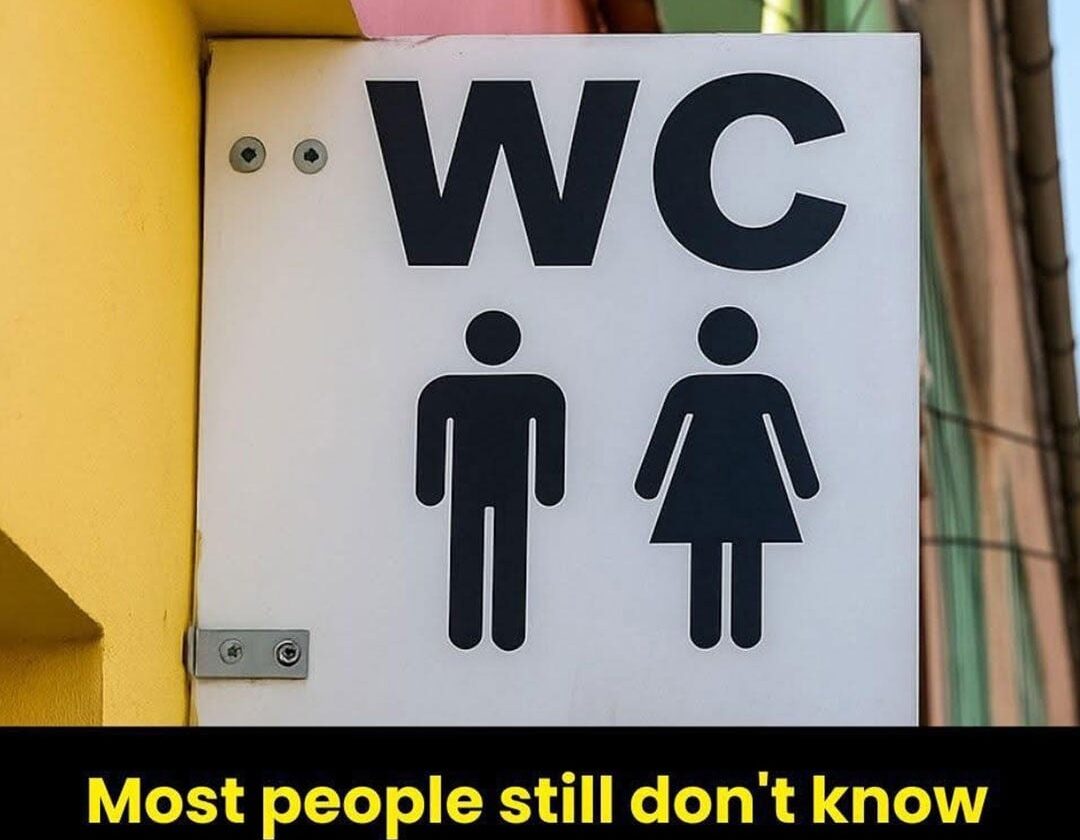
You have probably seen the letters “WC” hundreds of times without giving them much thought. They appear quietly on restroom doors in hotels, airports, train stations, restaurants, and historic buildings around the world. Most people instinctively know the sign points toward a bathroom — but surprisingly few know what the abbreviation actually means.
The answer is both simple and fascinating: WC stands for “Water Closet.” Once you learn it, the mystery suddenly makes perfect sense. What sounds old-fashioned today was once a modern innovation tied directly to the rise of indoor plumbing and private sanitation.
Small discoveries like this are strangely satisfying because they reveal how everyday language preserves pieces of history we rarely notice. A tiny sign on a wall suddenly becomes a reminder of how homes, technology, and even social customs evolved over time.
Why You’ll Love This Article
- Explains the hidden meaning behind a common everyday sign
- Reveals fascinating bathroom and plumbing history
- Easy-to-understand language with interesting historical facts
- Perfect for travel lovers and curious readers
- Helps explain why different countries use different bathroom terms
What Does “WC” Stand For?
WC stands for Water Closet.
Originally, the term described a small enclosed room containing a flush toilet. The phrase may sound unusual today, but during the rise of indoor plumbing, it was practical, descriptive, and completely modern for its time.
The “water” referred to the flushing mechanism, while “closet” referred to a small private room.
Simple. Functional. Direct.
Why Was It Called a “Water Closet”?
In the 19th century, indoor plumbing transformed homes and public sanitation. Before modern bathrooms became common:
- Toilets were often located outside in separate buildings
- Bathing usually happened in a different room
- Privacy and sanitation were treated as separate functions
- Many homes lacked running water entirely
When indoor flush toilets became more common, they were frequently installed in compact, dedicated rooms separate from bathing spaces. These rooms became known as water closets because they were small closet-like spaces equipped with water-powered toilets.
At the time, this was considered a major technological advancement and a sign of modern living.
Why Do So Many Places Still Use “WC” Today?
Even though the phrase “water closet” sounds old-fashioned in modern American English, the abbreviation WC remains widely used around the world.
You will commonly see WC signs in:
- European countries
- Hotels and hostels
- Airports and train stations
- Museums and historic buildings
- International tourist destinations
One major reason for its survival is simplicity. WC is short, recognizable, and largely language-neutral, making it ideal for international travelers.
Instead of translating “bathroom,” “restroom,” or “toilet” into dozens of languages, many public spaces simply use WC as a universal symbol.
Why Not Just Say “Bathroom”?
Different regions use different words for the same space, and each term reflects cultural habits and language history.
Bathroom
Common in the United States and Canada. Usually refers to a room containing a toilet and a bath or shower.
Restroom
Frequently used in public places in America. The term sounds softer and more polite in formal settings.
Toilet
Widely used in the United Kingdom, Europe, and many other countries. More direct and practical.
WC
Common in international signage because it is short and easy to recognize.
None of these terms are technically “wrong.” They simply developed differently across cultures and regions.
A Small Lesson in Language Evolution
One reason people enjoy learning about terms like WC is because it highlights how language changes over time.
Words that once sounded modern can gradually become historical while still remaining useful in everyday life. Linguists call this kind of shift language evolution or linguistic drift.
Examples include:
- “Telephone” becoming simply “phone”
- “Icebox” evolving into “refrigerator”
- “Wireless” becoming “Wi-Fi” in modern conversation
- “Water Closet” shrinking into WC signage
Even when original meanings fade, the abbreviations and symbols often survive for generations.
Is “WC” Still Commonly Used?
Yes — especially outside North America.
In many countries across Europe, Asia, and Latin America, WC remains one of the most recognizable public restroom labels. Travelers often notice it immediately in airports, hotels, restaurants, and train stations.
In some places, it is actually more common than the word “bathroom.”
Does “WC” Mean the Entire Bathroom?
Not always.
Traditionally, a water closet referred specifically to the room containing the toilet rather than the full bathroom.
In older architectural designs, toilets, sinks, and bathing areas were sometimes separated into different rooms.
Today, however, many people simply interpret WC as meaning “restroom” in general.
Why Hotels and Airports Prefer “WC”
International locations prioritize clarity.
Hotels, airports, train stations, and tourist destinations welcome visitors from many countries who may not speak the local language fluently.
Using WC signage offers several advantages:
- Easy to recognize internationally
- Short and space-efficient on signs
- Avoids translation confusion
- Familiar to global travelers
That is why you often notice WC signs more frequently while traveling abroad.
Is “Water Closet” Considered Outdated?
The full phrase “water closet” does sound somewhat old-fashioned in modern American English, but the abbreviation WC is far from obsolete.
Language usage depends heavily on:
- Geography
- Culture
- Historical habits
- Public signage standards
Much like the difference between “elevator” and “lift,” regional preferences shape which terms survive.
Fun Facts About Bathroom Terminology
- Ancient Romans used public communal toilets centuries before modern plumbing
- Early indoor toilets were considered luxury items for wealthy households
- The term “restroom” became popular in the United States during the early 20th century
- Many European countries still use pictograms and WC symbols instead of words
- Some modern homes still include rooms officially labeled “WC” in architectural floor plans
Frequently Asked Questions
What does WC stand for on bathroom signs?
WC stands for “Water Closet,” an older term for a room containing a flush toilet.
Why do European countries use WC?
Because it is short, internationally recognizable, and easy for travelers to understand regardless of language.
Is WC the same as a bathroom?
Generally yes in public signage, although historically it referred specifically to the toilet room.
Why do Americans say “restroom” instead of “toilet”?
American English often favors softer or more indirect terms in public settings.
Is “Water Closet” still used today?
The full phrase is less common in casual conversation, but WC remains widely used on signs worldwide.
You May Also Like
- Why Airplane Bathrooms Are So Small
- The Surprising History of Indoor Plumbing
- Why Some Countries Call Elevators “Lifts”
- Strange Hotel Signs Travelers Always Notice
- Common Words That Mean Different Things Around the World
- Hidden Meanings Behind Everyday Symbols
Final Thoughts
It is amazing how many small mysteries surround us in everyday life without us ever stopping to question them.
A simple sign like “WC” can quietly carry generations of history, technology, architecture, and language evolution inside just two letters. What once described a revolutionary indoor plumbing feature eventually became one of the world’s most recognizable restroom symbols.
Learning that WC means “Water Closet” may seem like a tiny discovery, but it is also a reminder that language is a living record of how people lived, communicated, and adapted over time.
So the next time you spot those familiar letters on a door, you will not just see a restroom sign.
You will see a small piece of history hidden in plain sight.