
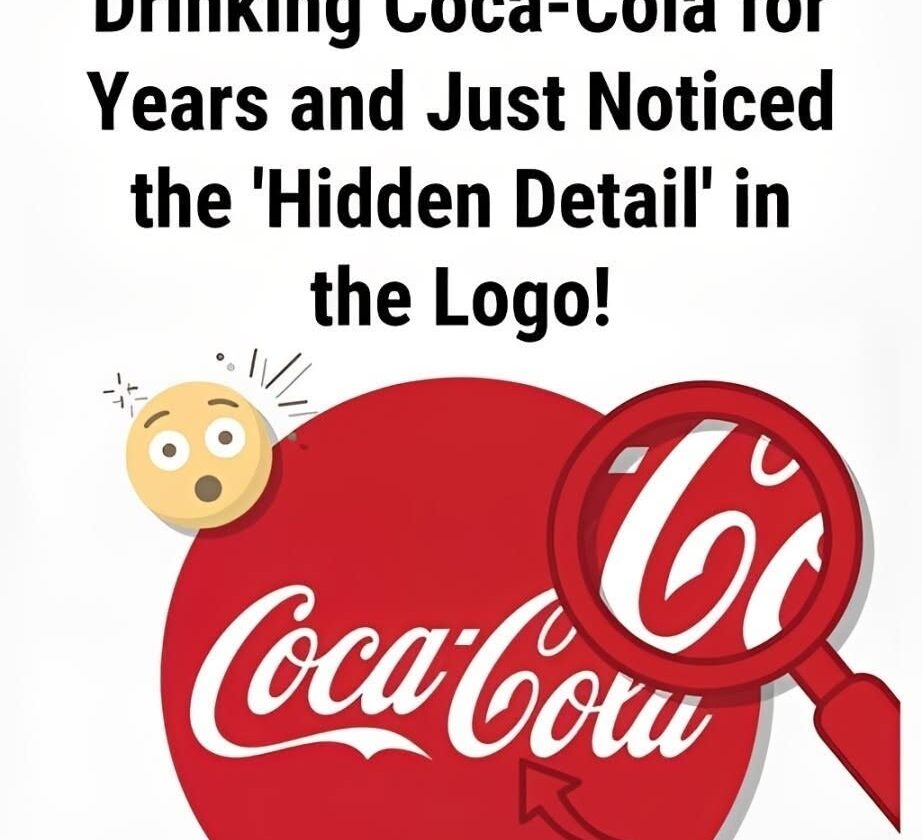
The Hidden Smile in the Coca-Cola Logo? Why Millions of People Can’t Unsee It
The Fascinating Connection Between Design, Psychology, and Everyday Perception
Have you ever looked at something hundreds of times and suddenly noticed a detail that completely changes the way you see it?
That’s exactly what happens to many people when someone points out a curious feature hidden within the famous Coca-Cola logo.
At first glance, the iconic red-and-white script appears exactly as it always has. But once someone mentions that the second “C” looks remarkably like a smiling mouth, it’s almost impossible to ignore.
Suddenly, the logo seems warmer.
Friendlier.
Almost as if it’s smiling right back at you.
But is this hidden smile an intentional piece of brilliant branding, or is it simply a fascinating trick of the human mind?
Let’s take a closer look.
The Hidden Smile Theory
The theory is surprisingly simple.
Supporters believe that the elongated curve extending from the second “C” in the Coca-Cola logo resembles a smile.
Once noticed, the shape appears to create a subtle feeling of happiness and friendliness.
Some marketing enthusiasts argue that this wasn’t an accident.
According to the theory, the logo’s design subtly reinforces positive emotions associated with the brand, including:
- Happiness
- Joy
- Optimism
- Friendliness
- Comfort
Considering Coca-Cola’s long history of advertising centered around happiness and togetherness, the idea seems plausible to many people.
After all, what better way to promote positivity than with a hidden smile?
Why Your Brain Sees a Smile
The explanation may actually have less to do with branding and more to do with psychology.
Humans are naturally programmed to recognize faces and emotional expressions.
In fact, our brains are so good at this that we often see faces where none actually exist.
This phenomenon is known as pareidolia.
Pareidolia occurs when the brain identifies familiar patterns in random objects.
Examples include:
- Seeing animals in clouds
- Spotting faces in electrical outlets
- Finding shapes in rock formations
- Recognizing expressions in everyday objects
The Coca-Cola logo may trigger the same response.
A curved line that resembles a smile can quickly become impossible to ignore once your brain makes the connection.
The Origins of the Coca-Cola Logo
To understand whether the smile was intentional, it helps to look at the logo’s history.
The Coca-Cola script was originally created in 1886 by Frank Mason Robinson, the company’s bookkeeper and advertising manager.
Robinson chose the elegant Spencerian script style because it was popular at the time and stood out in advertising.
According to historical accounts, he believed the two capital “C” letters would look attractive and distinctive in promotional materials.
His primary goal was creating a memorable brand identity.
Whether he intentionally embedded a smile remains unclear.
What Some Branding Experts Believe
Some logo analysts argue that the smile-like curve serves an important psychological purpose.
They suggest that visual elements associated with positive emotions can influence how consumers feel about a brand.
Research in marketing and consumer psychology has shown that people often respond emotionally to design elements without consciously realizing it.
A simple curve can feel more welcoming than a sharp angle.
A rounded shape can appear more approachable than a rigid one.
From this perspective, even if the smile wasn’t originally planned, it may still contribute to the logo’s friendly appearance.
The Problem With the Theory
While the smile theory is intriguing, there is one important complication.
The Coca-Cola logo has evolved over time.
Many of the specific design details people point to today were refined through various updates and standardizations over the decades.
Because of these changes, proving that a hidden smile was part of the original design is difficult.
More importantly, Coca-Cola’s official historical materials generally describe the logo as a distinctive trademark created in Spencerian script—not as a secret psychological message.
That doesn’t mean the smile isn’t there.
It simply means there’s no definitive evidence that it was intentionally placed there from the beginning.
Why Hidden Messages Fascinate Us
Whether it’s a logo, painting, photograph, or advertisement, people love discovering hidden details.
Part of the appeal comes from feeling like we’ve uncovered a secret that others missed.
Another reason is that our brains naturally search for patterns and meaning.
When we discover something unexpected, we experience a small burst of excitement and satisfaction.
That’s why theories about hidden symbols and messages often spread quickly online.
They invite people to participate in the discovery themselves.
Other Famous Logos People Analyze
The Coca-Cola smile isn’t the only logo that sparks discussion.
Over the years, people have identified hidden symbols in numerous famous brands, including:
- Arrows hidden within lettering
- Animals concealed in negative space
- Shapes that symbolize company values
- Geographic references embedded in designs
Some of these hidden elements were intentional.
Others are simply interpretations that gained popularity over time.
Is the Smile Real?
The answer depends on how you define “real.”
If you’re asking whether the second “C” visually resembles a smile, many people would say yes.
If you’re asking whether the smile was deliberately designed as a subconscious marketing tool, the evidence is less clear.
There is no universally accepted proof that the original designer intended it as a hidden message.
What we do know is this:
Millions of people now see it.
And once they do, they rarely stop seeing it.
Frequently Asked Questions
Does the Coca-Cola logo really contain a smile?
Many people believe the curve of the second “C” resembles a smile, although interpretations vary.
Was the smile intentionally designed?
There is no confirmed evidence from Coca-Cola that the smile was deliberately included.
What is pareidolia?
Pareidolia is a psychological phenomenon where people perceive familiar patterns, such as faces or shapes, in unrelated objects.
Who designed the Coca-Cola logo?
The original Coca-Cola script was created by Frank Mason Robinson in 1886.
Why do people notice hidden messages in logos?
Humans naturally seek patterns and meaning, making us especially likely to spot symbols and shapes in familiar designs.
You May Also Like
- Hidden Symbols Found in Famous Company Logos
- The Psychology Behind Brand Recognition
- Why Our Brains See Faces Everywhere
- The Surprising History of Coca-Cola’s Branding
- Famous Design Secrets That Went Unnoticed for Years
- How Logos Influence Consumer Behavior
Final Thoughts
Whether the hidden smile in the Coca-Cola logo was intentional or simply a happy accident may never be fully known.
But perhaps that’s what makes the story so fascinating.
A single curved line has inspired countless conversations, marketing debates, and psychological discussions—all because people noticed something they had overlooked for years.
And that’s the beauty of great design.
Sometimes the most memorable details aren’t the ones that were planned.
They’re the ones our minds discover on their own.
The next time you see the Coca-Cola logo, take another look at that second “C.”
You might find yourself smiling too.