Why Does My Dog Lick Me? The Surprising Reasons Behind This Common Behavior
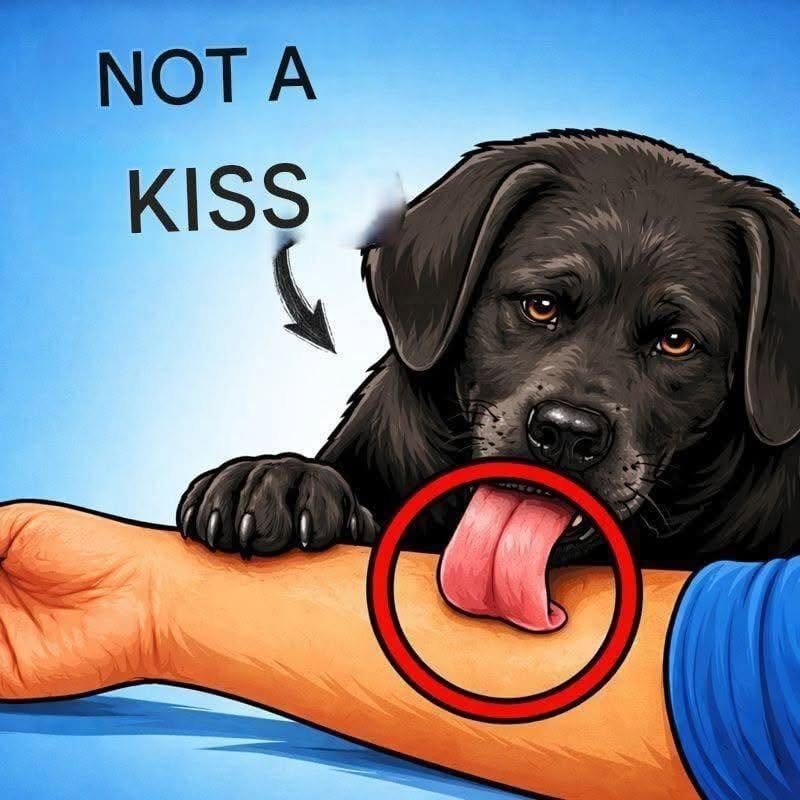
If your dog constantly licks your hands, face, or arms, you might assume the message is simple: “I love you.”
Sometimes, that’s exactly what your dog is communicating. But licking is much more complicated than a canine version of a kiss.
Dogs use licking for communication, social bonding, exploration, attention-seeking, and sometimes stress relief. To understand what your dog is trying to tell you, it’s important to look at the licking together with the rest of their body language.
Why Do Dogs Lick Humans?
Licking begins early in a dog’s life. Puppies lick their mother and interact with littermates through various forms of physical contact and communication.
As dogs grow older, some of these behaviors continue into their relationships with humans.
A dog may lick you because of:
- Affection
- Social bonding
- Attention-seeking
- Curiosity
- The taste of your skin
- Appeasement or submissive behavior
- Anxiety or stress
- A learned habit
So the same behavior can have completely different meanings depending on the situation.
1. Your Dog May Be Showing Affection
One of the most common explanations is social bonding.
Dogs often lick people they feel comfortable around. If your dog approaches you with a relaxed body, soft eyes, loose posture, and a gently wagging tail, licking may simply be part of a friendly interaction.
For some dogs, physical contact is an important way of maintaining their relationship with their favorite people.


However, it’s important not to assume that every lick automatically means love.
The surrounding behavior provides valuable clues.
2. Your Skin May Taste Interesting
Sometimes your dog isn’t trying to express an emotional message at all.
Human skin naturally contains salt from sweat. It can also carry traces of food, skincare products, and other scents that dogs find interesting.
Dogs experience the world largely through their extremely powerful sense of smell, and taste can provide additional information.
If your dog becomes especially interested in licking you after exercise, cooking, eating, or spending time outdoors, simple curiosity may explain the behavior.
3. Licking Can Be a Way to Get Your Attention
Dogs are excellent observers of cause and effect.
If licking you consistently produces a reaction—petting, talking, laughing, eye contact, or even being told to stop—your dog may learn that licking is an effective way to get your attention.
In other words, your dog may have discovered:
“When I do this, my human responds.”
Even negative attention can sometimes reinforce a behavior.
If you don’t want your dog licking you constantly, calmly redirecting the behavior toward another activity can be more effective than repeatedly making a dramatic reaction.
4. Your Dog Could Be Feeling Stressed
Licking isn’t always a sign of happiness.
Some dogs lick themselves, other dogs, objects, or people when they feel nervous or uncomfortable.
Pay attention to what happens around the licking.
Other signs of stress can include:
- Yawning when there is no obvious reason to be tired
- Lip licking
- Pacing
- Avoiding eye contact
- A tucked or lowered tail
- Stiff posture
- Excessive panting
- Trying to move away
If licking appears alongside several of these behaviors, it may be better understood as part of a stress response rather than simple affection.
5. Licking Can Be Social Communication
Dogs don’t communicate exclusively through barking and whining.
Body posture, facial expressions, movement, scent, touch, and other behaviors all contribute to canine communication.
Licking can sometimes function as an appeasement or socially deferential behavior, particularly when a dog is interacting with another individual.
That’s why observing the entire interaction is much more informative than focusing on the lick itself.