
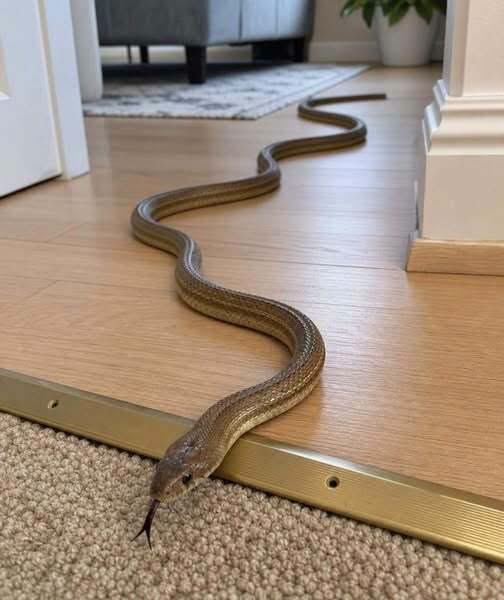
Snake in the House? What to Do Safely, Why Snakes Get Inside, and How to Keep Them Out
Finding a snake inside your home can be a terrifying experience, especially when you cannot immediately tell whether it is harmless or potentially dangerous. One moment everything feels normal, and the next you are wondering how a snake managed to get indoors in the first place.
The good news is that a snake inside your house does not automatically mean there is an immediate threat. Snakes may enter homes while searching for food, shelter, warmth, water, or protection from extreme weather. Small openings around doors, windows, pipes, vents, garages, and foundations can sometimes provide an easy route inside.
Knowing how to respond calmly can make a stressful situation much safer. Instead of approaching or trying to catch the snake yourself, keep your distance, protect children and pets, and contact a trained wildlife professional when necessary.
Why You’ll Want to Know What to Do
- Learn what can attract snakes to a home.
- Find out what to do if you discover a snake indoors.
- Understand why trying to catch an unknown snake can be risky.
- Discover simple ways to reduce potential entry points.
- Learn how removing rodents, insects, and outdoor clutter can make your property less attractive to snakes.
Why Do Snakes Enter Houses?
Snakes generally do not enter homes because they are looking for people.
Like other wild animals, they are usually responding to basic survival needs.
Food
One of the biggest reasons a snake may approach a home is the availability of prey.
Rodents and insects can attract snakes to residential properties. If mice, rats, or other potential food sources are present around a garage, basement, shed, crawl space, or yard, snakes may follow those food sources.
This is why rodent prevention and pest control can be an important part of keeping unwanted wildlife away from your home.
Shelter
Snakes may also look for protected places where they can hide.
A garage, crawl space, basement, shed, woodpile, or area beneath outdoor materials can provide shelter from predators and harsh weather.
Warmth and Weather Protection
Extreme temperatures can cause wildlife to search for more suitable environments.
Depending on the season and local climate, a building may offer protection from excessive heat, cold temperatures, rain, or other environmental conditions.
Easy Entry Points
A snake does not need a large opening to get inside.
Gaps around doors, windows, pipes, vents, foundations, and garages can potentially provide access. Damaged screens, poorly sealed openings, and cracks around utility lines may also deserve attention.