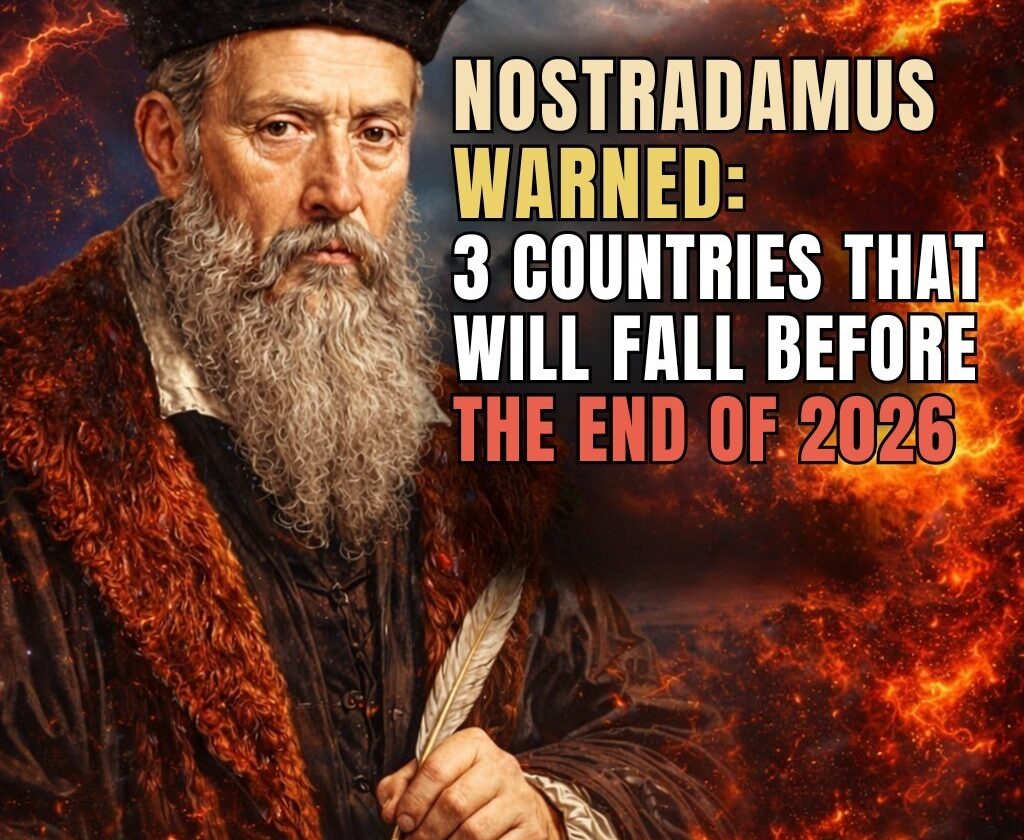
For more than four centuries, the name Nostradamus has shimmered at the edge of history—a blend of physician, mystic, and enigma whose cryptic verses continue to captivate imaginations. Born Michel de Nostredame in 1503, this French Renaissance scholar trained as a doctor, treating plague victims with herbal remedies while quietly studying astrology and ancient cosmologies. In an era when bold predictions could invite persecution, he crafted his famous Prophecies (first published in 1555) in deliberately obscure language—a tapestry of metaphor, multilingual wordplay, and celestial symbolism designed to veil meaning as much as reveal it.
His legacy endures not because his quatrains are clear, but because they are open. Like Rorschach inkblots cast in verse, they invite each generation to see its own anxieties reflected in their shadows. Today, as geopolitical tensions rise and climate disruptions intensify, interest in Nostradamus has resurged—not as proof of foresight, but as a mirror of our moment.
Three Modern Interpretations—And Why They Resonate
Scholars universally agree: Nostradamus did not predict specific future events. His quatrains are too vague, too poetic, and too rooted in 16th-century cosmology to function as literal forecasts. Yet three themes recur in contemporary readings—each reflecting present-day concerns more than Renaissance prophecy:
1. The Shadow of Global Conflict
1. The Shadow of Global Conflict
Certain quatrains describe prolonged warfare involving “eastern” powers and references to a “27-year war.” Modern interpreters sometimes map these phrases onto tensions between major powers—framing them as warnings of a “third world war.” Yet the original text names no nations, describes no technologies beyond its era, and could equally describe the Thirty Years’ War (1618–1648) that followed Nostradamus’s death. What resonates today is not prediction—but our own fear of escalation in an unstable world.
2. Earth in Turmoil
Verses mentioning “fire from the sky,” floods, and withering harvests feel eerily familiar in an age of climate anxiety. Some read these as prescient warnings of ecological collapse. But such imagery also describes volcanic eruptions, biblical plagues, and medieval famines—all within Nostradamus’s historical frame of reference. The power of these lines lies not in foresight, but in their timeless evocation of nature’s wrath—a theme that gains urgency as our planet warms.
3. The Unraveling of Order
Other quatrains speak of “kings cast down” and “old orders broken.” In eras of political upheaval—from the French Revolution to Brexit—readers have seen their own revolutions in these words. Today, amid democratic backsliding and institutional distrust, the verses feel newly relevant. Yet again: Nostradamus wrote of his world’s fragility. We hear echoes of ours.
The Cycle of Interpretation
A key to understanding Nostradamus lies in recognizing a phenomenon scholars call retroactive prophecy: vague texts are reinterpreted after events occur, creating an illusion of prediction. When a war erupts, a flood devastates a coast, or a leader falls, enthusiasts comb quatrains for phrases that could fit—and declare confirmation. The process works precisely because the language is ambiguous enough to accommodate almost any outcome.
This isn’t deception—it’s human nature. We seek patterns in chaos. We crave meaning in uncertainty. Nostradamus’s genius (intentional or not) was crafting verses spacious enough to hold centuries of collective anxiety.
A Balanced Perspective
Nostradamus was a product of his time—a learned man navigating faith, science, and power in a volatile age. His writings reflect Renaissance cosmology, not 21st-century geopolitics. Historians emphasize:
✓ His quatrains contain no verifiable predictions of specific future events
✓ Their power lies in poetic ambiguity, not prophetic accuracy
✓ They reveal more about our hopes and fears than about his foresight
Yet dismissing them entirely misses their cultural value. These verses endure because they give form to a universal human impulse: the desire to believe that chaos has pattern, that suffering has purpose, that someone—somewhere—understands the arc of history.
Final Reflection
Nostradamus offers not a window into the future, but a mirror to the present. When we read his quatrains today, we aren’t decoding destiny—we’re confronting our own uncertainties about war, climate, and societal change. And perhaps that is their true gift: not prediction, but perspective.
The most profound prophecy may not be foretelling events—but awakening us to the choices that shape them. In an age of rapid change, that awareness—not a cryptic verse—is what truly prepares us for what lies ahead.
Note: This reflection honors historical scholarship while acknowledging cultural fascination. Nostradamus’s writings remain a subject of academic study—not validated prophecy.