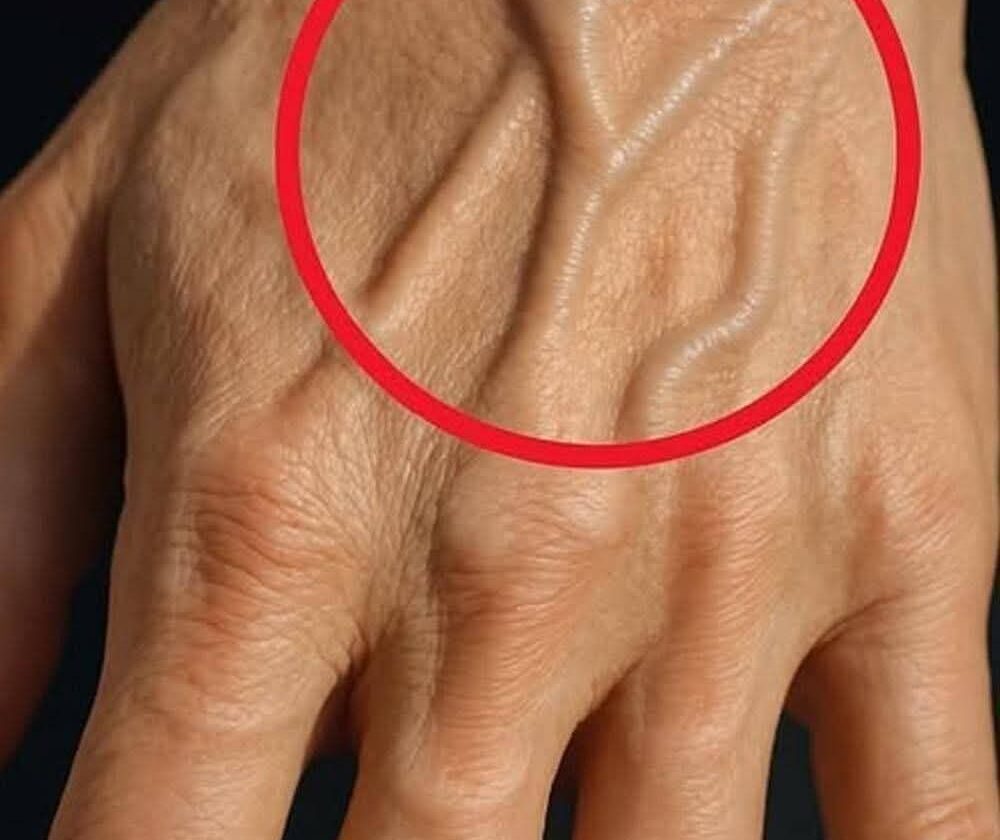
It’s easy to look down at your hands—especially when veins seem more visible—and wonder if something deeper is going on inside your body. With so much information online, it’s common to see claims linking visible veins to serious internal issues.
Here’s the honest, science-based truth:
Most of the time, visible veins in your hands are completely normal—and not a sign of organ problems.
Let’s break it down clearly.
🔍 Why Your Hand Veins May Look More Visible
In the vast majority of cases, prominent veins are simply due to natural factors:
✔️ Aging
As you get older, your skin becomes thinner and loses collagen. This makes veins underneath more noticeable.
✔️ Low Body Fat
Less fat under the skin = less “coverage,” so veins appear more defined.
✔️ Genetics
Some people naturally have more visible veins—just like eye color or height.
✔️ Exercise
After physical activity, increased blood flow makes veins temporarily expand and stand out.
✔️ Heat
Warm temperatures cause blood vessels to widen, making veins more visible.
✔️ Mild Dehydration
When fluid levels drop slightly, veins can appear more pronounced.
👉 Key point: All of these are normal and harmless.
🧠 The Myth: Do Visible Veins Mean Organ Problems?
Short answer: No.
There is no medical evidence linking visible hand veins to problems with your body’s filtration system (like the kidneys).
In fact, the logic often goes the opposite way.
💧 What Happens When the Body Has Fluid Problems?
When the body’s filtration system isn’t working properly, it usually leads to fluid retention, not loss.
That causes:
- Swelling in hands, feet, or face
- Puffiness under the skin
👉 And here’s the important part:
Swelling actually makes veins LESS visible, not more.
⚠️ Real Signs That Deserve Attention
Instead of focusing on veins, watch for symptoms that doctors actually recognize as important:
- Persistent swelling (hands, ankles, face)
- Changes in urination (more or less than usual)
- Foamy urine
- Ongoing fatigue
- High blood pressure
- Shortness of breath
- Loss of appetite or nausea
These signs are linked to real conditions like Chronic Kidney Disease and should be evaluated by a healthcare professional.
🏥 When Veins Do Look Different for Medical Reasons
There is one exception—but it’s not what most people think.
Patients with advanced kidney disease may undergo Dialysis.
Doctors create a special connection (called a fistula) in the arm, which makes veins look larger and more prominent.
👉 But this is:
- A planned medical procedure
- Not a natural symptom
- Not something that appears before diagnosis
🧪 How Doctors Actually Check Organ Health
Doctors don’t look at your hands to assess internal health.
They rely on:
- Blood tests
- Urine tests
- Blood pressure readings
- Medical history and symptoms
These provide real, measurable answers.
💡 What Visible Veins Really Mean
When you see veins on your hands, you’re usually just seeing:
- Your skin thickness
- Your hydration level
- Your body composition
- Your genetics
👉 Not your organ function.
✅ The Bottom Line
Visible hand veins are almost always:
- Normal
- Harmless
- Not a warning sign of internal disease
If you feel well and don’t have concerning symptoms, there’s no reason to worry.
🧠 A Smarter Way to Think About It
Instead of asking:
“Do my veins look normal?”
Ask:
- Do I feel persistent swelling?
- Has my energy changed significantly?
- Are there changes in my body’s normal patterns?
👉 That’s where real health signals live.