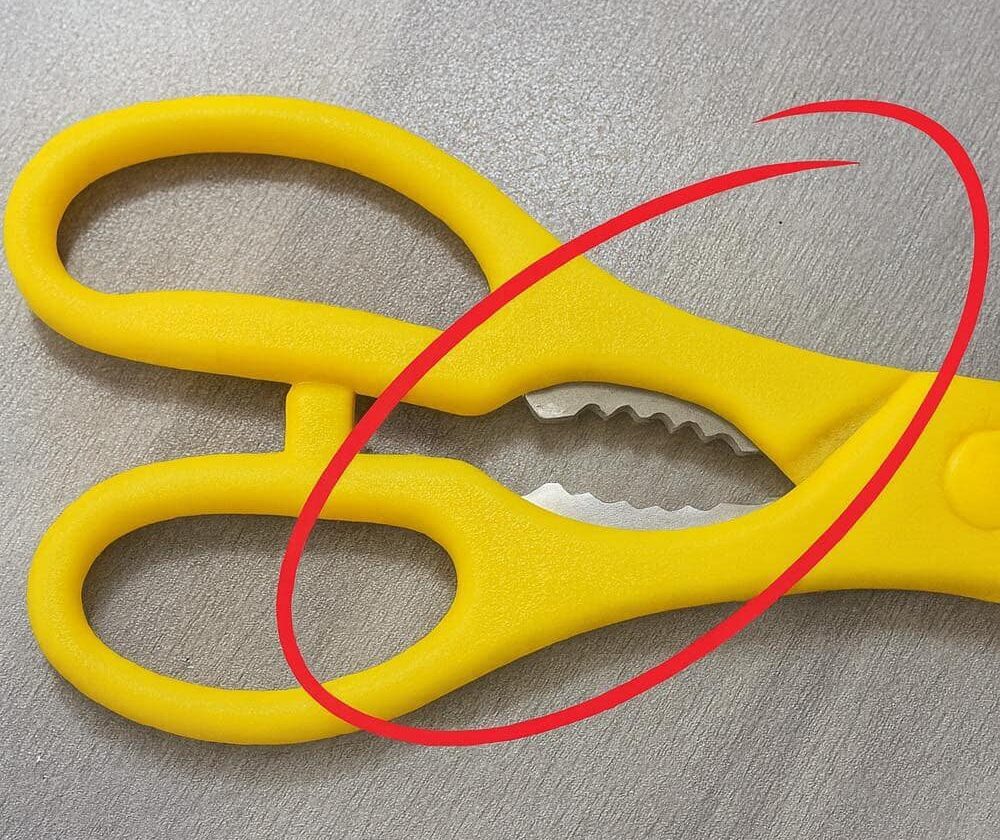
Tucked between the handles of your kitchen scissors—just behind where your fingers rest—lives a small, serrated feature many overlook. At first glance, those jagged teeth might seem decorative or accidental. But this unassuming detail is anything but ornamental. It’s a thoughtfully engineered grip tool, designed to solve everyday kitchen frustrations with quiet ingenuity.
Let’s uncover what it truly does—and why it deserves a permanent place in your culinary toolkit.
🔍 What Is This Feature, Exactly?
That ridged section—sometimes called a jar opener, nut cracker, or bone gripper—is fundamentally a traction enhancer. Positioned where the handles curve inward, it’s crafted from metal or reinforced plastic. When you partially close the scissors, the grooves interlock to create a powerful, non-slip surface capable of gripping even the most stubborn objects.
Think of it as your scissors’ silent partner—always present, always ready to lend extra leverage when your hands alone aren’t enough.
🫙 Three Clever Ways to Put It to Work
1. Conquer Stubborn Jars in Seconds
That pickle jar refusing to budge? Place the lid between the serrated grooves, close the scissors just enough to grip firmly, then twist. The textured surface prevents slipping while the scissors’ leverage distributes pressure evenly—no rubber bands or towel wraps required. Especially helpful for those with arthritis or limited hand strength.
2. Crack Nuts Without a Dedicated Tool
No nutcracker? No problem. Nestle a walnut or pecan into the grooved slot and apply gentle, steady pressure until the shell yields. Rotate and repeat as needed. The key is patience—firm but controlled pressure cracks the shell without pulverizing the nut inside.
3. Handle Poultry with Precision
Heavy-duty kitchen shears often feature reinforced grips designed to secure small bones. Hold a chicken wing or drumette in the serrated section while cutting—those teeth prevent slippage, giving you control and confidence when breaking down birds. (Note: Use only sturdy poultry shears—not delicate scissors—for this task.)
Unexpected Bonus Uses
Unexpected Bonus Uses
This humble grip tool proves surprisingly versatile:
→ Crack crab legs or lobster shells for seafood feasts
→ Pop open stubborn plastic caps on juice or milk containers
→ Secure twist ties while snipping them cleanly
→ Grip slippery bottle caps when pouring oils or vinegars
Essentially, if an object resists your grasp, this feature may hold the solution.
Why Manufacturers Include It
In an era of kitchen minimalism, multi-functional tools earn their keep. This single feature transforms ordinary scissors into a compact multi-tool—reducing drawer clutter while expanding capability. For small kitchens or those embracing “less but better” design, it’s a stroke of practical genius.
Do All Scissors Have This?
Not universally—but you’ll commonly find it on:
✓ Heavy-duty kitchen shears
✓ Poultry or boning scissors
✓ Multi-purpose utility scissors
To check yours: partially close the scissors. If ridged grooves align to form a gripping surface between the handles—you’ve got this hidden helper ready to go.
Gentle Reminders for Safe Use
→ Respect the tool’s limits: Avoid forcing extremely hard shells or large bones—this can damage scissors or cause injury.
→ Mind your fingers: Keep hands clear of the closing grooves to prevent pinching.
→ Clean thoroughly: Food particles (especially from meat or sticky residues) can lodge in the serrations. Wash carefully after use.Meat & Seafood
→ Stay kitchen-focused: Resist using it for non-food tasks like opening paint cans—this compromises both safety and longevity.
The Quiet Wisdom of Thoughtful Design
What appears to be a quirky notch is, in truth, a testament to functional elegance. It asks nothing of you—no extra cost, no learning curve—yet stands ready to simplify moments of frustration.
Your kitchen scissors were never just for cutting.
With this feature, they become:
→ A jar opener when your hands tire
→ A nutcracker when the proper tool is missing
→ A steady hand when precision matters most
So next time you reach for your scissors, pause.
Run your thumb over those small teeth.
And remember:
The most helpful tools often hide in plain sight—
waiting not for admiration, but for use.
Try it today.
That stubborn jar lid won’t know what hit it.