
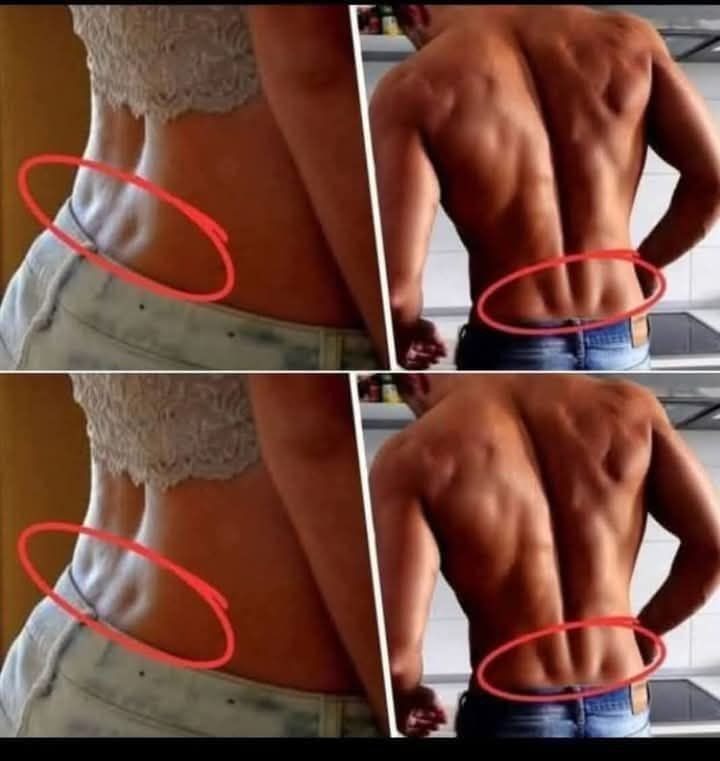
The Truth About “Dimples of Venus” — What They Really Mean for Your Body and Health
Those small indentations just above the buttocks—often called “Dimples of Venus”—have fascinated people for centuries. Some see them as a symbol of beauty. Others associate them with fitness, attractiveness, or even good genetics. Social media and fitness culture have only amplified the attention around them.
But beyond aesthetics, these dimples actually have a very real anatomical explanation.
For most people, they are completely harmless and simply part of natural body structure. However, understanding the difference between ordinary “Venus dimples” and rare medical warning signs can help you better understand your body and know when it may be worth speaking to a healthcare professional.
Whether you’ve noticed them after weight loss, wondered why some people have them and others don’t, or simply became curious after seeing them online, here’s what science, anatomy, and medical experts say about these famous lower-back dimples.
What Are “Dimples of Venus”?
The “Dimples of Venus” are small, symmetrical indentations located on the lower back, just above the buttocks.
They are also known medically as:
| Term | Meaning |
|---|---|
| Dimples of Venus | Common beauty-related name |
| Back Dimples | Casual everyday term |
| Sacral Dimples | Broader anatomical term |
| PSIS Dimples | Anatomical reference to pelvic landmarks |
These dimples appear where the posterior superior iliac spine (PSIS)—a part of the pelvic bone—sits close to the skin’s surface.
Strong ligaments connect the skin to this area of bone, creating a visible indentation in some people.
Why Do Some People Have Them?
The biggest factor is genetics.
Some people naturally inherit pelvic structures and ligament attachments that create visible dimples. Others simply don’t.
Several factors can influence how visible they are:
| Factor | Effect |
|---|---|
| Genetics | Primary reason they appear |
| Body fat percentage | Lower body fat may make them more noticeable |
| Muscle tone | Strong core and glute muscles can define the area |
| Pelvic shape | Bone structure affects visibility |
| Skin elasticity | Firmer skin may accentuate dimples |
This means you cannot fully “create” Dimples of Venus through exercise alone if your anatomy does not naturally support them.
Are Dimples of Venus a Sign of Fitness?
Not necessarily.
Many people notice their dimples more after:
- Weight loss
- Core strengthening
- Pilates or yoga
- Increased muscle definition
But having these dimples does not automatically mean someone is healthier or fitter than someone without them.
They are primarily an anatomical feature—not a health score.
The Historical Fascination with Venus Dimples
The term “Dimples of Venus” comes from the Roman goddess of beauty and love, Venus.
In Renaissance art and classical paintings, these dimples were often portrayed as symbols of:
- Fertility
- Grace
- Femininity
- Sensuality
- Natural beauty
Artists like Sandro Botticelli famously included them in works such as The Birth of Venus.
Today, they continue to be highlighted in fashion photography, swimwear campaigns, and fitness culture.
Are Dimples of Venus Harmful?
For almost all adults, the answer is no.
These dimples are generally:
| Characteristic | Meaning |
|---|---|
| Pain-free | Not associated with disease |
| Genetic | Usually inherited |
| Common | Seen in many body types |
| Benign | Typically medically harmless |
Most people with Venus dimples never experience any problems related to them.
Can Men Have Dimples of Venus?
Absolutely.
Although they’re discussed more often in women due to beauty trends, men can also have them.
In men, they’re sometimes casually called “Apollo dimples,” though anatomically they are the same feature.
Can Exercise Make Them More Visible?
Yes—sometimes.
Exercises that may emphasize the area include:
- Planks
- Pilates
- Yoga
- Glute bridges
- Deadlifts
- Core training
These activities can tone surrounding muscles and reduce body fat, which may make existing dimples easier to see.
But exercise alone cannot fundamentally change bone structure.
When Should You Pay Attention?
While normal Venus dimples are harmless, there are rare situations where a sacral dimple may deserve medical evaluation.
In Adults: Warning Signs
See a healthcare provider if you notice:
| Symptom | Possible Concern |
|---|---|
| Pain or tenderness | Irritation or inflammation |
| Redness or swelling | Infection or cyst |
| Drainage or discharge | Possible pilonidal cyst |
| Sudden changes | Skin or tissue abnormality |
| Numbness or weakness | Rare neurological issue |
These symptoms are uncommon but worth checking.
Sacral Dimples in Babies: Different Situation
Doctors routinely examine newborns for sacral dimples.
Most infant dimples are harmless, but some features may indicate underlying spinal abnormalities.
Doctors may recommend imaging if a dimple is:
- Very deep
- Large
- Located high above the buttocks
- Associated with a tuft of hair
- Accompanied by skin discoloration or drainage
Fortunately, the vast majority are benign.
Do Dimples of Venus Affect Back Pain?
There is no proven evidence that normal Venus dimples directly cause back pain.
However, the PSIS region is important in:
- Pelvic alignment
- Movement patterns
- Physical therapy assessments
If someone experiences chronic lower back pain, the issue usually involves muscles, joints, nerves, or posture—not the dimples themselves.
Can They Change Over Time?
Yes.
Dimples may become:
- More visible after weight loss
- Less noticeable with aging
- More defined during periods of muscle toning
- Altered slightly after pregnancy or body composition changes
The underlying anatomy remains the same, but visibility can fluctuate.
Common Myths About Venus Dimples
Myth #1: Only women have them
False. Men can have them too.
Myth #2: They indicate fertility
No scientific evidence supports this.
Myth #3: Exercise creates them
Exercise may enhance visibility but cannot create bone structure.
Myth #4: They are linked to better health
They are not a medical indicator of health or fitness.
Why Social Media Obsession Can Be Misleading
Platforms like Instagram and fitness influencers often portray Dimples of Venus as a “perfect body” feature.
But it’s important to remember:
- Lighting changes visibility
- Posing enhances contours
- Body filters alter appearance
- Genetics play the biggest role
Human anatomy naturally varies from person to person.
Tips for Body Confidence
Whether you have Venus dimples or not, your body does not need to meet internet trends to be valuable.
Healthy body image starts with focusing on:
- Strength
- Function
- Energy
- Mobility
- Self-respect
Not every physical feature needs to become a beauty standard.
Frequently Asked Questions
Can Dimples of Venus disappear?
Yes. Weight gain, aging, pregnancy, or reduced muscle tone can make them less visible.
Are they rare?
No. Many people naturally have them.
Can surgery create them?
Cosmetic procedures exist, but natural dimples are determined mostly by anatomy and genetics.
Are they connected to spinal problems?
Usually not. Normal symmetrical dimples are generally harmless.
Do they mean someone is athletic?
Not necessarily. They are mostly genetic.
Final Thoughts
Dimples of Venus are one of those fascinating body features that sit at the intersection of anatomy, art, beauty, and culture.
For most people, they are simply harmless indentations created by natural pelvic structure and connective tissue. They do not define beauty, fitness, fertility, or worth.
Still, understanding your body—and knowing which changes deserve attention—is always valuable.
The human body is wonderfully diverse. Some people have dimples. Some don’t. Neither is better.
And perhaps that’s the most important reminder of all: your body is not a trend. It’s your home.