Viral “Which Baby Is the Girl?” Quiz Explained: What Your Choice Really Says About You
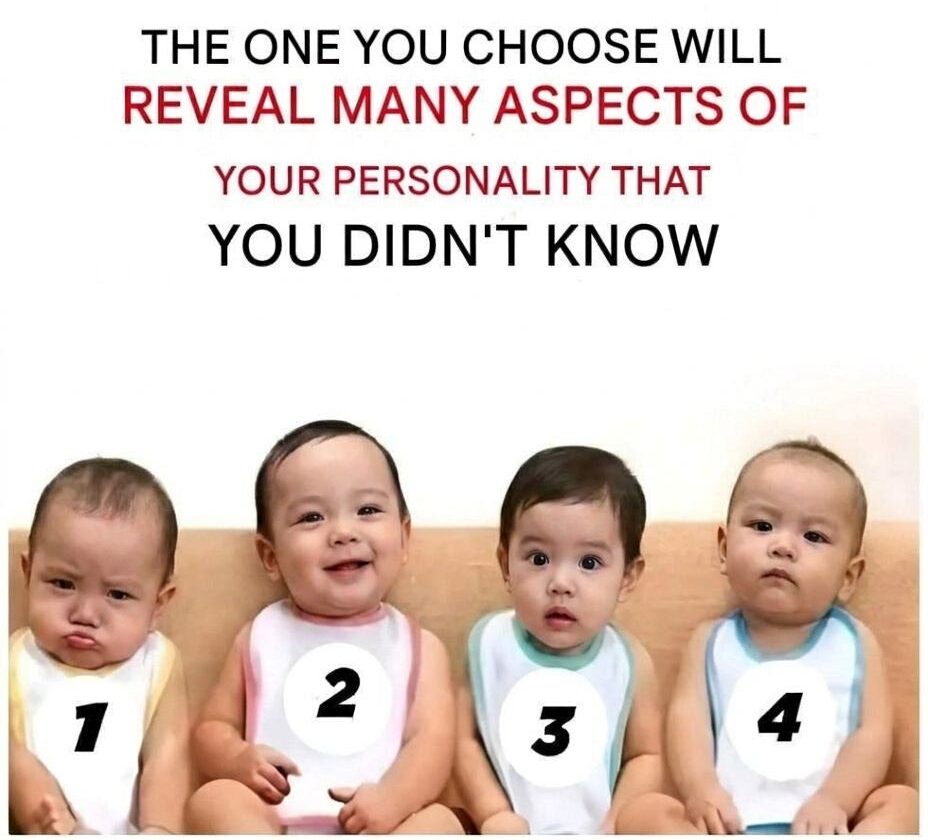
You’ve probably seen it while scrolling online: four adorable babies lined up side by side with a simple challenge — “Which one is the little girl?” The post usually promises that your answer reveals something surprising about your personality, emotional intelligence, or hidden instincts.
It feels playful and harmless at first. You pause, study the faces, make a quick choice, and suddenly the internet claims to know whether you’re empathetic, intuitive, sensitive, or emotionally warm. But beneath this viral social media trend lies something much more interesting: a fascinating look at how the human brain interprets faces, emotion, and gender.
The real psychology behind the quiz says far more about human perception than it does about personality tests.
Why These Viral Personality Quizzes Spread So Fast
Social media loves interactive content. Quizzes like this thrive because they trigger three powerful psychological reactions:
- Curiosity
- Emotional engagement
- Self-reflection
People naturally want to learn something about themselves, even from something as simple as choosing a photo. Add cute babies, emotional language, and a promise of “hidden truth,” and the post becomes almost impossible to ignore.
These viral quizzes are especially effective because they create what psychologists call instant participation. You don’t need instructions, special knowledge, or time commitment. Your brain immediately starts searching for patterns and meaning.
The Psychology Behind the “Baby Girl” Choice
Here’s the important truth:
This is not a scientifically validated personality assessment.
The quiz works because humans are naturally wired to read emotional signals from faces — especially infant faces. In many versions of the quiz, the baby identified as the “girl” is often:
- Smiling more
- Making direct eye contact
- Appearing softer or calmer
- Styled with subtle visual cues
Most people who choose that baby are responding to emotional warmth, not biological gender.
The Brain’s Response to Happy Faces
Human brains are highly sensitive to facial expressions. Studies in emotional psychology show that people instinctively notice:
- Smiles
- Bright eyes
- Friendly expressions
- Emotional openness
This response is deeply connected to social bonding and survival instincts. We are biologically drawn toward positive emotional cues because they signal safety and connection.
So if you picked the smiling baby, it does not necessarily mean you are uniquely empathetic or intuitive. It often simply means your brain responded normally to visible warmth and friendliness.
The Barnum Effect: Why the Results Feel Personal
Most viral personality quizzes rely on something called the Barnum effect.
This psychological phenomenon happens when people believe very broad, flattering statements apply specifically to them.
Examples include:
- “You care deeply about others.”
- “You sometimes hide your emotions.”
- “You value honesty and connection.”
- “You’re more sensitive than people realize.”
These statements feel personal because they apply to almost everyone.
The same principle powers:
- Horoscope readings
- Online personality tests
- Viral image quizzes
- “What your choice says about you” posts
The quiz feels insightful because the descriptions are emotionally universal.
Can You Actually Tell a Baby’s Gender From a Photo?
In reality, no — not reliably.
Without obvious external clues like:
- Clothing
- Hair accessories
- Colors
- Labels
most people cannot accurately determine an infant’s biological sex from appearance alone.
Babies naturally share many facial characteristics regardless of gender:
- Rounded cheeks
- Soft facial features
- Similar expressions
- Minimal secondary physical differences
What people often interpret as “girlish” or “boyish” usually comes from cultural expectations, not biology.
How Gender Stereotypes Quietly Influence Perception
One reason these quizzes are so fascinating is that they reveal how quickly people attach meaning to appearance.
Many versions subtly reinforce stereotypes such as:
- Girls are sweeter
- Girls smile more
- Boys look more serious
- Girls appear gentler
But infant behavior doesn’t follow these social assumptions.
A smiling baby is simply a smiling baby.
Personality traits like warmth, curiosity, confidence, shyness, and emotional expressiveness belong to all children, regardless of gender.
Why People Love These Quizzes Anyway
Despite lacking scientific value, these quizzes remain popular because they offer something emotionally rewarding:
- A brief mental challenge
- A moment of self-reflection
- Social interaction
- Shared humor and curiosity
They also create conversation. People enjoy comparing answers, debating choices, and exploring why they saw certain traits in certain faces.
In that sense, the quiz works less as a personality test and more as a mirror for human perception.
A Better Question to Ask
Instead of asking:
“Which baby is the girl?”
a more meaningful question might be:
“Which baby made you smile first?”
That question removes assumptions and focuses on emotional response instead of stereotypes.
There’s no right or wrong answer — only a glimpse into what naturally catches your attention.
What These Viral Trends Reveal About Human Nature
At their core, viral image quizzes reveal something surprisingly human:
We are meaning-making creatures.
The brain constantly searches for:
- Patterns
- Identity
- Emotion
- Connection
- Familiarity
Even with limited information, people instinctively create stories and assumptions. Social media simply amplifies that tendency in entertaining ways.
FAQ
Is the “Which Baby Is the Girl?” quiz scientifically accurate?
No. It’s a social media engagement trend, not a real psychological assessment.
Why do people often choose the smiling baby?
Human brains are naturally drawn toward happy, emotionally expressive faces.
Can you determine a baby’s gender from facial appearance?
Usually not reliably. Most assumptions come from cultural cues rather than biology.
What is the Barnum effect?
The Barnum effect is when people believe vague, general personality descriptions uniquely apply to them.
Why are personality quizzes so addictive?
They trigger curiosity, emotional engagement, and self-reflection, which makes them highly shareable online.
Final Thoughts
The viral baby quiz may look like a harmless internet game — and in many ways, it is. But it also offers a surprisingly interesting glimpse into how humans interpret faces, emotions, and identity.
Your answer probably doesn’t reveal a hidden truth about your personality.
What matters far more is how thoughtfully and compassionately you see other people beyond assumptions, labels, and stereotypes.
And maybe that’s the real takeaway behind the trend:
not which baby you chose —
but how willing you are to look beyond appearances in the first place.