Why Some U.S. Dollar Bills Have Strange Stamps and Symbols on Them
Have you ever received a U.S. dollar bill with tiny stamps, initials, stars, or unusual symbols that clearly were not printed by the government?
At first glance, these markings might look like graffiti or damage. Some people even worry the bills are counterfeit or worthless. In reality, these mysterious symbols often tell the story of a long international journey.
They are known as chop marks, and they reveal how American currency travels through markets and businesses around the world.
What Are Chop Marks?
Chop marks are small symbols, stamps, initials, or markings placed on banknotes by money changers, merchants, or currency handlers after they verify that the bill is genuine.
These marks serve as a simple form of authentication, signaling that someone has already inspected the bill and confirmed that it is real.
The practice is especially common in regions where counterfeit currency is more common or where U.S. dollars are widely used alongside local currencies.
Where Did Chop Marks Come From?
The tradition dates back centuries.
The word “chop” comes from historical trading practices in Asia, where merchants stamped silver coins with personal seals after testing their purity and weight. Each stamp represented trust and verification.
Over time, the same idea was applied to paper currency, particularly U.S. dollars, which became one of the world’s most widely accepted forms of international payment.
Today, chop marks can still be found on bills that have circulated through parts of Southeast Asia, Africa, and Latin America.
Why Do Money Changers Stamp Bills?
Currency handlers use chop marks for several reasons:
- To confirm that a bill has passed authenticity checks.
- To identify which exchange office or merchant verified the note.
- To build trust among future holders of the currency.
- To track the movement of cash through local financial networks.
In areas where advanced counterfeit detection equipment is not always available, a trusted stamp can provide reassurance to both buyers and sellers.
What Do Chop Marks Look Like?
Chop marks come in many different forms, including:
- Stars
- Arrows
- Birds
- Numbers
- Initials
- Company symbols
- Geometric shapes
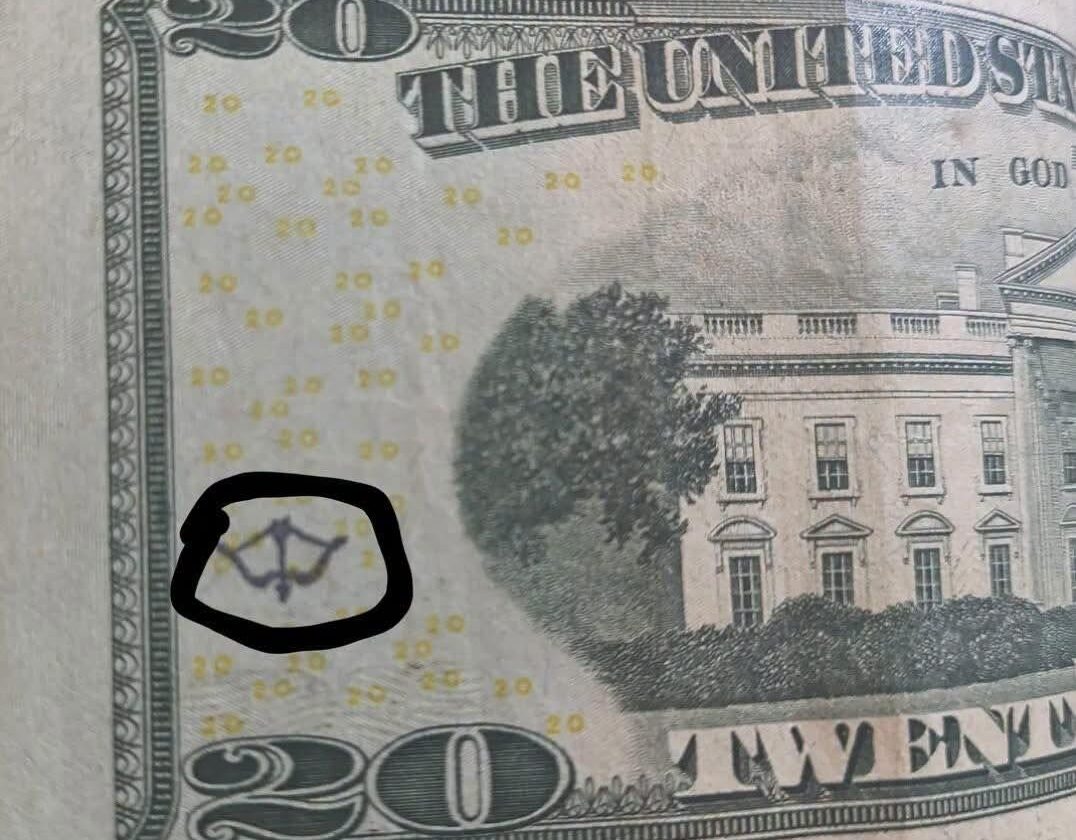
Some people have even discovered unusual images such as bows, arrows, or tiny emblems stamped onto their bills.
The markings are typically made using blue, black, or red ink and are intentionally kept small so they do not interfere with important security features.
Are Chop Marks Legal?
Many people assume that marking currency is illegal.
In the United States, laws prohibit intentionally damaging currency to the point where it can no longer function as legal tender. However, small chop marks generally do not affect the value or usability of a banknote.
Most stores and businesses will still accept these bills without issue.
That said, heavily marked notes may occasionally be rejected by vending machines, currency counters, or some banks simply because the machines have difficulty reading them.
Does a Chop Mark Reduce the Value of a Bill?
For everyday spending, the answer is usually no.
A twenty-dollar bill with a small chop mark is still worth twenty dollars.
Interestingly, some collectors find heavily traveled bills fascinating because they provide evidence of international circulation and economic history.
Each mark can represent a stop along the bill’s journey through foreign markets, exchange counters, and trading centers around the world.
A Hidden Story in Your Wallet
The next time you find a dollar bill covered with tiny symbols or stamps, take a closer look.
That note may have passed through countless hands, crossed multiple borders, and traveled thousands of miles before ending up in your wallet.
Far from being damage, those little marks are often signs of trust, verification, and global commerce.
In a way, every chop mark tells part of the bill’s story — a quiet reminder that money travels much farther than most of us ever will.