Can You Spot the Hidden Man in the Hat? This Vintage Optical Illusion Is Trickier Than It Looks
At first glance, this vintage-style illustration looks like an ordinary peaceful landscape.
Large rocks fill the foreground. Dry ground stretches toward a distant tree line, while fallen logs lie scattered across the scene. In the background, a calm body of water contains a small canoe with two people inside.
Nothing seems unusual.
But look a little longer.
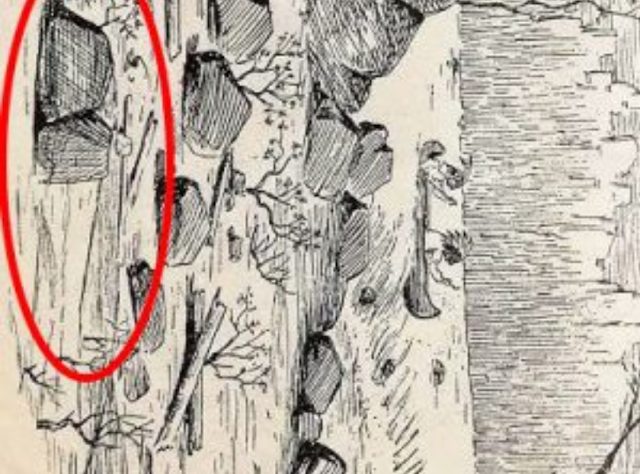
Hidden within the rocks, shadows, curves, and empty spaces is the face of a man wearing a hat.
The challenge is simple: Can you spot him?
And although the puzzle jokingly suggests that finding him proves your brain is “still young,” that isn’t really what the test measures. This is primarily a fascinating exercise in visual perception, pattern recognition, and perspective.
Where Is the Hidden Man?
The trick is that the man isn’t actually hiding behind an object.
There isn’t a tiny person tucked behind a tree or sitting somewhere along the shoreline.
Instead, the landscape itself creates the man’s face.
Several elements work together to form the hidden image:
- Rock formations create parts of the facial outline.
- Shadows help define darker areas of the face.
- Curved edges can resemble the forehead, cheek, or jaw.
- Negative space contributes to the shape.
- Dark areas can suggest an eye or other facial features.
- The surrounding landscape helps form the outline of the hat.
Individually, these details simply look like rocks, shadows, and natural scenery.
When viewed together, however, they can suddenly become a recognizable face.
That’s what makes this type of optical illusion so satisfying.
Why Is the Face So Difficult to See?
Your brain doesn’t simply record everything your eyes see.
Instead, your visual system constantly organizes information and tries to determine what objects are important.
When you first look at this illustration, your brain quickly identifies the overall scene:
landscape → rocks → trees → water → canoe
Once that interpretation has been established, your brain has little reason to search for another image.
This is known as figure-ground perception—the process your visual system uses to distinguish an object from its surrounding background.
The artist takes advantage of this process by making the landscape function as both the background and the hidden figure.