What Should You Do If You Find a Snake Inside?
The safest first step is simple:
Do not approach it.
If you discover an unfamiliar snake indoors, keep a safe distance and avoid touching, cornering, chasing, or attempting to catch it.
Keep Children and Pets Away
Move children and pets to another area of the home.
Dogs and cats may instinctively approach or attack a snake, potentially creating a dangerous situation for both the animal and your pet.
Children may also be curious and move closer before understanding the risk.
Creating distance is one of the simplest ways to reduce the chance of an accident.
Do Not Try to Identify It Up Close
Many people immediately want to know what type of snake they have found.
However, getting closer to an unfamiliar snake just to examine its markings is not worth the risk.
Snake identification can sometimes be difficult, particularly when the animal is stressed, partially hidden, or viewed from a distance.
If you can safely observe the snake without approaching it, a trained wildlife professional may be able to help determine what should happen next.
Avoid Trying to Catch It
A common mistake is assuming that a snake can simply be picked up or guided outside.
That can put you unnecessarily close to the animal.
If you are not trained to handle snakes, attempting to capture an unfamiliar snake may result in a bite or cause the snake to become more defensive.
Instead, keep your distance and contact a qualified local wildlife professional when appropriate.
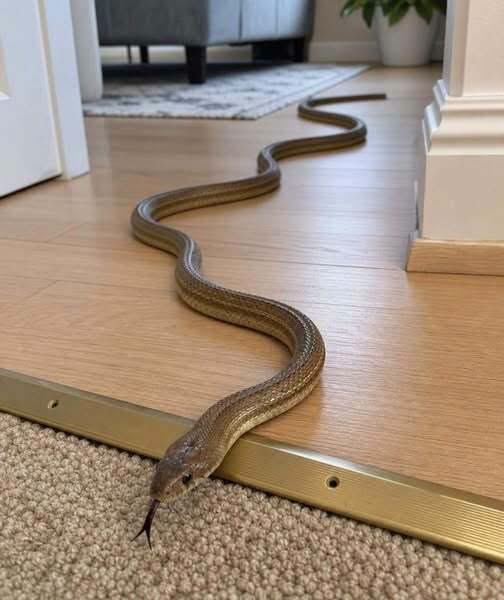
What Happened in This Situation?
In this case, the homeowner immediately stepped back after discovering the snake.
Rather than attempting to remove it alone, the homeowner contacted a local wildlife professional.
The professional explained that the snake had likely entered the property while searching for shelter or prey.
That explanation helped put the situation into perspective.
The snake had not necessarily entered the home because it was looking for a person. It may simply have found an accessible opening while moving through the property.
Once the animal was safely removed, attention turned toward preventing another encounter.
How to Snake-Proof Your Home
Removing a snake solves the immediate problem, but prevention is equally important.
A thorough inspection of the property can help identify areas that may allow wildlife to enter.
Check Doors and Windows
Inspect exterior doors and windows for gaps.
Pay particular attention to:
- Damaged weather stripping
- Gaps beneath exterior doors
- Torn window screens
- Cracks around frames
- Openings around garage doors
Repairing damaged seals can help reduce opportunities for wildlife to enter.
Inspect Pipes and Utility Openings
Pipes, cables, and utility lines often pass through exterior walls.
Check the areas surrounding these openings for visible gaps and have appropriate repairs made when necessary.
Check Vents
Exterior vents should be inspected to make sure they are properly protected and maintained.
Do not block necessary ventilation openings. Instead, use appropriate screening or professional repairs designed for the specific vent.
Examine the Foundation
Walk around the exterior of your home and look for cracks, holes, or other openings around the foundation.
Even small openings can deserve attention, particularly around areas where pipes or utilities enter the building.
Remove Outdoor Hiding Places
A tidy yard can make a property less appealing to some unwanted wildlife.
Remove or organize unnecessary outdoor clutter, including:
- Piles of wood
- Leaves
- Yard debris
- Unused materials
- Overgrown vegetation
- Objects sitting directly against exterior walls
Woodpiles and other materials can provide hiding places for snakes and may also shelter rodents and insects.
Reducing these areas can therefore address both shelter and potential food sources.
Check for Rodents and Insects
If snakes repeatedly appear around your property, consider whether there may be an underlying food source.
Signs of rodents can include droppings, gnaw marks, nesting material, or noises coming from walls, ceilings, garages, or other areas.
Insects can also contribute to wildlife activity around a property.
Addressing pest problems can be an important part of broader home pest prevention.
If you suspect a significant infestation, consider contacting a qualified pest-control professional rather than attempting to handle a serious problem yourself.
Is a Snake Inside the House Always Dangerous?
No.
A snake inside a house does not automatically mean that the animal is dangerous.
Many snake species are harmless to people. However, identifying a snake correctly can be difficult, and homeowners should not assume that an unfamiliar snake is safe to handle.
The safest approach is to treat an unknown snake with caution.
Keep your distance, prevent children and pets from approaching it, and seek professional assistance when you are uncertain about what to do.
Tips for Staying Safe Around Snakes
A few simple habits can help reduce unnecessary risk.
1. Stay Calm
Panic can cause people to make quick decisions, such as running toward the snake, trying to catch it, or cornering it.
Take a step back and create distance.
2. Keep Pets Away
Move dogs and cats away from the area.
3. Don’t Handle an Unknown Snake
Never assume that an unfamiliar snake is harmless simply because it appears small or calm.
4. Avoid Cornering It
Give the animal space whenever possible.
5. Contact a Professional When Necessary
A trained wildlife professional can determine the safest way to deal with a snake inside a home.
6. Inspect the Property Afterwards
Once the snake has been safely removed, look for potential entry points and conditions that may have attracted it.
Common Mistakes to Avoid
When people discover a snake unexpectedly, fear can lead to impulsive decisions.
Here are several mistakes worth avoiding:
Trying to grab the snake: Even a snake that appears calm can react defensively when approached.
Using household objects to hit or move it: This can increase stress and create unnecessary risk.
Allowing children to watch from nearby: Children should be moved away from the area.
Letting pets investigate: Dogs and cats can get too close before you can intervene.
Ignoring possible entry points: Removing the animal without addressing how it entered may leave the home vulnerable to another encounter.
Frequently Asked Questions
What attracts snakes to a house?
Snakes may be attracted by food sources such as rodents and insects, as well as sheltered areas, warmth, water, or protection from extreme weather. Openings around doors, foundations, vents, pipes, and garages can provide access.
What should I do if I find a snake in my house?
Keep your distance, move children and pets away, and avoid touching or attempting to capture the snake. If you are uncertain about the species or how to safely remove it, contact a trained wildlife professional.
Can snakes enter through small gaps?
Potentially, yes. Snakes can take advantage of surprisingly small openings, depending on the species and size of the animal. Inspect gaps around doors, windows, pipes, vents, garages, and foundations.
How can I keep snakes out of my house?
Seal appropriate openings around the home’s exterior, maintain doors and window screens, keep outdoor areas tidy, remove unnecessary debris, and address rodent or insect problems that could provide a food source.
Should I try to identify the snake myself?
It is better not to approach an unfamiliar snake simply to identify it. If identification is necessary, observe only from a safe distance and consider contacting a qualified wildlife professional.
A Simple Home Snake Prevention Checklist
After a snake has been safely removed, walk around your property and look for potential attractants and entry points.
- Check exterior doors for gaps.
- Inspect window screens.
- Look around pipes and utility openings.
- Examine foundation areas.
- Inspect exterior vents.
- Clean up piles of leaves and debris.
- Organize woodpiles and outdoor materials.
- Look for signs of rodents.
- Address insect problems.
- Keep pets away from areas where wildlife activity has been noticed.
Final Thoughts
Finding a snake inside your home can be frightening, but panic is rarely the best response.
The safest approach is to create distance, keep children and pets away, avoid handling the animal, and contact a trained wildlife professional when necessary.
Once the snake is gone, prevention becomes the next priority. Sealing potential entry points, reducing outdoor hiding places, and addressing rodents or insects can make your property less attractive to unwanted wildlife.
A calm response can protect everyone involved—and a careful inspection afterward can help make sure your next surprise visitor stays outside where it belongs.