
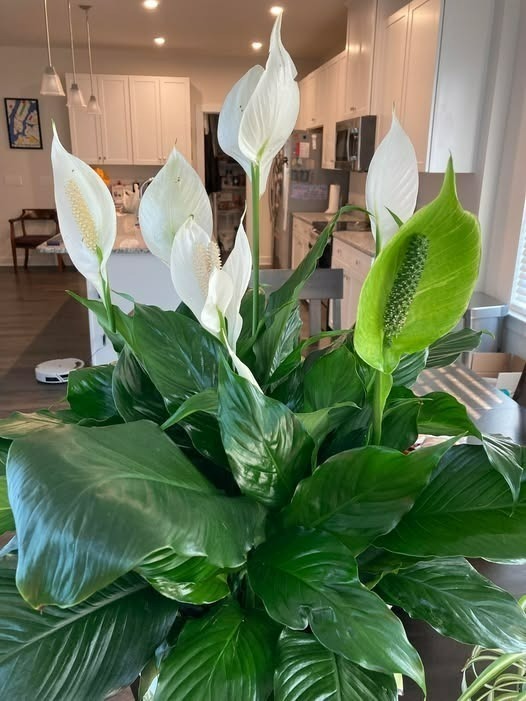
How to Make Your Peace Lily Bloom Again: 7 Expert Tips That Actually Work
If you’ve ever watched your peace lily produce that first elegant white bloom—arching proudly above its glossy green leaves—you know the quiet joy it brings. A blooming peace lily feels like a little reward from nature, a soft whisper that says: “You’re doing something right.”
I still remember the first time mine flowered.
For nearly two years, my peace lily looked healthy enough—lush leaves, steady growth, no yellowing. But flowers? Nothing. I started wondering if I had somehow bought the only peace lily in existence that simply refused to bloom.
Then one morning, I noticed something unusual emerging from the center of the plant. It wasn’t shaped like a leaf. It was thicker, lighter, almost folded into itself. For days I watched it cautiously, trying not to get my hopes up.
And then it opened.
A smooth white spathe unfurled around a tiny cream-colored spadix, and suddenly my ordinary houseplant looked elegant, tropical, alive in a completely different way.
I immediately texted a photo to my plant-loving friend.
“IS THIS A FLOWER?”
Her reply came instantly:
“Congratulations. You are now a real plant parent.”
But here’s the truth most people don’t realize:
Peace lilies can survive for years without blooming. They’ll stay green and healthy-looking while quietly refusing to produce flowers if certain conditions aren’t right.
The good news? Once you understand what triggers blooming, getting flowers becomes much easier.
Let’s walk through exactly how to encourage your peace lily to bloom consistently—and beautifully.
Why Peace Lilies Bloom (And Why They Don’t)
Before fixing the problem, it helps to understand the plant itself.
Peace lilies (Spathiphyllum) are tropical plants native to the rainforests of Central and South America. In nature, they grow beneath taller trees where they receive filtered light, steady warmth, moist soil, and high humidity.
And surprisingly, the famous white “flower” isn’t technically a flower at all.
The white leaf-like structure is called a spathe, while the tiny clustered bumps on the center spike (the spadix) are the actual flowers.
Peace lilies bloom when environmental conditions signal that the plant is thriving enough to reproduce.
If your plant isn’t flowering, it usually means one of these things is missing:
- Enough light
- Consistent moisture
- Proper humidity
- Nutrients
- Seasonal rest
The plant may be healthy enough to survive—but not quite comfortable enough to bloom.
1. Give Your Peace Lily Bright, Indirect Light
This is the single biggest reason peace lilies fail to flower.
Yes, peace lilies tolerate low light. But surviving and blooming are very different things.
In dark rooms, peace lilies often produce lots of deep green leaves because they’re stretching toward available light. However, without enough energy from sunlight, flower production slows or stops entirely.
What To Do Instead
Place your peace lily in bright, indirect light.
Ideal locations include:
- Near an east-facing window
- A few feet from a south-facing window
- Bright rooms with filtered sunlight
Avoid direct afternoon sun, which can scorch the leaves and leave brown patches.
Easy Light Test
If you can comfortably read a book in the room during the day without turning on a lamp, your peace lily likely has enough light.
If the room feels dim even at noon, it needs more brightness.
Bonus Tip
Rotate the plant every couple of weeks so all sides receive equal light. This prevents leaning and encourages balanced growth.
2. Water Consistently—But Don’t Overwater
Peace lilies are famously dramatic.
When thirsty, they collapse dramatically like they’re auditioning for a soap opera. Then, after watering, they spring back to life within hours.
But repeatedly letting the plant wilt stresses it—and stressed plants don’t prioritize flowering.
The Goal
Keep the soil consistently moist but never soggy.
Water when the top inch of soil feels dry.
Signs You’re Overwatering
- Yellow leaves
- Mushy stems
- Fungus gnats
- Sour-smelling soil
- Persistent drooping despite wet soil
Overwatering is actually more dangerous than underwatering because it can cause root rot.
Best Practice
Use room-temperature water whenever possible. Cold water can shock tropical roots.
If your tap water is heavily chlorinated or hard, filtered or distilled water may reduce brown leaf tips.
3. Increase Humidity
Peace lilies evolved in humid rainforests—not dry living rooms with central heating.
Low humidity weakens the plant and often causes crispy brown tips.
And a stressed plant rarely blooms.
Easy Ways to Increase Humidity
Mist the Leaves
Lightly mist in the morning so moisture evaporates before nightfall.
Use a Pebble Tray
Place the pot on pebbles above shallow water. As the water evaporates, humidity rises around the plant.
Group Plants Together
Plants naturally release moisture through transpiration, creating a mini tropical environment.
Use a Humidifier
Especially useful during winter when indoor heating dries the air.
Bathroom Placement
A bright bathroom with shower humidity can be ideal.
4. Fertilize Correctly
Peace lilies don’t need heavy feeding, but they do need nutrients to bloom.
The mistake many people make is using too much nitrogen fertilizer. Nitrogen encourages leafy growth—but not flowers.
Best Fertilizer
Use a balanced fertilizer like:
- 10-10-10
- 20-20-20
Dilute it to half strength.
For better flowering, choose one slightly higher in phosphorus, such as:
- 10-20-10
Phosphorus supports bloom production.
Feeding Schedule
- Feed every 4–6 weeks in spring and summer
- Stop fertilizing during fall and winter
Important
Always water the soil before fertilizing to avoid burning the roots.
5. Give Your Peace Lily a Rest Period
One overlooked trick for flowering is allowing the plant to experience a seasonal cycle.
In nature, peace lilies naturally slow down during cooler months before blooming again in warmer seasons.
During Fall and Winter
- Water slightly less often
- Stop fertilizing
- Keep temperatures around 60–65°F (15–18°C)
Growth slowing down is normal.
In Late Winter or Early Spring
Gradually:
- Increase watering
- Move to brighter light
- Resume fertilizing
This seasonal “wake-up call” often triggers blooming within a few months.
6. Repot Only When Necessary
Many plant owners accidentally prevent blooms by repotting too often.
Peace lilies actually bloom best when slightly root-bound.
If placed into a huge pot, the plant focuses on root expansion instead of flowers.
Signs It Needs Repotting
- Roots growing through drainage holes
- Water running straight through the pot
- Frequent wilting
- No repotting in 2–3 years
When repotting, only size up by 1–2 inches.
Use well-draining soil mixed with perlite or orchid bark for better airflow.
7. Remove Old Flowers and Damaged Leaves
Once blooms fade and turn green or brown, they continue draining energy from the plant.
Trim them off near the base using clean scissors.
Also remove:
- Yellow leaves
- Brown leaves
- Damaged foliage
This redirects energy toward healthy growth and future blooms.
Common Peace Lily Problems
| Problem | Likely Cause | Solution |
|---|---|---|
| No flowers | Low light or too much nitrogen | Increase light and switch fertilizer |
| Brown tips | Dry air or tap water chemicals | Raise humidity and use filtered water |
| Yellow leaves | Overwatering | Let soil dry slightly |
| Constant drooping | Underwatering or root rot | Check soil moisture carefully |
| Flowers turning green | Natural aging | Remove old blooms |
Frequently Asked Questions
How Often Do Peace Lilies Bloom?
Healthy mature plants can bloom two or three times per year, usually during spring and summer.
How Long Do Blooms Last?
Most flowers last 1–2 weeks before gradually fading.
Can Peace Lilies Bloom in Winter?
Occasionally yes, especially indoors with stable warmth and light—but spring and summer are more common.
Should I Cut Off Green Flowers?
Not immediately. Green blooms are usually aging naturally. Remove them once they begin browning.
Is My Plant Defective If It Never Flowers?
Almost certainly not. Most non-blooming peace lilies simply need better light and more consistent care.
The Secret Most Plant Owners Learn Eventually
Peace lilies are patient plants.
They don’t bloom because we demand it. They bloom when conditions feel safe, steady, and supportive.
Sometimes all it takes is:
- A brighter window
- Slightly better watering habits
- More humidity
- A little patience
And suddenly, after months of silence, a white bloom appears almost overnight.
That’s part of what makes them so rewarding.
Every flower feels earned.
So if your peace lily hasn’t bloomed yet, don’t give up. It may be far closer than you think.
And when that first white spathe finally unfurls, you’ll understand why so many plant lovers become completely obsessed with these beautiful tropical plants. 🌿🤍