
I Thought It Was a Strange Antique—Then I Discovered It Was Once Used to Draw Blood
The Tiny Metal Device That Revealed a Surprising Chapter in Medical History
At first, it looked like nothing more than an unusual antique.
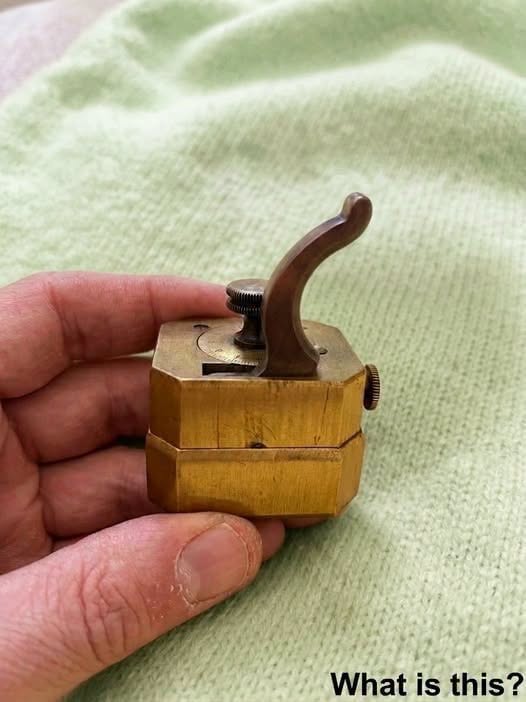
Small enough to fit in the palm of a hand, made of metal, and covered in the kind of craftsmanship rarely seen in modern tools, it seemed like the sort of object you might find in an old attic, flea market, or estate sale.
I picked it up out of curiosity.
It felt solid.
Intriguing.
Mysterious.
But the longer I examined it, the stranger it became.
Tiny moving parts clicked into place with mechanical precision. A hidden mechanism suggested it was designed for a very specific purpose. Yet that purpose wasn’t immediately obvious.
Then I turned it over and noticed something unsettling.
A row of small, perfectly aligned blades.
Suddenly, the object no longer felt harmless.
The Device Was an Antique Medical Scarificator
After some research, I discovered that the mysterious object was known as a medical scarificator.
Though largely forgotten today, these devices once played an important role in medical treatment.
Doctors used scarificators during a procedure called bloodletting, a practice that remained common for centuries across Europe and other parts of the world.
The compact instrument contained a spring-loaded mechanism that could briefly release multiple tiny blades at once.
The result was a series of shallow, controlled cuts made in the skin.
To modern eyes, the device can seem shocking.
But in its time, it represented accepted medical practice.
Why Doctors Once Believed Bloodletting Worked
For much of recorded history, many physicians believed that health depended on balancing the body’s internal fluids, often referred to as the “humors.”
According to this theory, illness could result from an excess or imbalance of these substances.
Bloodletting was thought to restore harmony by removing what practitioners considered unhealthy or excessive blood.
The treatment was recommended for a wide range of conditions, including:
- Fevers
- Headaches
- Infections
- Inflammation
- High blood pressure
- Respiratory illnesses
- Emotional disturbances
Patients often trusted these treatments because they reflected the best medical understanding available at the time.
How a Scarificator Worked
Unlike earlier methods that relied on knives or lancets, scarificators were designed to make bloodletting more controlled and efficient.
Inside the device, a spring mechanism stored tension.
When activated, the blades briefly emerged through openings in the casing, creating several shallow incisions almost instantly.
Many scarificators allowed physicians to adjust blade depth depending on the procedure.
This engineering made the device both sophisticated and somewhat unsettling.
What appears today as a curious collectible was once considered cutting-edge medical equipment.
A Window Into Medical History
Holding an antique scarificator creates an unusual feeling.
On one hand, it’s a fascinating example of craftsmanship and innovation.
On the other, it serves as a reminder that medicine has undergone tremendous transformation over the centuries.
Practices once regarded as scientifically sound are now viewed very differently.
This doesn’t mean historical physicians were careless or unintelligent.
Rather, it highlights how scientific understanding evolves over time.
Doctors worked with the knowledge available to them and often genuinely believed they were helping their patients.
How Modern Medicine Changed
Advances in biology, microbiology, anatomy, and clinical research gradually transformed medical practice.
As scientists learned more about:
- The circulatory system
- Infectious diseases
- Human physiology
- Evidence-based treatment
many traditional procedures were reexamined.
Over time, routine bloodletting fell out of favor for most conditions because research showed it often provided little benefit and could sometimes cause harm.
Today, blood removal is used only in specific medical circumstances under carefully controlled conditions.
Why Antique Medical Instruments Fascinate People
Objects like scarificators continue to capture public attention because they reveal how dramatically human knowledge can change.
They remind us that:
- Medical science is constantly evolving.
- Accepted beliefs can later be challenged.
- Innovation often emerges through trial and error.
- Historical artifacts tell stories far beyond their appearance.
What looks like a simple metal box may actually represent centuries of medical history, patient trust, and scientific experimentation.
Frequently Asked Questions
What is a scarificator?
A scarificator is a historical medical instrument used to create small skin incisions during bloodletting procedures.
What was bloodletting?
Bloodletting was a medical practice based on the belief that removing blood could treat or prevent illness.
Were scarificators common?
Yes. During certain periods, scarificators were widely used by physicians as a more controlled alternative to manual cutting instruments.
Is bloodletting still used today?
Routine bloodletting is no longer used for most illnesses, although controlled blood removal remains a treatment for a small number of specific medical conditions.
Why do people collect antique medical tools?
Collectors often value them for their historical significance, craftsmanship, and connection to the evolution of medicine.
You May Also Like
- Strange Medical Practices That Were Once Considered Normal
- The History of Medicine’s Most Unusual Instruments
- Antique Objects With Surprisingly Dark Origins
- Medical Discoveries That Changed the World
- Forgotten Tools Doctors Once Used Every Day
- How Modern Healthcare Evolved Over the Centuries
Final Thoughts
What began as a simple encounter with an unusual antique turned into a fascinating lesson about medical history.
The small metal device that first appeared harmless revealed itself to be a scarificator—a tool once trusted by doctors and patients alike in the pursuit of healing.
Today, it stands as a reminder of how far medicine has progressed and how scientific understanding continues to evolve.
Sometimes the most ordinary-looking artifacts hold the most extraordinary stories.
And occasionally, a small object found by chance can offer a powerful glimpse into the hopes, beliefs, and challenges of another era.