Introduction
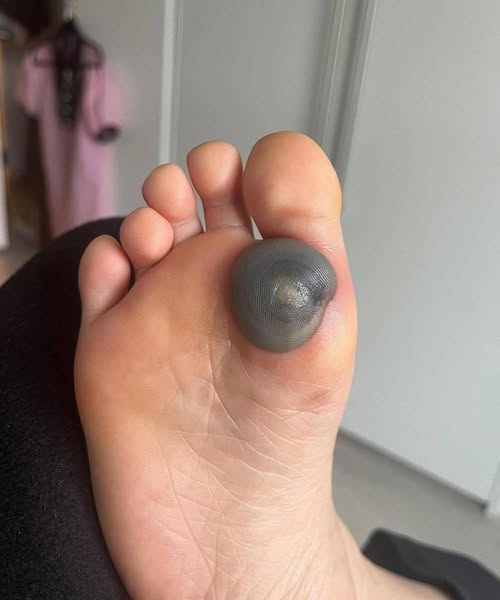
Seeing a large, dark spot suddenly appear on your child’s foot can be frightening, especially if it’s painful and makes it hard for them to walk. Many parents immediately worry about infections or serious injuries when something like this appears overnight.
In many cases, however, the cause is something much more common: a Blood blister. These blisters can look dramatic because they appear dark red, purple, or almost black under the skin, but they are usually harmless and tend to heal on their own.
Understanding what a blood blister is, why it forms, and how to care for it at home can help parents stay calm and know when medical attention may be needed.
What Is a Blood Blister?
A Blood blister forms when small blood vessels beneath the skin break, but the top layer of skin remains intact.
Instead of bleeding externally, the blood becomes trapped under the skin, creating a raised bubble filled with dark fluid.
Blood blisters often appear:
- Dark red
- Maroon
- Purple
- Sometimes almost black
They may feel tender, swollen, or painful, especially when pressure is applied.
Where Blood Blisters Usually Appear
Blood blisters most commonly develop in areas that experience friction or pressure, including:
- Toes
- Soles of the feet
- Fingers
- Palms
- Heels
They can also appear inside the mouth, such as on the cheeks, tongue, or gums.
Why Your Child Might Have One
The most common reason for a blood blister is friction or sudden pressure on the skin.
Examples include:
- Tight or poorly fitting shoes
- Walking or running for long periods
- Sports activities
- A foot being accidentally stepped on
- Skin pinched in a door or object
For children, new shoes or a day of heavy activity often causes these blisters on the feet.
What a Blood Blister Looks Like
Typical signs include:
- A raised bubble under the skin
- Dark red, purple, or black color
- Tenderness when touched
- Mild swelling
- Pain when walking or applying pressure
Because the blood is trapped beneath the skin, the blister may look more alarming than it actually is.
How Long It Takes to Heal
Most blood blisters heal naturally within 1–2 weeks.
During this time:
- The fluid gradually dries out
- The blister shrinks
- The skin heals underneath
In most cases, no medical treatment is required.
Should You Pop a Blood Blister?
Doctors generally recommend not popping a blood blister.
The skin covering the blister acts as a natural protective barrier that prevents bacteria from entering and causing infection.
If the blister breaks on its own:
- Gently wash the area with soap and water
- Apply antiseptic if available
- Cover with a clean bandage
- Keep the area dry and protected
Home Care Tips
You can help your child feel more comfortable while the blister heals.
Reduce Pressure
Avoid tight shoes or activities that put pressure on the blister.
Apply a Cold Compress
A cold pack for 10–15 minutes can reduce swelling and pain.
Keep the Area Clean
Clean the skin gently and cover it with a bandage if needed.
Protect the Skin
Soft socks or cushioned footwear can help prevent further irritation.
Avoid harsh chemicals or unverified home remedies, which can irritate the skin.
When to See a Doctor
Most blood blisters are harmless, but you should seek medical advice if:
- The blister becomes very painful
- It continues growing
- Signs of infection appear (pus, redness, warmth, fever)
- It does not heal within two weeks
- Your child cannot walk due to severe pain
Children with certain conditions—such as diabetes, circulation problems, or bleeding disorders—should also be evaluated by a doctor if blisters appear.
Could It Be Something Else?
Although blood blisters are common, similar spots may occasionally be caused by:
- Severe friction blisters
- Bruising under the skin
- Minor trauma
- Rare skin infections
A doctor can confirm the diagnosis if symptoms are unusual.
Final Thoughts
A sudden dark blister on your child’s foot can look scary, but in many cases it turns out to be a simple Blood blister caused by pressure or friction.
These blisters usually heal naturally with rest, protection, and gentle care. The most important thing is to avoid popping it and prevent further irritation.
If the pain is severe, the blister grows, or healing takes longer than expected, it’s always best to consult a healthcare professional for reassurance.