Why You Shouldn’t Panic If You Find String or Wire on Your Car Door Handle
A Viral Warning That Made Millions Nervous
Imagine walking through a parking lot after a long day, reaching your car, and suddenly noticing a strange ribbon, wire, or piece of string tied around your door handle.
Your first reaction would probably be concern.
Over the past few years, social media has been flooded with alarming warnings claiming these objects are secret markers used by kidnappers, traffickers, or car thieves. Viral videos have racked up millions of views, leaving many people wondering:
Is this a real danger—or just internet fear spreading faster than facts?
The truth is more balanced than the headlines suggest.
While it is always smart to stay alert in public places, there is currently no verified evidence from law enforcement showing that strings or ribbons on car handles are part of a widespread kidnapping scheme.
Still, understanding the facts—and knowing how to respond calmly—can help you stay both safe and informed.
Where the Viral Story Started
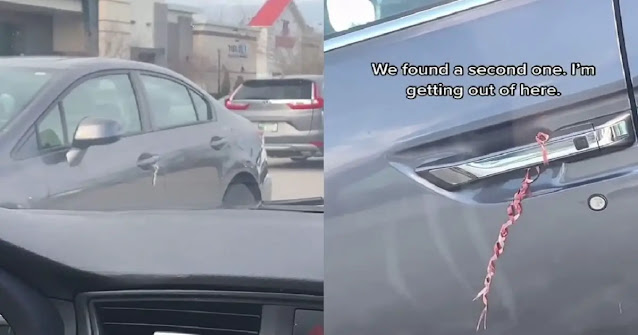
The concern gained attention after several social media creators shared videos showing ribbons or wires attached to parked cars.
One viral TikTok creator described finding a decorative ribbon tied to a driver-side door handle in a parking lot. Others quickly began sharing similar stories, along with theories about what the objects supposedly meant.
Some viewers claimed:
- The objects were “markers” used by criminals
- The string distracted drivers long enough for someone to approach
- Wires were used because they take longer to remove
- Cars were being “targeted” for kidnapping or theft
The warnings spread quickly because they tapped into a very real fear: vulnerability in isolated parking lots.
But viral stories do not always equal verified threats.
What Experts and Police Actually Say
Security experts and police departments across multiple regions have repeatedly stated that there is no confirmed evidence linking these objects to organized kidnapping operations.
That does not mean suspicious situations never happen.
It simply means the specific claim itself has not been verified as a common criminal tactic.
Here’s What Experts Say About the Most Common Claims:
“It’s a Kidnapping Marker”
There are no documented cases proving that ribbons or strings tied to car handles are routinely used for abductions.
Most violent crimes happen quickly and directly—not through elaborate marking systems.
“It’s Meant to Distract You”
In theory, a distraction tactic is possible.
However, experts note that criminals generally prefer faster, lower-risk opportunities rather than waiting for someone to untie a string.
“It Marks Cars for Theft”
Professional car thieves usually target vehicles based on value, security weaknesses, or ease of access—not decorative markers.
“It’s Probably Harmless”
In many situations, the object may simply be:
- Trash caught on the handle
- Leftover packaging material
- A prank
- A random coincidence
That’s why experts encourage awareness—not panic.
The Real Parking Lot Risks You Should Watch For
While the viral string theory may be exaggerated, parking lots can still present genuine safety risks.
Focusing on realistic threats is far more useful than fearing every strange object.
1. Distraction Theft
Some criminals intentionally distract people by:
- Asking unusual questions
- Dropping items nearby
- Pretending to need help
While attention is diverted, an accomplice may target bags, wallets, or phones.
Smart Habit:
Keep your belongings close and stay aware of your surroundings.
2. Carjacking
Carjackings are rare but real.
Risk increases in:
- Poorly lit parking lots
- Isolated garages
- Areas with little foot traffic
Smart Habit:
Have your keys ready before reaching your vehicle and lock your doors immediately after getting inside.
3. Vehicle Tampering
Occasionally, thieves may attempt to:
- Damage locks
- Attach tracking devices
- Tamper with tires
Smart Habit:
Do a quick visual walk-around before entering your car.
4. Scam Collisions
Some scams involve intentionally causing minor accidents to pressure drivers into exiting their vehicles.
Smart Habit:
If something feels suspicious, stay inside your locked car and call authorities.
What To Do If You Find Something on Your Door Handle
If you discover string, ribbon, or wire attached to your car, stay calm and follow simple safety steps.
What You SHOULD Do
Pause and Observe
Before touching anything, quickly scan the area.
If someone nearby seems suspicious or you feel uncomfortable, return to a populated area or go back inside the store.
Take a Photo
Use your phone to document the object from a distance.
This may help if you later decide to notify security or police.
Remove It Carefully
Instead of using your bare hands immediately, use a key, pen, or another object to remove it.
Check Your Vehicle
Take a quick look around your car for:
- Tire damage
- Scratches near locks
- Signs of tampering
Report Serious Concerns
If something genuinely feels unsafe, contact parking lot security or local non-emergency police.
Trust your instincts.
What You Should NOT Do
Don’t Panic
Most situations involving strings or ribbons are harmless.
Fear can cloud judgment.
Don’t Confront Strangers
Avoid escalating situations or approaching suspicious individuals yourself.
Don’t Spread Unverified Claims
Sharing frightening social media warnings without evidence can create unnecessary fear and confusion.
Always check whether claims are supported by credible law enforcement sources.
How Social Media Amplifies Fear
Social media is excellent at spreading emotional stories quickly.
Unfortunately, fear-based content often travels faster than verified information.
A single viral video can make a rare or unconfirmed event appear common and immediate.
Psychologists call this the “availability effect.”
When people repeatedly see dramatic warnings online, the brain begins to overestimate how likely the danger actually is.
That’s why it’s important to separate:
- Viral stories
from - Confirmed public safety information
Staying informed matters.
Staying fearful does not.
Simple Safety Habits That Actually Help
Rather than worrying about every internet rumor, focus on practical habits proven to improve personal safety.
Everyday Parking Lot Safety Tips
- Park in well-lit, busy areas
- Avoid distractions while walking
- Keep your phone put away when possible
- Have keys ready before reaching your car
- Lock doors immediately after entering
- Stay aware of nearby people and activity
- Trust your instincts if something feels wrong
These habits provide far more protection than worrying about random objects tied to door handles.
Final Thoughts
Finding string, ribbon, or wire attached to your car door handle can definitely feel unsettling.
But according to security experts and police, there is currently no verified evidence that this is part of a widespread kidnapping tactic.
Most of the time, the explanation is likely harmless.
Still, awareness is always valuable.
The best approach is calm caution:
- Stay observant
- Trust your instincts
- Avoid panic
- Focus on real safety habits
- Rely on credible information instead of viral fear
At the end of the day, confidence and awareness are far more powerful than anxiety.
And in most situations, your greatest protection is not fear—it’s staying calm, alert, and informed.