The Viral $100 Store Theft Riddle — Here’s the Correct Answer Explained
This famous math riddle has confused millions of people online because it tricks the brain into double-counting money. At first glance, the numbers seem complicated, but the solution is actually very simple once you follow the value step by step.
🧠 The Classic Riddle
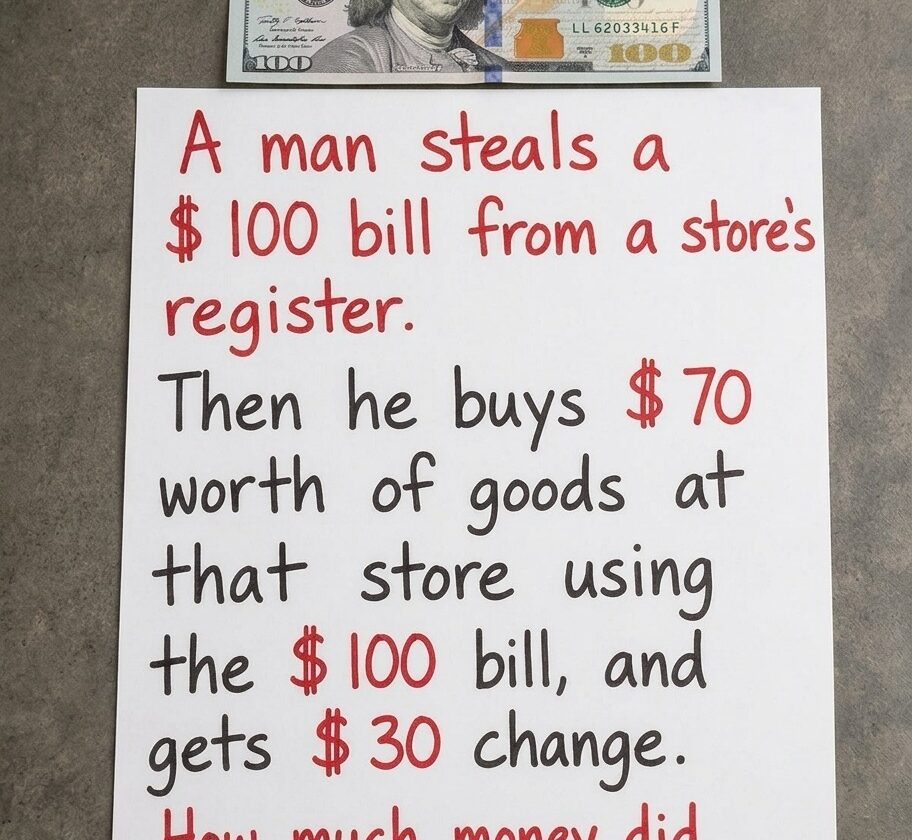
A man walks into a store and steals a $100 bill from the register while the owner isn’t looking.
He later returns and buys $70 worth of goods using that same stolen $100 bill.
The store owner gives him $30 in change.
👉 How much money did the store lose?
❌ The Most Common Wrong Answers
Many people answer:
- $200
- $130
But both are incorrect because they count the same $100 more than once.
✅ The Correct Answer: $100
The store only lost:
- $70 worth of merchandise
- $30 in cash change
Total Loss:
$100
🔍 Step-by-Step Explanation
Let’s break it down carefully.
Step 1: The Theft
The thief steals $100 cash.
At this moment:
- Store cash: –$100
- Total loss so far: $100
Step 2: The Purchase
The thief returns and uses the same stolen $100 bill to buy $70 worth of products.
The important detail:
👉 The stolen $100 bill goes back into the register.
So the original cash loss is effectively canceled.
But now the store gives away:
- $70 in inventory
- $30 in real cash as change
📊 Final Accounting
| What the Store Lost | Amount |
|---|---|
| Merchandise | $70 |
| Cash Change | $30 |
| Total Loss | $100 |
Why People Get Confused
This puzzle works because the brain tends to treat the stolen $100 and the purchase payment as two separate losses.
But they’re actually the same bill circulating back into the store.
The store does not lose:
- $100 stolen
- PLUS $70 goods
- PLUS $30 change
That would incorrectly count the same $100 twice.
Simple Way to Think About It
Imagine the thief never stole the money at all and simply walked out with:
- $70 worth of products
- $30 cash
That totals exactly:
💵 $100
The Real Lesson Behind the Puzzle
This riddle isn’t really about math.
It’s about attention and logical thinking.
The brain often creates unnecessary complexity when multiple transactions happen quickly. Viral riddles like this test whether we can slow down, separate events clearly, and follow the actual movement of value instead of reacting emotionally to the numbers.
Final Thought
“The mind sees complexity where simplicity lives.”
The trick is not advanced math.
The trick is learning not to double-count.
Sometimes the clearest answer appears only after we stop chasing every number and simply follow what was truly lost.
💡 The store lost:
- $70 in goods
- $30 in cash