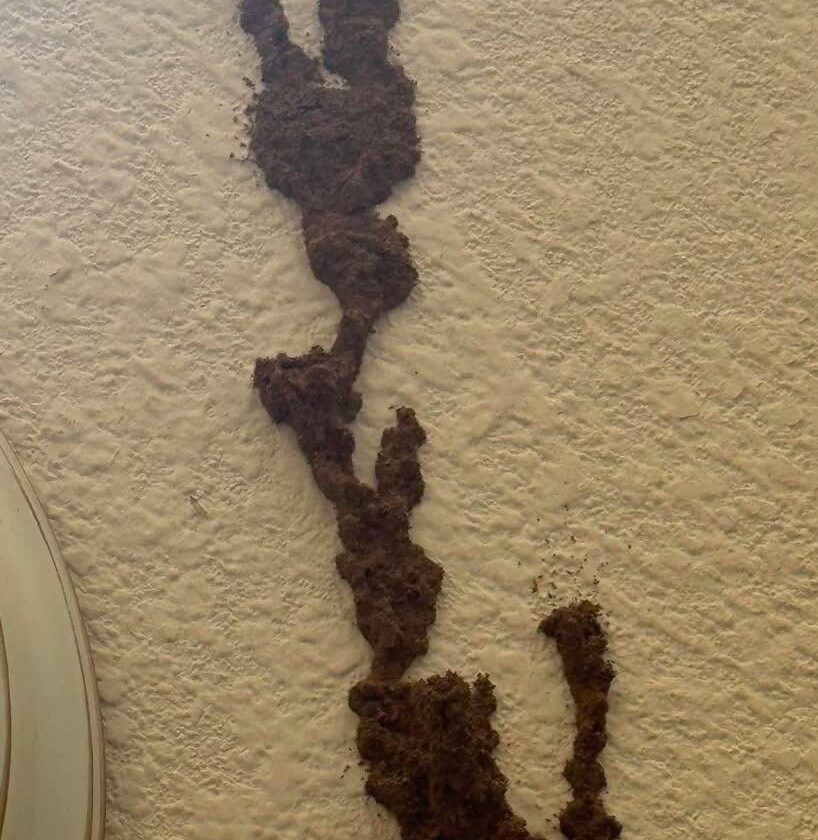
At first glance, it might look like nothing more than a thin line of dirt on your wall. But what appears harmless could actually be a warning sign of serious structural damage hiding inside your home.
One homeowner recently shared photos online showing a strange dirt trail slowly climbing the wall above a clock. What began as a small patch expanded over just 18 days into a thick tunnel of soil. After seeing the images, many viewers quickly recognized the culprit: termite mud tubes.
If you ever notice something similar in your home, it’s important to understand what it means—and why you should act quickly.
What Are Termite Mud Tubes?
Mud tubes are small, pencil-sized tunnels created by subterranean termites. These pests build the tubes using soil, wood particles, and their saliva.
The tubes act as protected passageways that allow termites to travel between their underground colony and the wooden structures inside your home.
Because termites cannot survive long in open air, these tubes protect them from:
- Dry air
- Sunlight
- Predators
Mud tubes are often found:
- Along foundation walls
- Inside crawl spaces
- On basement walls
- Climbing interior drywall or wood
If you see one inside your home, it usually means termites are already feeding on the structure.
Why This Is a Serious Problem
Termites are sometimes called “silent destroyers” because they can cause major damage before homeowners notice anything wrong.
By the time mud tubes appear, several things may already be happening:
- Wood inside walls may already be weakened
- A colony could contain tens of thousands of termites
- Damage may already be spreading through the structure
According to the National Pest Management Association, termites cause over $5 billion in property damage every year in the United States.
Unfortunately, most homeowner insurance policies do not cover termite damage, making prevention and early detection extremely important.
What To Do If You See a Mud Tube in Your Home
If you notice a dirt tunnel climbing a wall, resist the urge to immediately scrape it off.
1. Don’t Destroy the Tube Yet
Breaking the tube might seem like the obvious solution, but doing so can actually make things harder to diagnose.
Pest professionals often examine intact tubes to determine:
- The type of termite
- How active the colony is
- Where they are entering the structure
2. Schedule a Professional Inspection
A licensed pest control expert can confirm whether the structure is termite-related and assess the damage inside the walls.
During the inspection they will typically check:
- Wooden framing
- Crawl spaces
- Foundations
- Moisture levels
- Entry points
3. Begin Treatment Quickly
If termites are confirmed, treatment should begin as soon as possible. Common methods include:
- Bait systems placed around the property
- Liquid soil treatments that create a barrier around the foundation
- Foam or dust treatments injected into walls
- Full-home fumigation for severe infestations
The earlier treatment starts, the less structural damage occurs.
How to Prevent Termites From Returning
Once a termite problem has been addressed, prevention becomes the most important step.
Here are some effective ways to reduce future risk:
Reduce Moisture
Termites thrive in damp environments.
- Fix leaking pipes
- Improve drainage around the home
- Use dehumidifiers in damp areas
Keep Wood Away From the Foundation
Avoid storing materials like:
- Firewood
- Lumber
- Mulch piles
Directly against your home’s exterior.
Seal Entry Points
Inspect your home for:
- Foundation cracks
- Gaps around pipes
- Openings near windows and doors
Sealing these areas can help block termite access.
Schedule Annual Inspections
Even if you’ve never had termites, a yearly inspection can detect early signs before damage becomes expensive.
A Small Sign That Shouldn’t Be Ignored
The homeowner who shared the wall photos initially thought the dirt line was harmless. But what looked like a small stain turned out to be a major warning sign.
Termites work quietly, slowly eating away at wood structures while remaining hidden behind walls and floors.
By the time you see mud tubes, the colony has already established a pathway into your home.
Final Thoughts
If you ever notice dirt tubes climbing your walls, don’t ignore them. Acting quickly could save you thousands of dollars in repairs and prevent serious structural damage.
A simple inspection today could protect your home for years to come.
Sometimes the smallest signs are the ones that matter most.