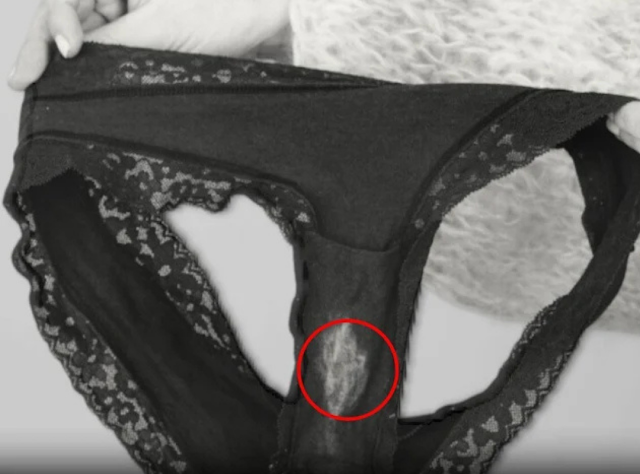
Have you ever taken a pair of underwear out of the laundry and noticed a lighter or “bleached-looking” spot in the center area? Many people immediately assume it’s caused by strong detergent, bleach residue, or even a washing machine problem.
But the truth is much simpler—and surprisingly reassuring. That faded patch is usually not a laundry mistake at all. Instead, it’s the result of the natural acidity of vaginal discharge interacting with the dye in the fabric.
For many women, this discovery can be both surprising and comforting. What looks like a stain or fading is actually a normal sign that the body’s natural protective system is functioning properly. Understanding this helps replace unnecessary worry with confidence and better awareness of how the body works.
Why This Topic Matters
Understanding why this happens can help remove confusion and unnecessary concern. Here are a few reasons why it’s important:
• Reduces unnecessary worry – It’s not caused by bad hygiene or laundry mistakes
• Promotes body awareness – Learning how vaginal pH works helps you recognize normal changes
• Encourages healthier habits – Understanding the body prevents overuse of harsh hygiene products
• Destigmatizes natural processes – Vaginal discharge is a normal and protective function
• Supports informed self-care – Knowledge helps you recognize when something is normal vs. when to seek medical advice
The Science Behind the “Bleach” Effect
The vagina naturally maintains a slightly acidic pH, usually between 3.8 and 4.5. This acidity is essential for maintaining vaginal health.
The acidic environment helps:
• Prevent harmful bacteria from growing
• Support beneficial bacteria
• Maintain a healthy vaginal microbiome
• Protect against infections
This natural acidity is created by beneficial bacteria called lactobacilli, which produce lactic acid.
Over time, vaginal discharge containing this mild acid can react with the dyes used in dark-colored fabrics. The result is a lightened or faded patch, especially noticeable on black or dark underwear.
Importantly, this is not actual bleach and not a hygiene issue. It’s simply a natural chemical interaction between acidic discharge and fabric dye.
You can think of it similarly to how lemon juice can lighten hair in the sun—a mild natural reaction rather than damage.
Why Dark Underwear Shows It More
The effect is most noticeable on dark-colored fabrics because the contrast is stronger.
Colors that often show this effect include:
• Black
• Navy blue
• Dark burgundy
• Deep purple
On white or light-colored underwear, the same discharge may still be present, but the fabric lightening simply isn’t visible.
Some people prefer light-colored underwear for this reason, while others choose dark fabrics and simply accept the fading as normal wear.
Factors That Can Affect Vaginal pH
Even though vaginal pH usually stays within a healthy acidic range, it can naturally fluctuate because of everyday factors.
Common influences include:
Menstrual cycle
Menstrual blood has a higher pH, so vaginal acidity may temporarily decrease during a period.
Sexual activity
Semen is alkaline, which can temporarily raise vaginal pH.
Hormonal changes
Pregnancy, menopause, and hormonal birth control can affect vaginal acidity.
Antibiotics
Antibiotics may disrupt healthy bacteria and temporarily alter the vaginal microbiome.
Hygiene products
Douching or scented products can interfere with natural pH balance.
Medical professionals often recommend avoiding internal cleansing products, since the vagina is naturally self-cleaning.
Is This Normal?
Yes. Fabric lightening caused by vaginal discharge is very common and completely normal.
Key points to remember:
• It does not mean poor hygiene
• It does not indicate infection
• It does not mean something is wrong with your laundry routine
• It simply reflects normal vaginal acidity
Every person’s body chemistry is different, so the effect may appear more strongly in some people than others.
When Should You Pay Attention?
While lightening on underwear is normal, certain changes in discharge could signal a medical issue.
Consider speaking with a healthcare professional if you notice:
• Strong or unpleasant odor
• Green, gray, or yellow discharge
• Thick, cottage-cheese–like discharge
• Itching or burning
• Pain during urination or intercourse
These symptoms could indicate conditions such as:
• Yeast infections
• Bacterial vaginosis
• Other vaginal infections
If you’re unsure, a healthcare provider can easily evaluate and provide guidance.
Common Questions
Does this mean my discharge is unhealthy?
No. In fact, the mild acidity that causes fabric fading usually reflects a healthy vaginal environment.
Healthy discharge is typically clear to white and mild-smelling, and its consistency can change during the menstrual cycle.
Can I stop this from happening?
Not completely. Since it’s caused by natural body chemistry, it’s difficult to prevent entirely.
However, some people reduce visible fading by:
• Wearing panty liners
• Choosing lighter underwear colors
• Using cotton underwear with breathable fabric
Will this happen to all dark underwear?
Not always. The effect depends on:
• Fabric type
• Dye quality
• Washing frequency
• Individual body chemistry
Some underwear may fade quickly, while others may show little or no change.
Is it related to hygiene?
No. This phenomenon is not related to cleanliness.
Even people with excellent hygiene habits may notice the same fading.
Do “pH-balanced” products help?
Most medical experts recommend minimal use of internal hygiene products.
The vagina naturally maintains its own balance, and using scented washes or douching can sometimes disrupt healthy bacteria.
Gentle cleansing of the external area with mild, unscented soap and water is usually enough.
Important Medical Note
This information is intended for educational purposes only and should not replace professional medical advice.
If you experience unusual symptoms or have concerns about vaginal health, consult a qualified healthcare professional or gynecologist.
Every body is different, and personalized medical guidance is always the most reliable approach.
Final Thoughts
Our bodies often communicate through small signals that can easily be misunderstood. A faint “bleached” patch on underwear may seem confusing at first—but in most cases, it’s simply a reflection of the body’s natural protective chemistry.
Rather than being a problem, it’s often a quiet sign that the body is maintaining its delicate balance just as it should.
Understanding these normal processes helps replace worry with awareness—and reminds us that sometimes the things we question most are actually signs that our bodies are working exactly as designed.