You open a package of puff pastry, ready to bake something buttery and flaky. But then you notice something strange—tiny black or dark gray dots scattered across the dough. For a moment, you might wonder if it’s mold or if the pastry has gone bad.
The good news? In most cases, those little specks are completely harmless. They’re usually the result of natural ingredients or normal baking processes—not contamination. Understanding what causes these spots can help you decide whether your pastry is safe to use or better tossed out.
Let’s break down the most common reasons these dots appear and how to tell the difference between harmless specks and actual spoilage.
First: What Mold on Puff Pastry Actually Looks Like
Before identifying the harmless causes, it’s important to know what real mold looks like.
Signs of mold include:
- Fuzzy or raised patches
- Colors like blue, green, or white
- Moist or slimy texture
- Musty or sour smell
Mold tends to spread unevenly and grow over time.
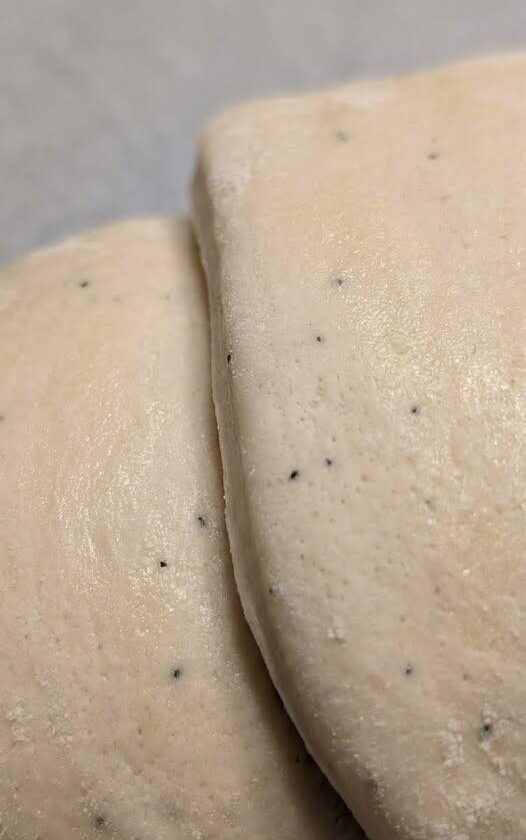
By contrast, harmless pastry specks are usually:
- Flat and dry
- Dark brown or charcoal-colored
- Embedded in the dough
- Odorless
If the dots look more like freckles baked into the dough, they’re usually safe.
The 4 Most Common Causes of Black Specks
1. Bran Specks From Flour
One of the most common causes is tiny particles of wheat bran or germ left in the flour.
Many flours—especially:
- organic flour
- stone-ground flour
- minimally processed flour
contain natural bits of grain. During baking, these particles darken and appear as tiny specks.
This is actually a sign of less processed flour, not a defect.
2. Caramelized Butter Solids
Puff pastry contains a large amount of butter. Butter isn’t pure fat—it also contains milk solids and proteins.
During the folding and baking process (called lamination), these solids can brown slightly, creating small dark spots.
This is similar to the golden browning you see in:
- toasted butter
- grilled cheese crusts
- browned pastries
In many cases, this browning actually adds flavor.
3. Oxidation From Storage
If puff pastry has been thawed too long or stored improperly, the fats can begin to oxidize.
This may create:
- light speckling
- dull coloring
- slight discoloration
While it’s usually still safe if properly frozen, oxidized pastry might:
- taste slightly stale
- rise less during baking
If the pastry smells normal, it’s often still usable.
4. Residue From Baking Trays
Sometimes the specks aren’t actually in the pastry—they’re transferred from the baking surface.
Possible causes include:
- burnt flour on a tray
- caramelized sugar residue
- grease spots from previous baking
When the dough touches the tray, those marks can transfer to the pastry.
Using clean parchment paper or a wiped baking sheet prevents this.
When Puff Pastry Is Safe to Use
You can usually bake the pastry safely if:
✔ The specks are flat and dry
✔ The dough smells neutral or buttery
✔ There’s no fuzzy growth
✔ The texture feels normal
In these cases, the dots are most likely natural ingredients or mild browning.
When You Should Throw It Away
Discard the pastry if you notice:
✖ Fuzzy or raised spots
✖ Green, blue, or white patches
✖ Sour or musty smell
✖ Sticky or slimy texture
✖ Severe freezer burn
These are signs of spoilage or mold.
Simple Tips to Prevent Black Specks
You can reduce the chances of mysterious spots with a few simple steps:
- Store puff pastry sealed tightly in the freezer
- Avoid thawing and refreezing
- Use clean baking sheets or parchment paper
- Keep pastry refrigerated until ready to use
- Choose refined flour if you want ultra-smooth dough
Final Thoughts
Seeing tiny black specks on puff pastry can be alarming at first, but in most cases they’re completely harmless. They’re often caused by natural flour particles, caramelized butter solids, or normal storage changes.
The key is to check the texture, smell, and appearance of the dough. If it smells fresh and the specks are flat and dry, you can usually bake with confidence.
And if something truly seems off—trust your instincts and toss it. Fresh ingredients are always the best foundation for delicious pastries.