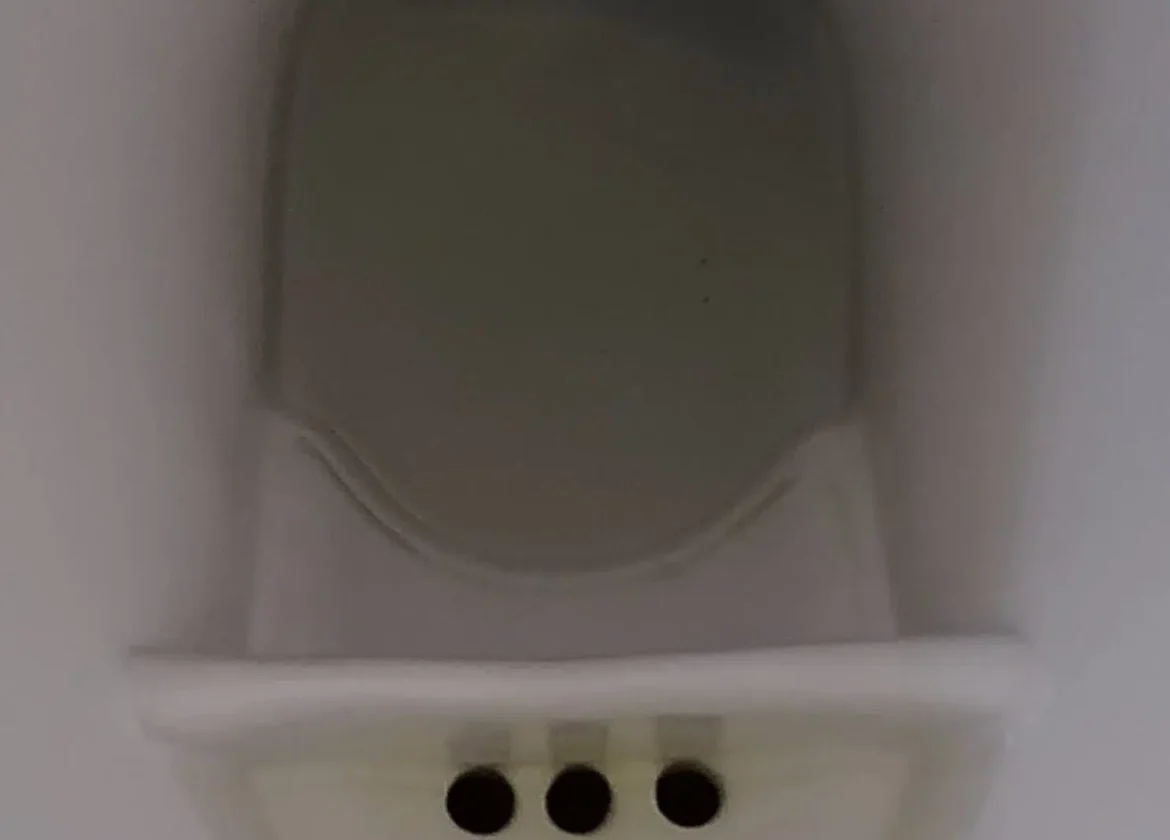
Now, just imagine this: You enter a bathroom, pull up the toilet lid, and bam. A weird shelf toilet sitting just above the waterline in the bowl, like a tiny landing pad for, well, your business. At first, you might say, what did the plumber do wrong? Maybe they ran out of parts? But then you understand it isn’t a mistake. It’s supposed to be there.
If you have ever recognized this strange feature, however, you are looking at what is known as a shelf toilet or, more formally, the German shelf toilet. I know what you’re thinking, though. “Who in their right mind would come up with a toilet like that?” I get it. It’s a little odd, a little weird, but it’s actually got a fairly logical explanation.
And I’m here to tell you everything.
Shelf toilet with a raised platform
source: Reddit
So What’s Up With That Shelf?
At first glance, the shelf toilet may appear to be a misstep of pooping engineering. What kind of person designs a toilet where whatever you dispense doesn’t directly drop into water? Seems inefficient, right? But here’s the thing: that shelf is actually for inspection, a very specific purpose inspection.
If you’re thinking it’s some strange European bathroom thing, stop right there. In ancient times, long before modern medical tests were available, examining stool was the easiest way to detect potential health problems. It’s kind of a do-it-yourself health check. The platform lets you easily check your waste for parasites, blood or diet-related problems. It was a sensible way of detecting health problems early, long before the time when doctors began to perform tests such as we conduct now.
It’s not glamorous, sure. But there’s a reason this design has evolved in parts of Europe for recent decades.
Health Check and Then Some: Other Surprising Benefits
Well, it’s not just for looking at your stool for signs of disease. There are some practical perks to the shelf toilet that you didn’t know you needed:
Less Splashback: Because let’s face it, we’ve all experienced that awkward moment right when you sit down and BAM! Splashback. Well, with the shelf toilet, wastes plummet onto a dry platform instead of slapping into the water. It means no drippy splashback, which, let’s face it, is a huge victory.
Better Hygiene: The design means it’s easier to check waste for indicators of health, but it also helps reduce mess. When waste doesn’t sink into the water right away, the opportunity for water splashes and the spread of bacteria falls away. And, of course, you still need to clean up after you use one, but the shelf can make things a bit more sanitary than a traditional toilet.
But yes, there is a disadvantage to the whole “dry platform” thing: the smell. Since the waste isn’t submerged at once, odors can hang around if you walk away from the toilet for an extended time without flushing. That’s why they’re often accompanied by a strong flush and ventilation system designed to address that problem.
source: Pixabay
So, Why Aren’t These Toilets Everywhere?
I know what you’re probably thinking: “If this shelf toilet is so great, why don’t I see it everywhere?” Well okay then, the answer is actually quite simple. Washdown toilets are favored in most of the world — especially the United States — where poop drops directly into a basin of water. Why? Because they tend to be more hygienic and odor-controlling. The water immediately covers the waste, which significantly decreases smell and possible contamination.
Still, in Sweden, Germany and the Netherlands, the shelf toilet design is quite popular. And in locations with older plumbing systems, you may even see them in medical contexts, where practitioners require a clearer view of stool for diagnostic reasons.
What to Do If You Find a Shelf Toilet?
So, say you are at a hotel being offered a shelf toilet. What now? Here’s how to handle it:
Don’t Panic: No, it’s not broken. Think of that shelf as being there for a reason. It’s just doing its job.
Flush Promptly: While it’s great for inspection, the shelf can cause odors to linger. Thus, flush immediately when finished to keep everything fresh.
Grab the Toilet Brush: Some users may need to clean the shelf after using it. But don’t fret, a toilet brush typically remains within arm’s reach precisely for moments like this.
The Shelf Toilet (Quirky but Practical)
So the next time you see a shelf toilet, try to view it through another perspective. It’s not just a strange design decision; it’s a practical piece of plumbing history. In its simplest form, this design has helped people assess their health for more than a century. Maybe the bathroom isn’t the most glamorous part of a home, but the topic has been an invaluable crutch to those who’ve known how to lean on it.
And while some places may not have embraced it yet, in others it’s quietly doing its work: Ensuring that people remain aware of their health, one inspection at a time.