
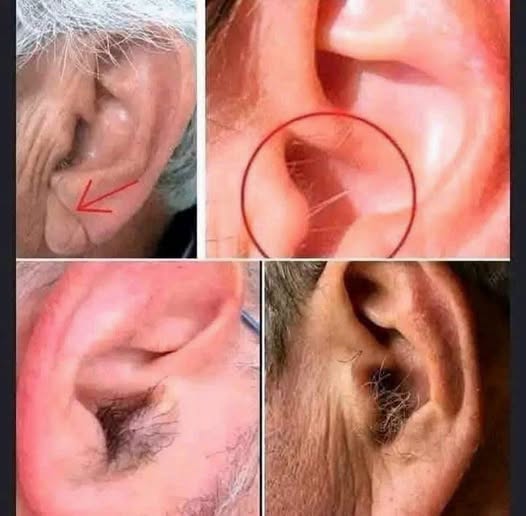
Many people notice something surprising as they get older: hair begins to appear on their ears. For some, it happens gradually after age 50 or 60. Others notice it almost overnight while looking in the mirror and immediately wonder if it signals a health problem.
The good news is simple: ear hair growth is usually a completely normal part of aging.
Rather than indicating illness or poor health, ear hair is often the result of natural hormonal changes, genetics, and the aging process itself.
Why Does Ear Hair Increase With Age?
Our bodies change in different ways as we get older. While hair on the scalp may become thinner, hair in other areas—including the ears, nose, and eyebrows—can become thicker or more noticeable.
This happens because hair follicles in different parts of the body respond differently to hormones over time.
The Role of Hormones
Male hormones known as androgens, particularly testosterone and its byproduct dihydrotestosterone (DHT), play an important role in hair growth patterns.
Interestingly, these hormones can have opposite effects depending on where the hair follicle is located:
- They may contribute to thinning hair on the scalp.
- At the same time, they can stimulate growth in the ears, nose, and eyebrows.
This is why many men notice increased ear hair as they age.
Women can experience similar changes as well, especially after menopause when estrogen levels decline and hormonal balances shift.
Genetics Matter More Than You Think
If your father or grandfather developed noticeable ear hair later in life, there’s a good chance you may as well.
Genetics influence:
- Hair thickness
- Growth speed
- Hair density
- The areas where hair becomes more prominent with age
Some people develop only a few fine hairs, while others experience more substantial growth.
Ear Hair Actually Serves a Purpose
Although many people see ear hair as purely cosmetic, it originally had protective functions.
Ear hair helps:
- Trap dust and debris
- Reduce the chance of insects entering the ear canal
- Provide a barrier against small particles
As we age, these hairs can become longer or more visible, but the underlying purpose remains the same.
Common Myths About Ear Hair
Several myths continue to circulate about ear hair growth. Fortunately, most of them have no scientific basis.
Myth: Ear hair means you have poor circulation.
False. Ear hair growth is not linked to circulation problems.
Myth: Ear hair is a sign of disease.
False. Ear hair is generally a normal age-related change.
Myth: Hormonal imbalance causes ear hair.
Mostly false. Normal hormonal aging is usually responsible, not a medical disorder.
Myth: Trimming ear hair makes it grow back thicker.
False. Cutting hair only creates a blunt edge, making regrowth appear thicker even though the hair itself has not changed.
Should You Remove Ear Hair?
Removing ear hair is entirely a personal choice.
If you prefer a cleaner appearance, experts recommend:
- Using electric ear trimmers designed specifically for grooming.
- Using rounded-tip grooming scissors for visible hairs.
- Avoiding tweezers deep inside the ear canal.
- Never inserting sharp objects into the ear.
Safety should always come first.
A Visible Sign of Aging—Not a Problem
Many people feel embarrassed by ear hair because society often associates aging with something that should be hidden.
In reality, ear hair is simply another reminder that the body changes over time.
Just as wrinkles, gray hair, and reading glasses become more common with age, ear hair is part of the natural journey of growing older.
The Bottom Line
If you notice hair growing on your ears, there is usually no reason for concern.
In most cases, it is simply the result of:
- Natural aging
- Hormonal changes
- Genetics
- Normal body functions continuing over time
Ear hair is not a disease, a warning sign, or a mystery. It is simply another way the human body adapts and evolves throughout life.
Aging brings changes that are sometimes surprising, but many of them—including ear hair—are perfectly normal.