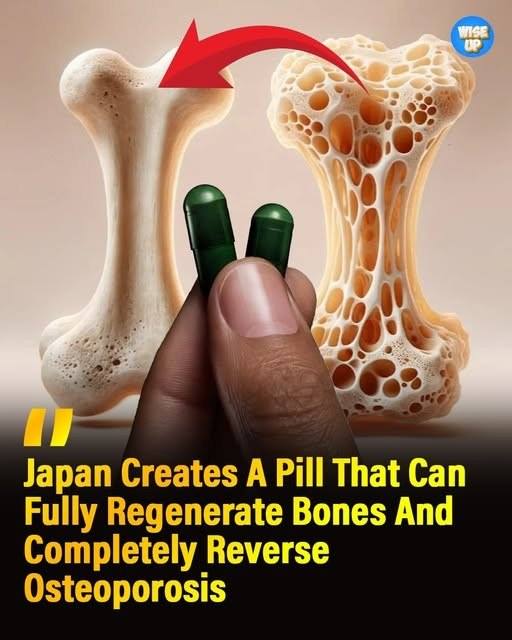
New Daily Pill May Help Reverse Osteoporosis Naturally, Researchers Say
For decades, osteoporosis treatments have focused mainly on slowing bone loss.
Doctors could help patients protect the bone they still had — but rebuilding bone that was already lost remained one of medicine’s biggest challenges.
Now, researchers in Japan believe that may finally be changing.
Scientists at Tokyo Medical and Dental University are developing a promising new daily pill that may actually help reverse osteoporosis by stimulating the body’s natural bone-building process instead of simply slowing further damage.
The early findings are generating excitement because this approach targets the root imbalance behind osteoporosis itself: the breakdown between bone loss and bone formation.
For millions of older adults living with fragile bones, fractures, and declining mobility, the possibility of rebuilding bone density could represent a major shift in the future of healthy aging.
While the research is still in early stages, experts say the science behind it may open the door to a completely new generation of osteoporosis treatment.
Why This Research Is Getting Attention
- Focuses on rebuilding bone instead of only slowing bone loss
- Targets the body’s natural bone remodeling system
- May improve bone density and bone strength
- Could work alongside exercise for better mobility and muscle health
- Represents a potentially major breakthrough in osteoporosis research
What Is Osteoporosis?
Osteoporosis is a condition that causes bones to become weak, thin, and fragile.
As bone density decreases, the risk of fractures rises significantly — especially in the:
- hips
- spine
- wrists
- ribs
Many people do not realize they have osteoporosis until a fracture occurs.
The condition becomes more common with aging and especially affects postmenopausal women, though men can develop osteoporosis too.
Common Symptoms of Osteoporosis
In early stages, osteoporosis often causes no symptoms at all.
As bone loss progresses, signs may include:
- back pain
- loss of height
- stooped posture
- fragile bones
- fractures from minor falls
- decreased mobility
Because osteoporosis develops gradually, prevention and early treatment are extremely important.
How Bones Constantly Rebuild Themselves
One of the most fascinating parts of the human body is that bone is constantly renewing itself.
Your skeleton is not fixed or permanent.
Instead, your body continuously removes old bone and replaces it with new bone through a process called bone remodeling.
This process depends on two important cell types:
Osteoblasts 🧱
These cells build new bone.
They help strengthen and repair the skeleton over time.
Osteoclasts ⚒️
These cells break down old bone so it can be replaced.
Healthy bones depend on balance between these two systems.
What Happens in Osteoporosis?
In osteoporosis, the balance becomes disrupted.
Bone breakdown begins happening faster than new bone can be rebuilt.
Over time, bones become:
- weaker
- thinner
- more fragile
- more likely to fracture
Most current osteoporosis medications mainly focus on slowing the activity of osteoclasts — the cells responsible for bone breakdown.
While this helps preserve existing bone, it often cannot fully restore bone already lost.
That’s what makes this new research so different.
The New Discovery: Targeting the GPR133 Receptor
Researchers at Tokyo Medical and Dental University are studying compounds that activate something called the GPR133 receptor.
This receptor appears to play an important role in stimulating new bone formation.
By activating GPR133, scientists hope to:
- increase osteoblast activity
- reduce excessive osteoclast activity
- rebuild bone density
- improve bone strength naturally
In simple terms:
the goal is not just protecting bone —
but actually helping regrow it.
Early Study Results Look Promising
In preclinical studies, researchers observed several encouraging outcomes.
The treatment appeared to help:
- increase bone density
- improve bone structure
- strengthen bone architecture
- stimulate new bone formation
This suggests the therapy may potentially reverse some osteoporosis-related damage rather than simply slow further decline.
That possibility is what makes the research especially exciting within the medical community.
Why Exercise May Still Matter
Another important part of the research involves physical activity.
Scientists believe this future treatment could potentially work even better when combined with resistance exercise and strength training.
Exercise naturally helps stimulate:
- muscle growth
- bone loading
- balance
- coordination
- circulation
Activities that may support bone health include:
- walking
- resistance bands
- light weightlifting
- balance exercises
- bodyweight training
The combination of medication plus movement may offer a more complete approach to healthy aging.
Is This Osteoporosis Pill Available Yet?
Not yet.
While the research is exciting, it is still in early development stages.
That means:
- human trials remain limited
- long-term safety is still being studied
- effectiveness in large patient populations is not yet confirmed
- researchers still need more clinical data
So although headlines about a “bone rebuilding pill” sound exciting, experts caution that more research is needed before the treatment becomes widely available.
Is Osteoporosis Reversible?
Currently, osteoporosis is generally considered manageable rather than fully reversible.
However, some treatments may help improve bone density and reduce fracture risk.
This new research is important because it shifts the conversation from:
“slowing decline”
to potentially
“rebuilding strength.”
That represents a major change in how scientists think about future bone health treatment.
Healthy Habits That Support Bone Health
While research continues, doctors still recommend lifestyle habits that support strong bones naturally.
Eat Bone-Supportive Nutrients
Focus on:
- calcium-rich foods
- vitamin D
- magnesium
- protein
- leafy greens
Stay Physically Active
Weight-bearing exercise helps stimulate bone strength.
Avoid Smoking
Smoking is strongly associated with reduced bone density.
Limit Excess Alcohol
Heavy alcohol intake may weaken bones over time.
Prioritize Balance and Mobility
Falls are one of the biggest fracture risks in osteoporosis patients.
Is Osteoporosis Common?
Yes — extremely common.
Millions of people worldwide live with osteoporosis or low bone density.
Risk increases with:
- aging
- menopause
- family history
- inactivity
- low calcium intake
- smoking
- certain medications
As populations age globally, osteoporosis research is becoming increasingly important.
FAQ About the New Osteoporosis Pill
What is the new osteoporosis pill designed to do?
Researchers hope the pill may help rebuild lost bone by stimulating bone-building cells called osteoblasts.
What is the GPR133 receptor?
GPR133 is a biological receptor researchers believe may help trigger new bone formation.
Has the pill been approved yet?
No. The treatment is still in early research and testing stages.
Can exercise improve osteoporosis?
Yes. Resistance exercise and weight-bearing activity may help support bone density and strength.
Is osteoporosis reversible?
Current treatments mainly slow bone loss, but emerging research aims to restore lost bone density.
You May Also Like
- Early Warning Signs of Osteoporosis Many People Ignore
- Best Foods for Strong Bones After 50
- Simple Exercises That Support Bone Density
- How Vitamin D Affects Bone Health
- Natural Ways to Support Healthy Aging
- Common Habits That May Weaken Bones Faster
Final Thoughts
For years, osteoporosis treatment has focused mainly on preventing things from getting worse.
This new research suggests the future may look very different.
Instead of only slowing bone loss, scientists are now exploring ways to help the body rebuild bone naturally — potentially restoring strength, mobility, and quality of life for millions of people.
While much more research is still needed, the direction is undeniably promising.
From preserving bone…
to potentially regenerating it.
That shift could redefine the future of osteoporosis care entirely.
And for many people living with fragile bones and fear of fractures, that possibility alone offers something incredibly powerful:
hope.