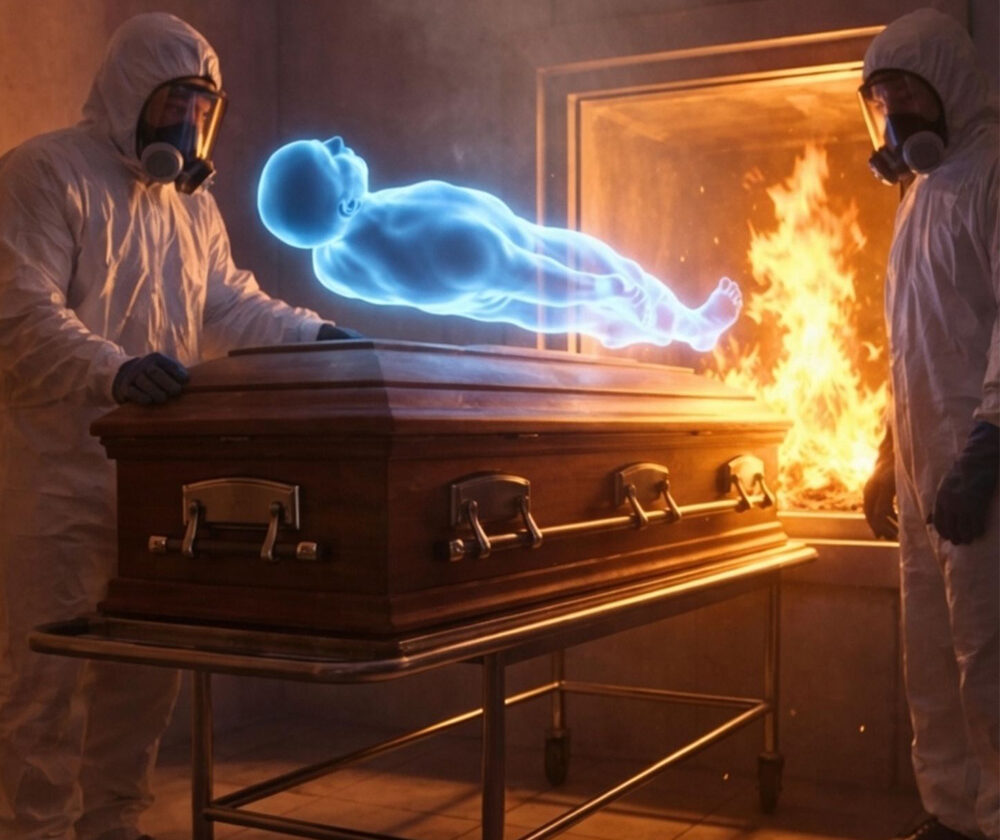
The Bible does not explicitly forbid cremation — but the answer isn’t simple. Here is what Christianity, Islam, Judaism, Hinduism, and Buddhism genuinely teach about the body after death.
Few topics sit at the crossroads of faith, family, and grief quite like the question of cremation. As more families across the United States and the world face end-of-life decisions, this question comes up with increasing frequency — and the answers, depending on who you ask, can vary dramatically.
For devout Christians, the question often begins with a deeply personal one: Is cremation a sin? What does the Bible actually say? Is burial the only truly faithful option? And for those of other faiths — Muslim, Jewish, Hindu, Buddhist — the teachings are equally distinct, each rooted in centuries of theology, tradition, and deeply held beliefs about the body, the soul, and what comes after death.
This article explores what each major world religion genuinely teaches about cremation, examines the relevant biblical passages carefully, and helps families navigating these difficult decisions feel informed and respected — whatever path they ultimately choose.
Jump to a religion:
At a Glance: What Each Religion Teaches
| Religion | Cremation Permitted? | Traditional Practice |
|---|---|---|
| Christianity | Varies by denomination | Burial historically preferred; cremation now widely accepted |
| Hinduism | Required | Cremation is the sacred duty — essential for the soul’s release |
| Buddhism | Widely practiced | Cremation reflects the teaching of impermanence |
| Islam | Forbidden | Burial required; cremation considered disrespectful to the body |
| Judaism | Traditionally prohibited | Burial strongly preferred; some Reform communities allow cremation |
1. Christianity — What Does the Bible Really Say?
⚖ Nuanced — Varies by DenominationThis is the question many believers ask most urgently: Is cremation a sin? The careful, honest answer is that the Bible does not explicitly forbid cremation. There is no direct command in Scripture stating that the body must not be burned after death.
In fact, the Bible’s primary focus after death is on the soul, not the physical body. The body, according to Scripture, is temporary — a vessel that will one day return to the earth from which it came.
This verse, often cited in discussions of cremation, emphasizes that the physical body’s ultimate return to the earth is part of God’s design — whether that happens through burial, decomposition, or cremation. Many theologians argue that if God can resurrect a body from dust, He is certainly not limited by the method of its return to that state.
There are passages in the Old Testament where fire or burning is associated with judgment in specific contexts, and some believers interpret these as suggesting that a natural burial is the preferred tradition. This view is held by certain evangelical and conservative denominations who see burial as the more biblically consistent practice, pointing to the examples of Abraham, Jacob, Joseph, and Jesus himself — all of whom were buried.
However, the majority of mainstream Christian theologians today agree on a crucial point: cremation itself is not clearly defined as a sin in the Bible. The Catholic Church permitted cremation in 1963 (with guidelines about respectful treatment of remains). Most Protestant denominations leave the decision to individual families. Eastern Orthodox Christianity remains the most consistent in requiring burial.
Ultimately, most Christian theologians conclude that the manner in which a body is treated after death does not affect the soul’s relationship with God or the promise of resurrection. God’s power is not limited by the physical condition of the body at the time of resurrection. Cremation, in this view, is a matter of personal conviction, denominational tradition, and family discernment — not a matter of salvation.
2. Hinduism — Cremation as Sacred Duty
✓ Required — Religiously EssentialIn Hinduism, cremation is not simply accepted — it is considered a sacred obligation. The ritual of cremation, known as Antyesti (meaning “last sacrifice”), is one of the most important of the 16 sacraments in Hindu tradition. It is believed to perform a vital spiritual function: releasing the soul from the physical body so it can continue its journey toward rebirth or, ultimately, moksha (liberation from the cycle of rebirth).
According to Hindu belief, the body is a temporary vehicle for the soul. Fire is considered a purifying force — it destroys the physical form efficiently and completely, freeing the soul from its earthly attachment. The cremation ceremony is typically performed by the eldest son and involves specific prayers, rituals, and the scattering of ashes, often in a sacred river like the Ganges.
For Hindus, not cremating a body is the greater concern — burial is generally avoided because it is believed to delay the soul’s journey and potentially cause it to linger between worlds. Cremation is the compassionate, spiritually correct act for a loved one who has passed.
The body is a vessel. Fire is liberation.
3. Buddhism — Impermanence and the Fire Ceremony
✓ Widely Practiced — Spiritually ConsistentBuddhism’s acceptance of cremation runs deep — rooted in one of its most fundamental teachings: anicca, or impermanence. All things are temporary, the body included. Buddhism teaches that attachment to the physical form — including the body after death — can be a source of suffering. Cremation, which reduces the body to its most basic elements quickly and completely, is seen as a natural and spiritually harmonious act.
The Buddha himself was cremated after his death, according to Buddhist tradition, and his remains were distributed among his followers as sacred relics. This set a precedent that has been followed across Buddhist communities in Japan, Thailand, Sri Lanka, Tibet, and beyond for more than 2,500 years.
While cremation is the most widely practiced method, Buddhism does not mandate it above all else. The key emphasis is on the spirit of the farewell — that it is performed with mindfulness, compassion, and respect — rather than on the specific physical method.
Impermanence is not loss — it is truth.
4. Islam — Burial as a Religious Requirement
✗ Strictly ForbiddenIn Islam, cremation is clearly and unambiguously prohibited. This is not a matter of interpretation or personal choice — it is a firm religious ruling grounded in Islamic law (Sharia) and in the teachings of the Prophet Muhammad (peace be upon him). Burial is required as an act of obedience to God and as a mark of deep respect for the human body.
Islamic theology teaches that the body, having been created by Allah and having served as the vessel for the soul during life, deserves to be treated with dignity in death. Burial returns the body to the earth in a manner that honors this dignity. The body is washed, wrapped in a white shroud, and buried — ideally facing the direction of Mecca — as soon as possible after death, typically within 24 hours.
The Islamic prohibition on cremation also connects to the belief in the Day of Resurrection (Yawm al-Qiyamah), on which all bodies will be raised. While Islamic theology acknowledges that Allah’s power is unlimited and not dependent on the physical state of the body, the requirement of burial remains firm as an act of faith and reverence.
Burial is the sacred duty. No exceptions in traditional teaching.
5. Judaism — The Dignity of Return to Earth
✗ Traditionally ProhibitedTraditional Jewish law (Halacha) prohibits cremation and strongly favors burial. This teaching is rooted in several foundations: the commandment to honor the body (kavod ha-met), the biblical precedent of burial throughout the Torah, and the principle of returning the body to the earth — “for dust you are and to dust you shall return” (Genesis 3:19), which Jewish tradition interprets as specifically referring to burial in the ground.
Traditional and Orthodox Judaism maintain this prohibition firmly. Conservative Judaism generally discourages cremation but may permit it in certain circumstances. Reform and Reconstructionist movements take a more permissive stance, allowing individuals and families greater latitude in their decisions, though burial remains the encouraged preference even in more liberal communities.
For Jewish families who have survived the Holocaust, cremation carries an additional layer of profound historical trauma — it is associated with the forced mass cremations carried out by the Nazi regime. Many Jewish families and communities hold this context with deep solemnity when the topic arises.
Traditional teaching: the body returns to earth as it was given.
Why Is Cremation Becoming More Common?
Across the United States and much of the Western world, cremation rates have risen dramatically over the past three decades. Understanding why helps families make more informed, personalized decisions — and contextualizes the shifting landscape in which these religious questions arise.
- 💰
Significantly lower cost. The average traditional burial in the United States costs $7,000–$12,000 when funeral home services, a burial plot, and a headstone are included. Cremation typically costs $1,000–$3,000. For many families, especially those without pre-arranged funeral plans, this difference is decisive.
- 🌍
Environmental considerations. A growing number of people, particularly younger generations, are choosing cremation partly out of environmental concern — traditional burials use embalming chemicals, wood, metal, and land that some families prefer to avoid.
- 🏙️
Urban land scarcity. In densely populated cities — from New York to Tokyo to London — cemetery space is genuinely limited and often expensive. Cremation eliminates the need for a burial plot entirely.
- 🌐
Geographic flexibility. Modern families are often dispersed across states or countries. Cremation allows ashes to be transported easily, divided among family members, or scattered at a place of personal significance — a flexibility that traditional burial cannot offer.
- 💭
Shifting attitudes toward death and meaning. More people today approach end-of-life planning as a personal, customizable experience rather than a strictly religious one. Many prioritize a meaningful farewell over adherence to tradition, which has contributed to the rise of both cremation and non-traditional memorial services.
Frequently Asked Questions
The Bible does not explicitly state that cremation is a sin. There is no direct biblical command forbidding the burning of the body after death. Scripture’s emphasis after death is overwhelmingly on the soul, not the physical form. Most mainstream Christian theologians — Catholic, Protestant, and evangelical — agree that cremation is not a sin, though they may prefer burial as a tradition that more directly reflects the hope of bodily resurrection. The decision is widely considered a matter of personal faith and family preference, not a matter of salvation.
Islam and traditional Judaism both prohibit cremation. In Islam, burial is required as an act of obedience to God and respect for the body — this is a firm ruling with no exceptions in traditional Islamic law. In Judaism, traditional and Orthodox teaching prohibits cremation and requires burial in the ground. Conservative Judaism discourages cremation; Reform and Reconstructionist movements give individuals more latitude. Eastern Orthodox Christianity also maintains a strong preference for burial, though it is less categorically prohibitive than Islam or Orthodox Judaism.
From a theological standpoint across most Christian denominations, no. The vast majority of Christian theologians teach that God’s power to resurrect the body is not limited by its physical condition at the time of resurrection. A God who created the body from nothing can certainly restore it from ash, dust, or any other state. This is why most mainline Christian denominations consider cremation theologically acceptable. The belief in bodily resurrection is about God’s power and faithfulness — not about preserving the physical body intact.
The Catholic Church officially permitted cremation in 1963, marking a significant shift from its earlier prohibition. Today, cremation is allowed under Catholic teaching, provided it is not chosen as a way to deny or reject the belief in bodily resurrection. The Church does require that cremated remains be treated with the same reverence as a body — they should be kept in a sacred place (such as a Catholic cemetery or church columbarium) and not scattered, divided, or kept at home in most circumstances. A Catholic funeral Mass may be celebrated with cremated remains present.
Prayerfully, with respect for both faith and family. Most Christian families navigating this decision will benefit from speaking with their pastor, priest, or spiritual advisor about their specific denomination’s teaching. Beyond that, the decision often involves practical considerations — cost, family geography, personal wishes of the deceased — alongside theological ones. What most theologians across denominations agree on is this: God’s grace is not dependent on how the body is treated after death. The most important thing is that the farewell is conducted with love, faith, and dignity.
You May Also Like
What the Bible Says About Life After Death — A Complete Guide
Faith & Scripture
How to Plan a Meaningful Funeral on Any Budget
End-of-Life Planning
Christian Funeral Traditions: What to Expect and What They Mean
Faith & Tradition
Green Burials: The Eco-Friendly Alternative More Families Are Choosing
End-of-Life Options
How to Write a Meaningful Eulogy — Step-by-Step Guide
Grief & Memorial
What Different Religions Believe About Heaven and the Afterlife
World Religions
What Truly Lasts Is Not the Body — It Is What We Carry Forward
Across every faith tradition explored in this article, one thread runs through all of them: the body after death is a vessel, and what matters most is the soul, the spirit, and the love left behind.
Whether your faith calls you toward burial, cremation, or another form of farewell, the most important thing is that the decision is made with honesty, love, and respect — for the person who has passed, and for the beliefs that guided their life.
For most Christians, the comfort is this: God’s grace is not measured by the condition of the body. It is measured by the heart.