
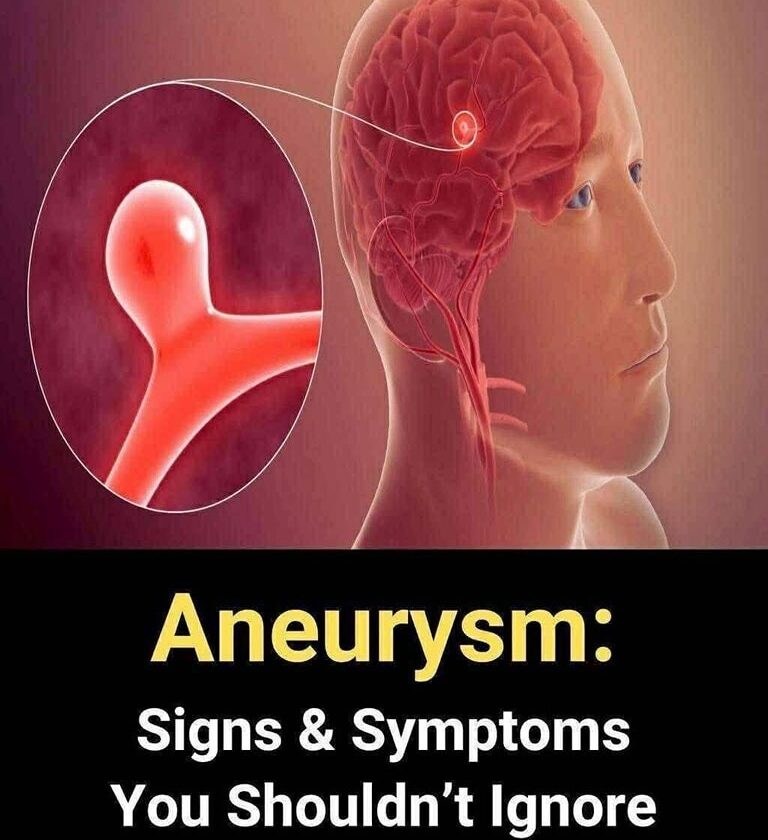
12 Brain Aneurysm Warning Signs You Should Never Ignore
A Headache That Changed Everything
A friend’s healthy 52-year-old mother once complained of what she called “the worst headache of her life.” It struck suddenly—like an explosion in her head. Her husband wanted to rush her to the emergency room, but she insisted it was “just a bad migraine” and decided to sleep instead.
She never woke up.
Doctors later discovered the cause: a ruptured brain aneurysm.
Stories like this are heartbreaking because many people do not realize that certain sudden neurological symptoms can signal a medical emergency. While most headaches are harmless, some symptoms should never be ignored—especially when they appear suddenly or feel completely different from anything you’ve experienced before.
Recognizing the warning signs of a brain aneurysm could save a life.
What Is a Brain Aneurysm?
A brain aneurysm—also called a cerebral aneurysm—is a weak, bulging area in a blood vessel in the brain. Over time, pressure from blood flow can cause the vessel wall to balloon outward.
Many aneurysms never rupture and may cause no symptoms at all. But when an aneurysm leaks or bursts, it can lead to a life-threatening type of bleeding called a subarachnoid hemorrhage.
Important Facts
- Many aneurysms remain undetected for years.
- Ruptured aneurysms are medical emergencies.
- Early treatment greatly improves survival chances.
- High blood pressure and smoking significantly increase risk.
- Family history may increase the likelihood of developing aneurysms.
12 Warning Signs You Should Never Ignore
1. Sudden, Severe “Thunderclap” Headache
This is the most classic warning sign.
People often describe it as:
- “The worst headache of my life”
- A sudden explosive pain
- Feeling like being hit in the head
- A headache that reaches maximum intensity within seconds
Unlike tension headaches or most migraines, thunderclap headaches appear suddenly and intensely.
Even if the pain improves later, emergency evaluation is still essential.
2. Blurred or Double Vision
An aneurysm can place pressure on nerves connected to the eyes.
Symptoms may include:
- Blurry vision
- Double vision
- Difficulty focusing
- Sudden visual disturbances
These symptoms should never be ignored when they appear suddenly.
3. Drooping Eyelid
One eyelid may suddenly begin to droop.
This can happen when an aneurysm presses on the nerves responsible for controlling eye movement and eyelid muscles.
A drooping eyelid combined with vision changes is especially concerning.
4. Unequal or Dilated Pupils
If one pupil becomes noticeably larger than the other, it may indicate pressure affecting nerves inside the brain.
Sudden pupil changes require immediate medical attention.
5. Pain Around or Behind the Eye
Some aneurysms create localized pressure that causes:
- Deep eye pain
- Pain behind one eye
- Persistent pressure near the eye socket
People sometimes mistake this symptom for sinus pain or eye strain.
6. Weakness or Numbness on One Side of the Body
Sudden weakness, tingling, or numbness may resemble stroke symptoms.
Warning signs include:
- Arm weakness
- Leg weakness
- Difficulty gripping objects
- Facial numbness
Any sudden neurological weakness should be treated as an emergency.
7. Facial Drooping
One side of the face may sag or feel weak.
The smile may appear uneven, or one side of the mouth may not move normally.
This can happen when bleeding or pressure affects areas of the brain controlling facial muscles.
8. Difficulty Speaking or Slurred Speech
People experiencing aneurysm-related complications may suddenly:
- Slur words
- Struggle to form sentences
- Use incorrect words
- Have difficulty understanding speech
Speech changes are serious neurological symptoms requiring emergency evaluation.
9. Stiff Neck
A ruptured aneurysm can irritate tissues surrounding the brain and spinal cord.
This may cause:
- Neck stiffness
- Pain when bending the neck forward
- Severe headache with neck discomfort
A stiff neck combined with sudden headache is especially concerning.
10. Sudden Nausea and Vomiting
Unexpected nausea or vomiting—especially alongside a severe headache—may occur due to increased pressure inside the skull.
This is particularly concerning when there is no obvious stomach-related cause.
11. Extreme Sensitivity to Light
Bright lights may suddenly become painful or overwhelming.
This symptom can occur because bleeding irritates the protective membranes surrounding the brain.
Although migraines can also cause light sensitivity, sudden onset alongside other neurological symptoms should be treated seriously.
12. Seizures
A ruptured aneurysm may trigger seizures due to abnormal electrical activity in the brain.
Symptoms may include:
- Shaking or convulsions
- Sudden collapse
- Loss of consciousness
- Staring episodes
A first-time seizure in an adult is always a medical emergency.
The “Sentinel Headache” Warning
Some people experience a smaller leak before a catastrophic rupture.
This warning event—sometimes called a sentinel headache—may occur days or weeks earlier.
Characteristics include:
- Sudden severe headache
- Pain unlike previous headaches
- Symptoms that improve temporarily
Many people ignore these early warning headaches because the symptoms eventually fade.
That can be dangerous.
When to Seek Emergency Care
Call emergency services immediately if you or someone nearby experiences:
- A sudden thunderclap headache
- Weakness or numbness
- Facial drooping
- Vision changes
- Slurred speech
- Loss of consciousness
- Seizures
- Severe headache with vomiting or neck stiffness
Do not wait to “see if it gets better.”
Do not drive yourself if symptoms are severe.
Rapid treatment can save brain function—and save lives.
Risk Factors for Brain Aneurysms
Certain factors increase risk, including:
- High blood pressure
- Smoking
- Family history of aneurysms
- Heavy alcohol use
- Drug use, especially cocaine
- Certain inherited connective tissue disorders
- Age over 40
While aneurysms cannot always be prevented, managing blood pressure and avoiding smoking can significantly reduce rupture risk.
Important Perspective: Most Headaches Are NOT Aneurysms
It’s important not to panic.
Most headaches are caused by far less dangerous conditions such as tension headaches, dehydration, sinus problems, migraines, or stress.
However, a sudden severe headache that feels dramatically different from normal—especially when combined with neurological symptoms—should never be ignored.
Trust your instincts.
If something feels unusually intense, sudden, or alarming, seek medical attention.
Final Thoughts
Brain aneurysms are dangerous largely because they are often silent until an emergency occurs.
But sometimes the body sends warnings.
A thunderclap headache.
A drooping eyelid.
Sudden confusion.
Vision changes.
Weakness.
Recognizing these signs and responding quickly can make the difference between life and death.
Awareness is not about fear—it’s about knowing when symptoms deserve urgent attention.
If you ever experience sudden neurological symptoms unlike anything you’ve felt before, do not ignore them.
Your brain is worth protecting.