Why Ham Sometimes Looks Rainbow Colored — The Surprising Science Behind Iridescent Deli Meat
You open a fresh package of sliced ham, expecting lunch.
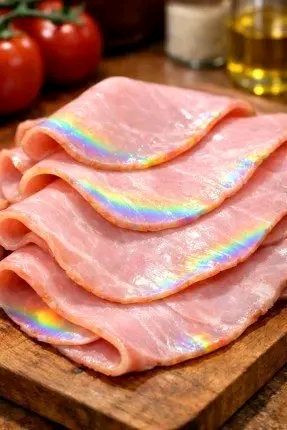
Instead, you’re greeted by shimmering streaks of green, blue, and purple gliding across the surface like an oil slick. For a split second, panic kicks in. Has the meat gone bad? Is it covered in chemicals? Should you throw it away immediately?
It’s a surprisingly common experience — and one that sends countless people searching online every year.
The truth is both strange and reassuring:
That rainbow shine on ham is usually not spoilage at all.
In most cases, it’s simply science.
Known as iridescence, this colorful effect happens because of the way light interacts with the microscopic structure of sliced meat. While the appearance can look unnatural, it’s often completely harmless.
Still, there’s an important catch: rainbow coloring alone doesn’t guarantee freshness. Knowing the difference between harmless iridescence and actual spoilage is what truly matters for food safety.
Why Does Ham Look Rainbow Colored?
The colorful shimmer isn’t caused by chemicals, mold, or bacteria.
It’s physics.
Iridescence
Ham — like all meat — is made up of tightly packed muscle fibers arranged in organized patterns. When deli meat is sliced very thinly, especially against the grain, the cut surface develops microscopic ridges and layers.
When light hits these tiny aligned structures, it bends and scatters into different wavelengths, creating rainbow-like reflections.
The effect works similarly to:
- Soap bubbles
- Oil on water
- CDs or DVDs
- Peacock feathers
The colors change depending on:
- Viewing angle
- Lighting conditions
- Moisture on the meat surface
That’s why the rainbow sometimes appears vivid in one direction and disappears in another.
Why Deli Ham Shows Iridescence More Often
Certain meats display iridescence more dramatically because of how they’re processed.
Cured meats like ham often contain:
- Salt
- Nitrates
- Moisture-retaining ingredients
Ham
These curing methods help preserve moisture and create a smooth reflective surface that enhances the rainbow effect.
Thin slicing also increases visibility because more muscle fiber surfaces become exposed to light.
Ironically, a rainbow shimmer can actually indicate:
- Fresh slicing
- High moisture content
- Intact muscle structure
rather than spoilage.
When Rainbow Ham Is NOT Safe
Although iridescence itself is harmless, spoiled meat can still show rainbow colors.
That’s why food safety experts recommend checking multiple signs instead of relying on color alone.
Warning Signs of Spoilage
Slimy Texture
Fresh deli ham should feel slightly moist but not sticky or slippery.
A slimy coating may signal bacterial growth.
Sour or Sulfur Smell
Spoiled meat often develops:
- Sour odors
- Rotten smells
- Sulfur-like scents
If the smell feels “off,” trust your instincts.
Gray or Brown Discoloration
Rainbow reflections shift with light.
Spoilage discoloration stays permanent and dull.
Mold Growth
Any fuzzy patches, green spots, or visible mold mean the meat should be discarded immediately.
The Biggest Hidden Risk: Listeria
One reason deli meats require caution is the risk of:
Listeriosis
The bacteria Listeria monocytogenes can grow even inside refrigerated foods.
What makes it especially dangerous is that contamination doesn’t always cause:
- Strong smells
- Obvious discoloration
- Visible spoilage
This is why proper storage time matters just as much as appearance.
How Long Is Opened Deli Ham Safe?
According to food safety recommendations, opened deli meats should generally be eaten within:
- 3–5 days after opening
Even if the meat still looks fine.
Leaving deli meat in the refrigerator too long increases the risk of bacterial growth, especially once packaging has been opened repeatedly.
Best Storage Tips for Deli Meat
Proper storage helps maintain both freshness and safety.
Keep It Airtight
Wrap ham tightly in:
- Plastic wrap
- Foil
- Airtight containers
to reduce exposure to air and moisture changes.
Store in the Coldest Part of the Fridge
The meat drawer or lower shelf often stays slightly colder than refrigerator doors.
Avoid Temperature Swings
Repeated warming and cooling encourages bacterial growth.
Is Rainbow Meat Dangerous?
In most cases, no.
Rainbow coloration by itself is usually just an optical effect caused by light reflecting off muscle fibers.
But safe food evaluation should always include:
- Smell
- Texture
- Storage time
- Overall appearance
A colorful shine is harmless.
A slimy, sour-smelling package is not.
FAQ
Why does ham turn rainbow colored?
The rainbow effect happens because light bends across microscopic muscle fibers in thinly sliced meat.
Is iridescent ham safe to eat?
Usually yes, provided there are no signs of spoilage like slime, sour smell, or mold.
Does rainbow ham mean chemicals were added?
No. The effect is a natural optical phenomenon, not chemical contamination.
How long does deli ham last after opening?
Typically 3–5 days when properly refrigerated.
What bacteria can grow on deli meat?
Listeria is one of the main concerns because it can grow even at refrigerator temperatures.
Final Thoughts
That strange rainbow shimmer on your deli ham may look alarming at first glance, but it’s usually nothing more than light interacting with the meat’s microscopic structure.
In other words:
your sandwich isn’t glowing because it’s toxic.
It’s glowing because science is weird.
Still, food safety always matters more than appearance alone. Checking texture, smell, storage time, and overall freshness remains the smartest way to protect yourself and your family.
Because when it comes to deli meat, the real danger isn’t the rainbow.
It’s ignoring the signs that actually matter. 🥪