Engaging Introduction
Your mop works hard to keep your home clean, but have you ever stopped to think about how clean your mop actually is? After repeated use, mops collect dirt, bacteria, food particles, and unpleasant odors. Instead of cleaning your floors, a dirty mop can end up spreading germs around your home.
The good news is that you don’t need to throw away your mop and buy a new one. With a few simple ingredients that are probably already in your kitchen, you can restore even a very dirty mop in less than 30 minutes. These natural cleaning methods are affordable, effective, and perfect for maintaining a healthy home environment.
If you’re looking for easy cleaning hacks, money-saving home tips, and simple solutions for a healthier household, this guide will show you exactly how to make your mop fresh again—without expensive cleaning products.
Why You’ll Love This Cleaning Trick
- Saves money – No need to replace your mop frequently.
- Easy household solution – Uses ingredients you already have at home.
- Removes odors and bacteria effectively.
- Eco-friendly cleaning method – Avoids harsh chemicals.
- Keeps floors truly clean instead of spreading germs.
Why Mop Hygiene Matters
A mop absorbs far more than just dirty water. Each time you clean your floors, the fibers trap moisture, dust, food residue, and bacteria. Over time, this buildup creates unpleasant smells and can even lead to mold growth.
If a mop isn’t cleaned regularly, it stops being a cleaning tool and becomes a source of contamination. This is why maintaining proper mop hygiene is essential for a clean and healthy home.
After every use, you should:
- Rinse the mop thoroughly with warm water
- Wring out as much water as possible
- Hang it in a ventilated area to dry
- Avoid storing it damp inside a bucket
Proper care can keep a mop usable for months before replacement becomes necessary.
When to Clean vs. Replace Your Mop
Before deep cleaning your mop, check its condition. Some mop heads can be revived easily, while others should be replaced.
| Condition | Recommended Action |
|---|---|
| Stained, smelly, or stiff fibers | Clean using the natural methods below |
| Frayed or torn fibers | Replace the mop head |
| Strong mildew smell after cleaning | Replace the mop |
| Microfiber or cotton mop with intact fibers | Clean and reuse |
If the fibers are still intact, deep cleaning can restore the mop almost completely.
Ingredients
- Baking soda
- White vinegar
- Lemon juice
- Tea tree oil
- Household ammonia
- Warm water
Instructions / Method
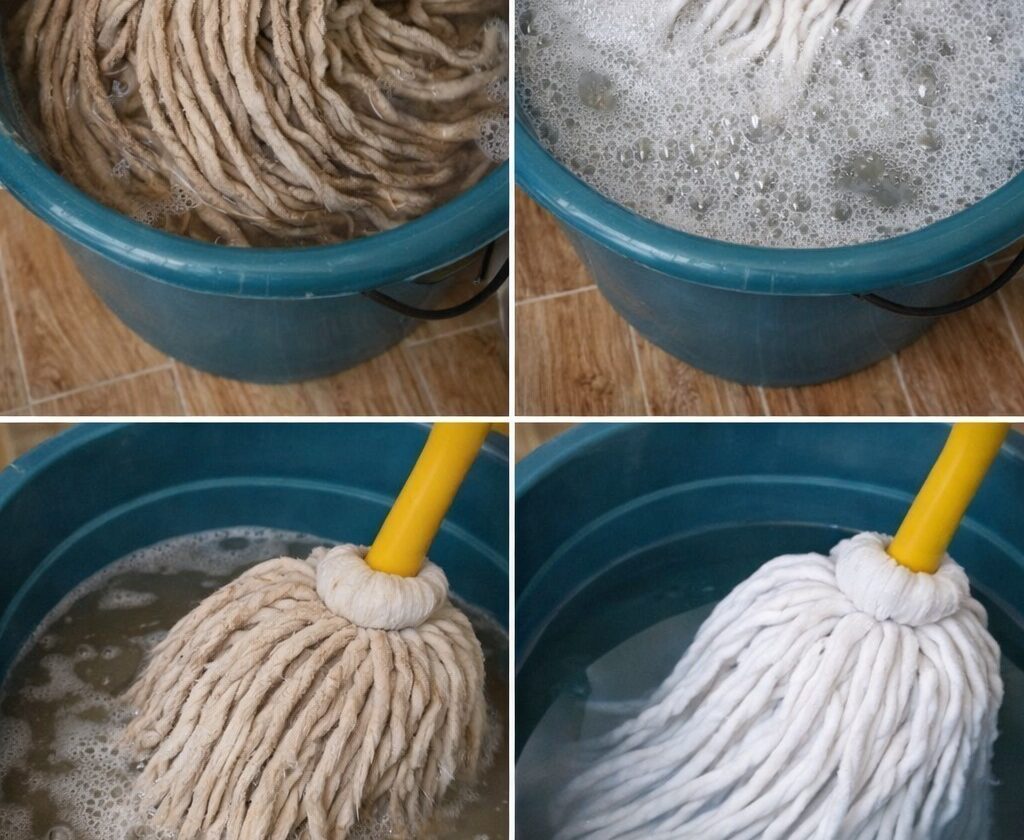
1. Baking Soda Soak (Best for Odor & Dirt)
- Fill a bucket with warm water.
- Add ½ cup baking soda and stir until dissolved.
- Submerge the mop head for 2–3 hours.
- Rinse thoroughly until the water runs clear.
- If the mop head is machine washable, place it in the washing machine with ½ cup baking soda and wash at 60–70°C (140–158°F).
2. Vinegar & Lemon Method (Great for Disinfecting)
- Mix 1 cup white vinegar with the juice of 2 lemons per liter of warm water.
- Soak the mop head for 30–60 minutes.
- For extra cleaning power, add 2 tablespoons baking soda.
- Rinse thoroughly and allow it to dry completely.
3. Tea Tree Oil Cleaning Solution (Antibacterial Boost)
- Mix 4 cups warm water with the juice of 1 lemon.
- Add 10 drops of tea tree oil.
- Soak the mop head for 30 minutes.
- Rinse thoroughly before drying.
4. Ammonia Deep Clean (For Very Dirty Mops)
- Mix ¼ cup household ammonia with one gallon of cool water.
- Soak the mop for 15–20 minutes.
- Rinse thoroughly two to three times.
- Let it air-dry completely before storing.
Important safety tip: Never mix ammonia with bleach.
Is This Cleaning Method Healthy?
Using natural cleaning ingredients like baking soda, vinegar, and lemon can help maintain a healthier indoor environment. Many commercial cleaners contain strong chemicals that may irritate skin or lungs.
Natural ingredients provide effective cleaning while reducing exposure to harsh substances. These methods also support eco-friendly and sustainable home care, making them a great choice for families trying to maintain a cleaner living space.
Tips for Best Results
- Always rinse the mop immediately after cleaning floors.
- Use hot water during deep cleaning to dissolve grease and dirt.
- Dry the mop completely to prevent mildew.
- Clean your mop at least once per week if used frequently.
- Store it hanging instead of leaving it in a bucket.
These small habits help your mop stay hygienic and effective for much longer.
Drying & Storage Tips
Drying is just as important as cleaning. A wet mop stored in a closed space will quickly develop bacteria and unpleasant odors.
For proper drying:
- Wring the mop completely after washing
- Hang it vertically so fibers spread out
- Allow it to dry in sunlight if possible
- Never store it damp
Sunlight helps kill bacteria naturally, making it an excellent final step.
FAQ
Can I wash my mop in the washing machine?
Yes, many microfiber and cotton mop heads are machine washable. Check the manufacturer instructions before washing.
How often should I deep clean my mop?
If you mop frequently, deep clean it once per week to prevent bacteria buildup.
Why does my mop smell bad?
Bad odors usually come from bacteria and mildew trapped in damp fibers.
Can vinegar disinfect a mop?
Yes, vinegar helps kill many bacteria and removes odors effectively.
When should I replace my mop?
Replace it when fibers are frayed, torn, or when odors remain after deep cleaning.
You May Also Like
- Easy Kitchen Cleaning Hacks That Save Time
- Natural Ways to Disinfect Your Home
- Simple Tricks to Remove Bad Household Odors
- How to Clean Floors Without Harsh Chemicals
- Smart Home Cleaning Tips for Busy Families
Final Thoughts
A dirty mop doesn’t mean it’s time to buy a new one. In most cases, a simple deep cleaning with ingredients like baking soda, vinegar, or lemon can bring it back to life. These easy methods not only save money but also help maintain a healthier home.
Taking a few minutes to clean your cleaning tools ensures they continue doing their job properly. After all, a truly clean home starts with clean tools—and your mop is one of the most important.