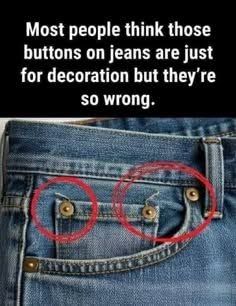
Why Are Jeans Still Made With Rivets?
Modern jeans are very different from the heavy-duty work trousers worn by 19th-century laborers.
Fabric technology has improved.
Stitching methods have evolved.
Manufacturers have access to stronger materials and more advanced production techniques.
So why keep the rivets?
There are several reasons.
1. Tradition
Rivets are part of the history of denim.
Removing them completely would change the traditional appearance of many classic jean designs.
2. Reinforcement
Rivets can still provide additional support at high-stress points, particularly around pockets.
3. Brand Identity
Metal rivets have become visually associated with traditional jeans.
For many denim brands, they are part of the classic look customers expect.
4. Authenticity
For vintage-style or heritage denim, traditional construction details are an important part of the appeal.
Why Do Some Jeans Have Hidden Rivets?
Here’s another interesting detail.
Not all rivets have always been exposed.
Some vintage denim garments used hidden or concealed rivets.
Why?
Exposed metal rivets can sometimes create practical problems.
They may scratch surfaces such as furniture, saddles, or other materials. They can also become uncomfortable depending on where they are positioned.
As denim designs evolved, some manufacturers experimented with ways to maintain reinforcement while reducing the disadvantages of exposed rivets.
This is a reminder that clothing design is often a balance between durability, comfort, appearance, and practicality.
Are Rivets Actually Necessary on Modern Jeans?
It depends on the jeans.
Modern denim can be manufactured using different construction methods, and not every pair requires traditional metal rivets.
Some jeans use reinforced stitching, bar tacks, different seam constructions, or other techniques to strengthen high-stress areas.
That means rivets aren’t the only way to make durable jeans.
However, traditional rivets remain popular because they combine function, history, and recognizable denim style.
Why Are the Rivets Often Copper-Colored?
When people picture classic jeans, they often imagine blue denim with small copper-colored metal rivets.
That combination has become iconic.
The warm metallic color contrasts with blue denim and contributes to the traditional appearance of workwear.
However, rivets can come in different finishes depending on the manufacturer and style.
You may find silver, black, antique, brass-colored, or other finishes on modern jeans.
The appearance may change, but the basic concept remains the same: reinforce the garment and add a distinctive construction detail.
A Small Detail That Changed Clothing History
One of the most fascinating things about everyday objects is how often their design reflects problems people once needed to solve.
The rivet on a pair of jeans is a perfect example.
Today, someone might see a tiny metal button and think:
“That’s just decoration.”
But historically, it represented an attempt to make clothing stronger.
The idea was straightforward, yet its influence was enormous.
The riveted work trouser helped establish a style of clothing that eventually became popular far beyond the workplace.
What began as practical workwear eventually became a global fashion staple.
From Workwear to Everyday Fashion
Jeans have undergone a remarkable transformation.
They began as durable clothing associated with labor and physical work.
Over generations, they became popular among a much broader audience.
Today, people wear jeans for countless occasions.
You might wear them while:
- Running errands
- Traveling
- Going to school
- Working in a casual office
- Spending time outdoors
- Meeting friends
- Going out for dinner
- Relaxing at home
Despite all those changes, many traditional design elements remain.
The rivet is one of them.
The Hidden History in Your Closet
This is what makes ordinary clothing so interesting.
A pair of jeans hanging in your closet may look completely ordinary, but several details can tell a story about manufacturing, engineering, work culture, and fashion history.
The pockets aren’t simply shaped the way they are by accident.
The stitching has a purpose.
The fabric weight can affect durability.
The rivets were originally introduced to solve a specific structural problem.
Even the familiar five-pocket style of many jeans is connected to the long history of denim design.
In other words, your jeans are a small piece of industrial history.
What Makes Rivets Different From Buttons?
It is easy to call them “buttons,” especially because they are small, round, and metallic.
But technically, they serve a different purpose.
A conventional button is generally used with a buttonhole to close a garment.
A rivet is a fastener used to join or reinforce materials.
On jeans, the rivets are generally fixed in place rather than being designed for repeated opening and closing.
So the next time someone points to those metal pieces and calls them buttons, you can tell them they’re actually rivets.
Denim Design Was Built Around Durability
The original success of riveted jeans was connected to a broader demand for durable clothing.
Workers needed garments that could withstand difficult conditions.
That meant designers and manufacturers had to think about more than appearance.
They needed to consider:
- Fabric strength
- Seam durability
- Pocket construction
- Reinforcement
- Comfort
- Ease of production
- Long-term wear
The rivet addressed one small part of that larger engineering challenge.
And sometimes, a small improvement is all it takes to transform a product.
Why This Little Detail Still Fascinates People
Part of the appeal is that the rivet is almost invisible to us as a design innovation.
We’ve seen it so many times that we rarely question it.
That’s true of countless objects around us.
We use zippers without thinking about how they work.
We flip light switches without considering their history.
We sit on chairs without wondering why they’re constructed the way they are.
Everyday products often contain decades—or even centuries—of accumulated design decisions.
The humble jeans rivet is simply one of those details.
Frequently Asked Questions
What are the metal buttons on jeans called?
They are called rivets. They are metal fasteners used primarily to reinforce areas of denim that can experience significant stress, especially around pockets.
Why do jeans have rivets?
Rivets were originally added to strengthen pocket seams and other high-stress areas of work trousers. They helped reduce the likelihood of the fabric pulling apart.
Who invented riveted jeans?
Tailor Jacob Davis developed the riveted clothing concept and partnered with Levi Strauss. They received a U.S. patent for the riveted design in 1873.
Are the metal rivets on jeans decorative?
They can contribute to the appearance of modern jeans, but their original purpose was functional. They were designed to reinforce the garment.
Why are some jeans missing rivets?
Not every pair of modern jeans uses traditional rivets. Manufacturers may use reinforced stitching or other construction methods depending on the style and intended use.
Can jeans be repaired if a rivet comes loose?
Yes. Depending on the garment and the damage, a tailor or denim repair specialist may be able to replace or reinforce the affected area.
Final Thoughts
The next time you put on a pair of jeans, take a second to look at those tiny metal pieces around the pockets.
They may seem like simple decoration, but they represent a clever solution to a very practical problem.
More than a century ago, workers needed trousers that could survive demanding jobs. Jacob Davis and Levi Strauss helped popularize a riveted design that reinforced vulnerable parts of the garment—and those little metal details eventually became part of the unmistakable look of jeans.
That’s what makes everyday objects so fascinating.
Sometimes the smallest details have the biggest stories.
So, did you think those little buttons were just decoration?