
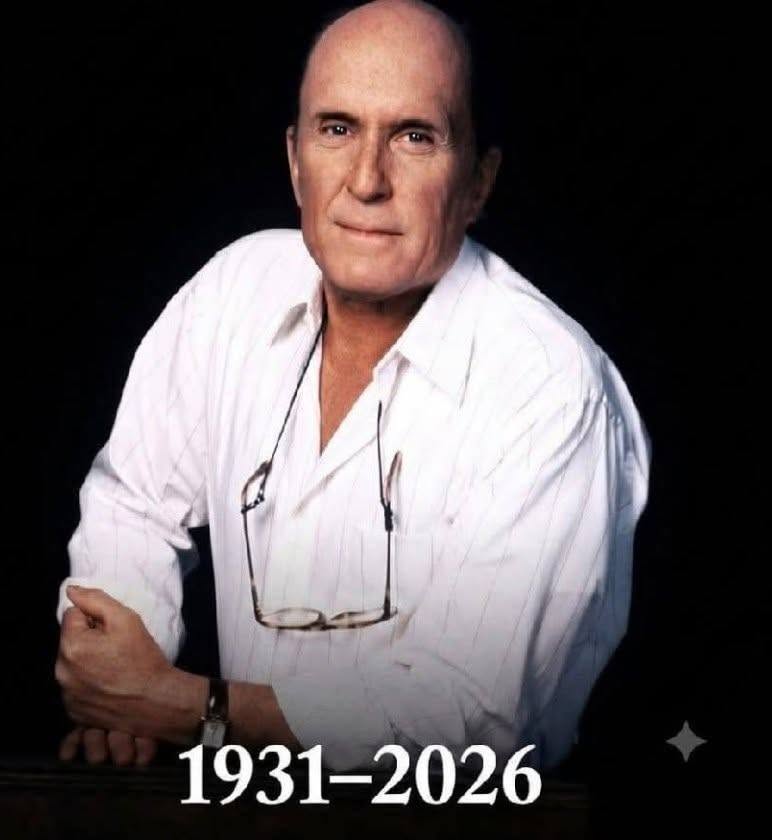
Robert Duvall Dies at 95: Remembering the Oscar-Winning Actor’s Extraordinary Hollywood Legacy
Hollywood is mourning the loss of Robert Duvall, one of the most respected and versatile American actors of his generation. Duvall died peacefully at his home in Middleburg, Virginia, on February 15, 2026, at the age of 95, according to a statement from his wife, Luciana Duvall. His family did not disclose a cause of death.
For more than six decades, Duvall brought remarkable depth and authenticity to the screen. From his unforgettable performance as Tom Hagen in The Godfather to his iconic portrayal of Lieutenant Colonel Bill Kilgore in Apocalypse Now, he became one of the defining character actors of modern American cinema.
His career stretched far beyond those famous roles. Duvall appeared in more than 100 films and also worked as a director, producer, and writer. He earned seven Academy Award nominations and won the Oscar for Best Actor for his powerful performance in Tender Mercies.
Robert Duvall’s Early Life and Path to Acting
Robert Selden Duvall was born on January 5, 1931, in San Diego, California. He grew up in Annapolis, Maryland, in a military family. His father, William Howard Duvall, was a career Navy officer who eventually became a rear admiral.
Duvall initially attended Principia College, where he studied drama. After graduating, he served in the U.S. Army before moving to New York and continuing his acting education at the Neighborhood Playhouse School of the Theatre.
There, he studied under renowned acting teacher Sanford Meisner. His classmates and friends included future Hollywood stars such as Dustin Hoffman and Gene Hackman, both of whom were still working toward their eventual breakthroughs at the time.
Duvall’s early years were largely spent developing his craft on the stage. His theatrical experience helped establish the naturalistic acting style that would eventually become one of his greatest strengths.
The Role That Introduced Him to Movie Audiences
Duvall made his feature-film debut in 1962’s To Kill a Mockingbird, where he played Arthur “Boo” Radley opposite Gregory Peck.
Although the role contained relatively little dialogue, Duvall made a lasting impression. His performance demonstrated an ability that would define much of his career: communicating complicated emotions through presence, expression, and subtle physical details.
The role helped open the door to a long and influential film career.