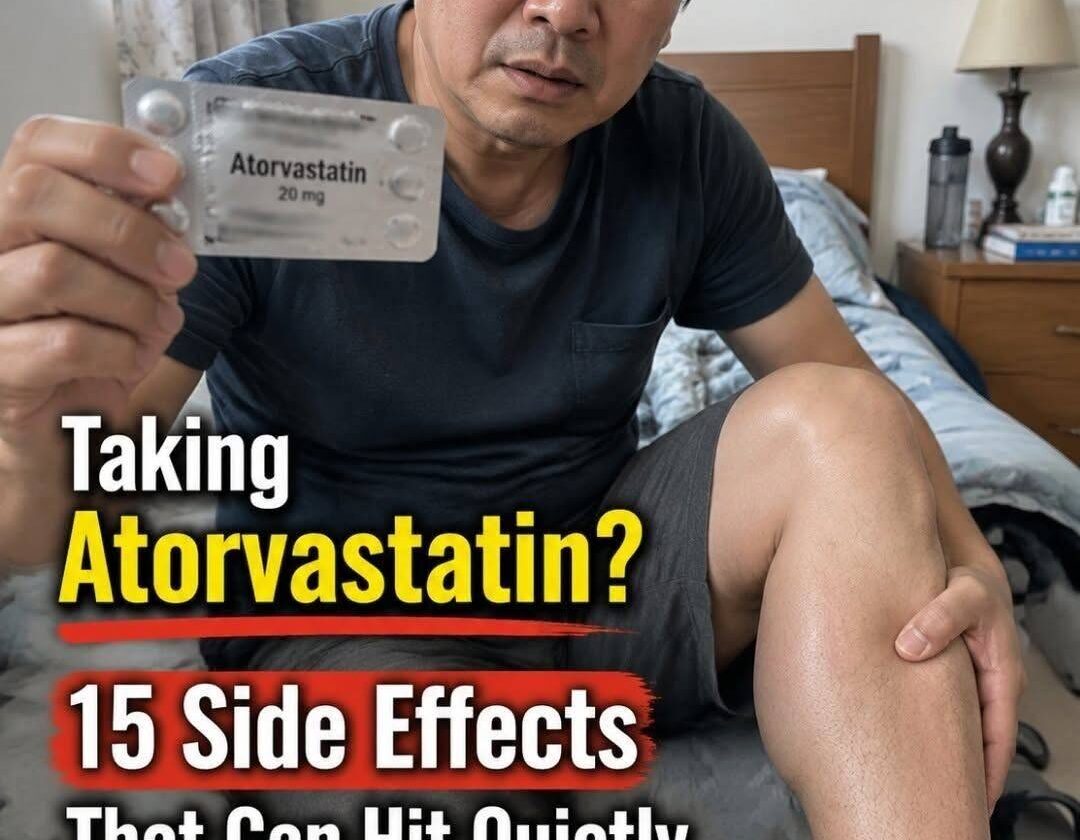
Taking Atorvastatin? 15 Possible Side Effects You Should Know About — And the Warning Signs Not to Ignore
Atorvastatin is one of the most widely used statin medicines. It lowers LDL cholesterol and is prescribed to reduce the risk of heart attack and stroke. For many people, it causes few or no troublesome side effects.
But when a new ache, stomach problem or unusual fatigue appears after starting a medication, it’s natural to wonder:
Could my atorvastatin be responsible?
The answer isn’t always straightforward. A symptom occurring while you’re taking atorvastatin doesn’t automatically mean the medication caused it. Still, there are recognized side effects—and a few uncommon warning signs that deserve prompt medical attention.
Most importantly, don’t stop prescribed atorvastatin on your own because of an online list. A clinician or pharmacist can help determine whether a symptom is medication-related and whether the dose or treatment should be changed.
1. Muscle Aches
This is probably the statin symptom people hear about most.
Some people report aching, tenderness or discomfort in their muscles. But ordinary soreness can also come from exercise, arthritis, infections and many other causes.
New, unexplained or persistent muscle symptoms deserve a conversation with your healthcare provider.
2. Muscle Weakness
Weakness is different from simply feeling sore after exercise.
If everyday activities suddenly feel unusually difficult—particularly after starting atorvastatin or changing the dose—tell your clinician.
Rarely, statins can cause serious muscle injury.
3. Joint Pain
Not every atorvastatin-related complaint involves muscle.
Joint pain is among the effects listed in current patient information for atorvastatin.
That doesn’t mean every painful knee or shoulder in someone taking the medicine is caused by the drug. Timing, other conditions and other medications all matter.
4. Diarrhea
Digestive symptoms can be easy to overlook because they’re so common.
Diarrhea is one of the listed possible atorvastatin side effects. If it’s mild and temporary, it may resolve, but persistent or severe symptoms should be discussed with a healthcare professional.
5. Gas
Yes, something as ordinary as increased gas can appear among the reported gastrointestinal effects.
Again, that doesn’t prove atorvastatin is responsible. Diet and many digestive conditions can produce exactly the same symptom.
6. Heartburn
Persistent heartburn is another listed possible effect.
If it began after starting a new medication, mention the timing to your clinician rather than assuming you simply developed a new food intolerance.
7. Nausea or Upset Stomach
Statin users can experience gastrointestinal discomfort, including nausea or an upset stomach.
Severe nausea accompanied by other symptoms—especially dark urine, marked weakness, loss of appetite or yellowing of the skin or eyes—is a different situation and warrants medical attention.
8. Headache
Headaches have many possible causes, from dehydration and lack of sleep to migraine and infection.
They are also among the mild effects reported with statin therapy generally.
A sudden, extremely severe headache or one accompanied by new neurological symptoms shouldn’t simply be blamed on medication and needs urgent evaluation.
9. Dizziness
Dizziness is another symptom reported with statins.
Because dizziness has many potential causes—including blood-pressure changes, dehydration, inner-ear problems and other medicines—persistent or significant dizziness deserves proper evaluation rather than self-diagnosis.
10. Constipation
Although atorvastatin-specific patient information emphasizes several other gastrointestinal symptoms, constipation is also listed among possible effects of statins generally.
Changing medication without determining the actual cause isn’t a good idea.
11. Changes in Blood Sugar
This one deserves more attention because you may not necessarily feel it.
Statins can increase blood glucose, and there is an associated increased risk of developing type 2 diabetes, particularly among people who already have risk factors such as prediabetes, obesity or metabolic syndrome.
That risk has to be weighed against the cardiovascular benefits for the individual patient rather than considered in isolation.
12. Memory Complaints
This is one of the more controversial-sounding symptoms online.
Don’t Make This Common Mistake
Imagine someone develops aching legs after starting atorvastatin.
They search online.
They find “muscle pain” on a list.
They immediately stop the tablets.
That sounds logical—but it skips an important step.
The pain might be related to atorvastatin.
Or it might not.
And atorvastatin may have been prescribed because that person has a meaningful risk of heart attack or stroke. The medication’s purpose is to lower that cardiovascular risk.
The safer approach is to tell the prescriber what’s happening.
Depending on the circumstances, a clinician may evaluate other causes, check laboratory tests when appropriate, adjust the dose or consider another treatment.
The Symptoms That Deserve Particular Attention
Most side effects aren’t medical emergencies. But contact a healthcare professional promptly for significant unexplained muscle pain or weakness, severe fatigue, dark urine, yellowing of the skin or eyes, unusual bleeding or bruising, or other substantial new symptoms. Difficulty breathing or swallowing or swelling involving the face or throat warrants emergency care.
And remember the most important part of this entire list:
Fifteen possible effects do not mean that everyone taking atorvastatin will experience fifteen problems—or even one.
Statins often cause no side effects, while their cholesterol-lowering effect can substantially reduce cardiovascular risk in appropriate patients.
So if you’ve been taking atorvastatin and suddenly recognize one of these symptoms, don’t panic—and don’t automatically throw away your medication.
Write down what you’re experiencing, when it began and whether anything else changed around the same time, then discuss it with your doctor or pharmacist.
That conversation is far more useful than letting a frightening social-media headline make the decision for you.