
Found These Strange Bugs Crawling Around Your House? Here’s What They Could Be — And Why You Shouldn’t Ignore Them
Imagine walking into your bathroom late at night, switching on the light, and suddenly seeing a strange silvery creature race across the floor.
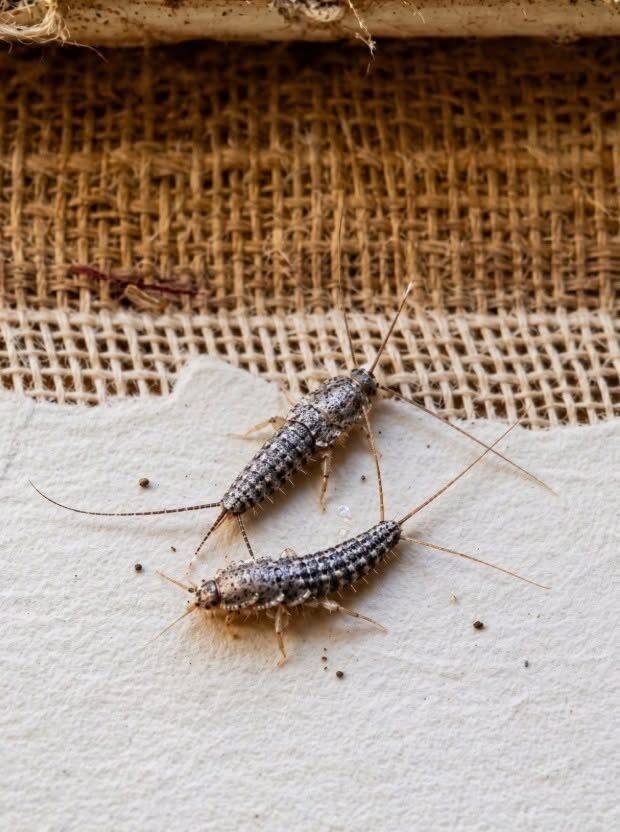
It has long antennae, a tapered body and several thin projections coming from its rear.
Then you find another one.
And another.
If you have children or pets in the house, your first thought might be: “What on earth are these things—and are they dangerous?”
The insects in the photo appear consistent with silverfish or a closely related bristletail-type insect. While an exact species can’t be confirmed from a photograph alone, their unusual appearance explains why discovering them indoors can be alarming.
Fortunately, the truth is less frightening than their prehistoric-looking bodies suggest.
First: Are They Dangerous?
Silverfish aren’t generally considered dangerous to people.
They don’t normally bite humans, and they’re not known as major disease-spreading household pests. So finding one doesn’t mean your children are suddenly in danger.
But that doesn’t mean you should completely ignore them.
The important question isn’t simply:
“What is this bug?”
It’s:
“Why does my house suddenly have conditions these insects like?”
That’s where things become interesting.
They Love Places You Rarely Look
Silverfish prefer dark, protected environments.
That’s why you may live in the same house with them for months without realizing they’re there.
During the day, they can remain hidden in tiny cracks, behind baseboards, beneath cabinets, around plumbing or inside stored belongings.
At night, they emerge looking for food and moisture.
That’s also why people often discover one unexpectedly when they enter a bathroom or kitchen after dark.
Turn on the light and—
there it goes.
The insect disappears beneath a cabinet before you can even figure out what you saw.
Finding Several Can Be a Moisture Clue
This is probably the part homeowners should pay the most attention to.
Silverfish tend to thrive in environments with favorable moisture and humidity.
Bathrooms, laundry rooms, kitchens, basements and other damp areas can therefore become attractive hiding places.
If you suddenly begin finding many of them concentrated in one room, inspect that area carefully.
Look around sinks.
Check underneath cabinets.
Examine plumbing.
Look around tubs and showers.
Inspect windows and walls for persistent dampness.
A slow plumbing leak or moisture problem can remain unnoticed for quite some time.
The insects aren’t proof that you have a hidden leak, but repeated sightings can be a reason to investigate.
And Here’s the Weird Part: They May Be Eating Things in Your House
Silverfish don’t need the same foods humans do.
They can feed on materials containing starches and carbohydrates.
That can include things such as paper, cardboard, book bindings, wallpaper adhesives and certain stored materials.
This explains why people sometimes discover them around:
old books,
storage boxes,
closets,
paperwork,
or piles of cardboard.
A single insect isn’t going to destroy your house.
But a persistent population can potentially damage susceptible belongings over time.
Why Are They Called Silverfish?
Take another look at their bodies.
Many silverfish have gray or silvery scales and move with a rapid, wriggling motion that reminded people of a swimming fish.
Hence the name:
silver + fish.
But they’re insects—not fish.
Their long antennae and tail filaments give them the bizarre appearance that makes people stop and photograph them.
And they’ve got an ancient pedigree: silverfish belong to a very old lineage of insects.
Perhaps that’s why they look like something that crawled straight out of prehistoric times.
So How Did They Get Into Your House?
There isn’t always one obvious answer.
They may enter through gaps and cracks, or they can sometimes be transported indoors with cardboard boxes, paper products and stored belongings.
Once inside, a suitable environment can allow them to persist.
And here’s an important distinction:
Finding silverfish doesn’t automatically mean your home is dirty.
Even a spotless house can provide moisture, shelter and materials they can feed on.
That’s why endlessly cleaning the visible floor without addressing hiding places or humidity may not solve the problem.
Here’s What You Should Do First
Don’t panic and start spraying random chemicals throughout the house.
Begin with the conditions that allow the insects to thrive.
Vacuum visible insects and thoroughly clean along baseboards, behind furniture and underneath cabinets.
Get rid of unnecessary cardboard and paper clutter, particularly in damp storage areas.
Keep susceptible dry foods in sealed containers.
Most importantly, deal with moisture.
Repair dripping pipes or leaking fixtures.
Improve bathroom ventilation.
Dry persistently damp areas.
If indoor humidity is consistently high, a dehumidifier may help.
Then start closing their hiding places.
Small cracks around baseboards, pipes and cabinets can provide excellent shelter. Sealing appropriate gaps makes the environment less inviting.
Sticky monitoring traps placed appropriately along walls can help determine where activity is concentrated.
Be Careful With DIY Pest-Control Hacks
Social media is full of homemade pest treatments.
Some recommend spreading various powders everywhere.
Others involve strong chemicals or improvised mixtures.
That’s especially questionable when children and pets live in the house.
Never assume something is safe merely because it’s described as “natural.”
And never combine household cleaning chemicals unless their labels specifically instruct you to do so. Some combinations can release dangerous gases.
If pesticide treatment becomes necessary, use a product specifically labeled for the intended indoor pest and location, and follow every instruction and precaution on the label.
For a significant infestation, professional pest control may be the safer and more effective option.
When Should You Call a Professional?
Seeing an occasional silverfish doesn’t necessarily mean you have a serious infestation.
But the situation deserves more attention if you’re seeing them frequently, finding them throughout multiple rooms or noticing numerous smaller individuals.
Regular daytime sightings can also be worth investigating because these insects usually prefer hiding.
A pest professional can determine where they’re concentrated and recommend treatment while you address moisture and structural conditions.
There’s Another Reason Not to Ignore Them
Suppose you repeatedly find silverfish beneath your bathroom sink.
You kill the insects.
A week later, they’re back.
You spray.
They disappear.
Then they return again.
At that point, continuing to kill individual insects may be addressing the symptom rather than the environment supporting them.
Maybe there’s a dripping connection beneath the sink.
Maybe condensation is keeping a cabinet damp.
Maybe there’s another humidity problem nearby.
That’s why the location of repeated sightings can sometimes be more informative than the insect itself.
What About the Kids?
This is the reassuring part.
If the insects are indeed silverfish, their frightening appearance doesn’t translate into the kind of threat many parents imagine when they first see them.
They’re primarily a household nuisance and potential property pest, not something that normally attacks people.
The bigger child-safety concern may actually arise from how adults try to eliminate them.
Don’t leave insecticides, powders or traps where young children can reach them.
Follow product labels carefully and use professional help when appropriate.
The Bottom Line
Those bizarre little creatures with long antennae and tapered bodies may look like something you absolutely do not want sharing your home.
And you probably don’t.
But there’s no reason to panic.
If they’re silverfish or a closely related household bristletail, the insects themselves generally aren’t dangerous to your family.
What you should pay attention to is why they’re appearing.
One strange bug may simply be an unwanted visitor.
Repeated sightings, however, can be your cue to check moisture, clutter, cracks and hidden areas of the house.
And sometimes, discovering the reason they’re comfortable in your home is far more useful than simply getting rid of the bug you can see.