
Over 70 With Aching, Grinding Knees? The Truth About the “One Food” Supposed to Rebuild Cartilage in Just 7 Hours
If your knees ache when you stand up, feel stiff first thing in the morning, or make grinding and crackling sounds on the stairs, a headline promising to “regenerate destroyed cartilage in seven hours” can be incredibly tempting.
The viral post claims that one mysterious food can rebuild knee cartilage and make people over 70 stop limping within days.
There’s just one major problem:
No food has been shown to regenerate severely damaged knee cartilage in seven hours.
That doesn’t mean nutrition is irrelevant to joint health. Far from it. But there’s an important difference between supporting your joints through a healthy diet and claiming that a bowl of food can reconstruct cartilage almost overnight.
What Is Actually Happening Inside an Arthritic Knee?
The ends of the bones inside a healthy knee are covered with articular cartilage. This smooth tissue helps the joint move with very little friction.
With osteoarthritis, cartilage and other tissues in the joint undergo gradual changes and damage. As the condition progresses, people can experience pain, stiffness, swelling and reduced mobility.
Some people also notice popping, crackling or grinding sensations.
But here’s something many viral posts leave out:
A noisy knee doesn’t automatically mean your cartilage has been “destroyed.”
Crepitus—the medical term often used for these joint noises—can occur for different reasons and doesn’t always indicate serious disease.
Persistent pain, swelling or reduced function deserves proper assessment rather than diagnosis from a social-media picture.
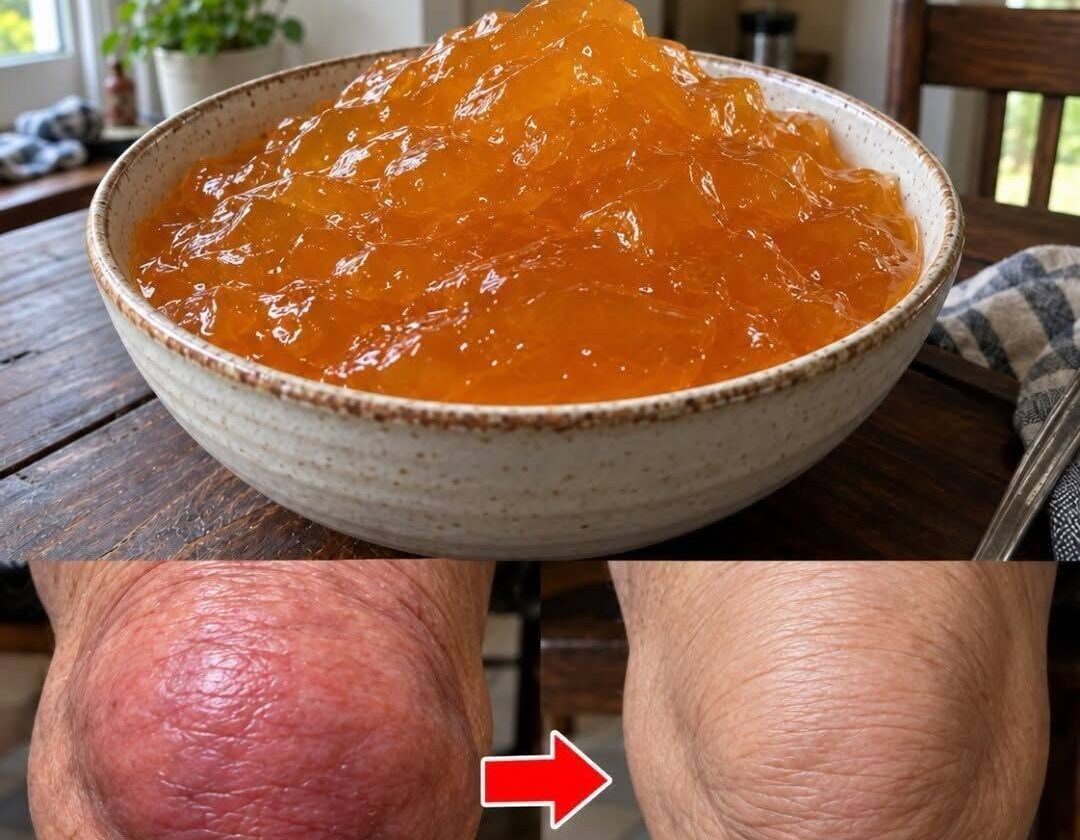
So What’s That Orange Jelly in the Picture?
From appearance alone, it’s impossible to reliably determine exactly what food the photograph contains.
Similar viral posts frequently promote gelatin, collagen-rich foods, broths or mixtures containing various spices and supplements.
Gelatin and collagen are particularly popular because cartilage contains collagen.
That leads to an appealing argument:
Cartilage contains collagen → eat collagen → damaged cartilage grows back.
Unfortunately, human biology isn’t that simple.
When you eat collagen or gelatin, digestion breaks proteins down into smaller peptides and amino acids. Your body can use those building blocks in numerous tissues.
Eating gelatin doesn’t send intact replacement cartilage directly to your knees.
But What About Collagen Supplements?
This is where the story becomes more nuanced.
Research has investigated collagen preparations for osteoarthritis symptoms, and some studies have reported improvements in pain or function.
But symptom improvement is very different from proving that someone’s destroyed cartilage has been completely regenerated.
And it certainly doesn’t establish the extraordinary claim that cartilage can be rebuilt within seven hours.
Cartilage biology simply doesn’t operate on that kind of social-media timetable.
The “Seven-Hour” Claim Is the Biggest Red Flag
Think about what is being claimed.
A person supposedly has enough structural knee damage to cause severe pain and limping.
They eat one food.
Seven hours later, the damaged tissue has regenerated sufficiently to eliminate the problem.
If a treatment could reliably accomplish that, it wouldn’t remain a secret hidden behind:
“Type OK for the recipe.”
It would represent a major orthopedic breakthrough studied in clinical trials and incorporated into medical treatment.
The dramatic before-and-after knee photographs don’t establish that regeneration occurred either.
Redness and swelling can change rapidly for many reasons. Cartilage itself isn’t visible from an ordinary external photograph.
You would need appropriate clinical evaluation and imaging or other research measurements to investigate structural changes inside the joint.
Can Food Still Help Your Knees?
Absolutely—but in a much less spectacular and much more realistic way.
A nutritious eating pattern can support overall health, and maintaining an appropriate body weight can be particularly important for people with knee osteoarthritis.
Foods commonly included in a balanced dietary pattern include vegetables, fruit, whole grains, legumes, nuts, fish and other suitable protein sources.
Adequate protein also provides amino acids used throughout the body.
But there isn’t a scientifically established single miracle food that makes all the other pieces irrelevant.
What Actually Helps Knee Osteoarthritis?
One of the most important misconceptions is that painful knees should always be rested indefinitely.
For many people with knee osteoarthritis, appropriately selected physical activity and therapeutic exercise are central parts of management.
Strengthening the muscles supporting the knee can improve function. Low-impact activities such as walking, cycling or swimming may be appropriate depending on the person’s condition and abilities.
Weight management can also help when excess body weight is contributing to joint load.
Other options may include physical therapy, appropriate pain medication, topical treatments, injections in selected circumstances and, for severe disease that hasn’t responded adequately to conservative treatment, joint-replacement surgery.
The right approach depends on the individual.
A 72-year-old with mild osteoarthritis doesn’t necessarily need the same treatment as someone with severe joint damage.
Be Careful With “Natural” Joint Recipes
Another common trick is to call a remedy natural and therefore imply that it can’t cause harm.
Natural doesn’t automatically mean safe.
Some concentrated herbs and supplements can interact with anticoagulants, diabetes medicines, blood-pressure treatments and other medications frequently used by older adults.
Supplements can also vary in quality and dosage.
So if someone is already taking prescription medication, it’s worth checking a supplement with their doctor or pharmacist before using large or concentrated amounts.
And prescribed treatment shouldn’t be stopped because an online recipe claims to replace it.
When Knee Pain Shouldn’t Be Treated With an Internet Recipe
An aching knee that has gradually become stiff over several years is very different from a knee that suddenly becomes extremely painful, hot, red and swollen.
Sudden significant swelling or redness can have causes that require prompt medical evaluation, including infection, crystal arthritis such as gout, injury and other conditions.
Seek urgent medical care for severe symptoms—particularly a hot, markedly swollen joint accompanied by fever or feeling seriously unwell.
Likewise, significant swelling after an injury, inability to bear weight, obvious deformity or rapidly worsening symptoms should not be treated solely with a homemade remedy.
What About People Over 70?
Being over 70 doesn’t mean knee pain is something you simply have to accept.
Older adults can still benefit from appropriately tailored exercise, rehabilitation and evidence-based medical treatment.
Nor does every older adult with knee pain have the same diagnosis.
Pain might originate from osteoarthritis, tendons, bursae, an old injury, inflammatory disease or even another part of the body.
That’s why identifying the cause matters.
The Real Secret Isn’t Nearly as Dramatic
There probably isn’t a mysterious food that doctors have been keeping quiet.
And there certainly isn’t good evidence that eating one food at breakfast can rebuild severely damaged knee cartilage by dinner.
But there are practical ways to improve knee health and, depending on the cause, reduce pain and improve mobility.
They aren’t as exciting as a seven-hour miracle.
They usually involve some combination of appropriate exercise, strengthening, weight management when relevant, nutritious food, symptom treatment and medical evaluation when needed.
And that’s precisely why sensational posts rarely mention them.
“Type OK and discover the secret food doctors don’t want you to know” gets more clicks than “joint health usually requires consistent, individualized care.”
But when it comes to your knees, the less exciting statement is much closer to the truth.